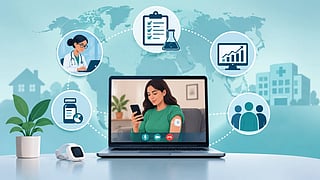
Traditionally, patients participating in a clinical trial need to visit trial sites e.g., hospital or research centers. This can often pose problems for patients living far away, with busy lifestyles or issues with mobility.
Decentralized Clinical Trials (DCTs) allow clinical research to be conducted outside of the clinical setting by using technology such as telehealth, wearable technology, electronic consents and home healthcare.
This has opened new opportunities for patients to become involved in research while enabling clinical trial teams to gain more health data.
Decentralized Clinical Trial platforms allow clinical research to be conducted outside of clinical trial sites by using technology. This means that the clinical trial team can engage with patients and researchers using a variety of technologies and services. These can include:
Electronic Consent: Patients can review information about the trial and sign their consent digitally
Telehealth: Enables virtual consultations.
Wearables: Collect health data from the patient, such as heart rate, activity and other trial data.
Electronic Patient Reported Outcomes: Can be used to collect symptomology and treatment experiences.
Direct-to-patient services: Enables trial medicines, diagnostic kits and items to be delivered to the patient.
It is important to note that not every trial can be fully decentralised. Many trials use a hybrid approach.
There are numerous technology companies that have developed digital solutions to aid decentralized and hybrid trials. 5 examples include:
An integrated clinical trial platform which includes eConsent, ePRO, telehealth and Remote Patient Monitoring. They provide solutions to allow clinical researchers to engage people in trials and collect trial data.
Medidata is part of a larger group called Dassault Systèmes. It provides digital solutions for clinical trials, Rave EDC solutions. Using their technology, one can collect data, engage with patients and decentralize trials. This helps clinical sponsors run complex trials.
A decentralized clinical research solution. Its operating system allows patients to complete virtual visits, remote patient monitoring, e-consent and recruitment using their DCT operating system. It reduces the number of visits needed.
A fully integrated digital platform which can be used for decentralized and hybrid clinical trials. It includes eConsent, ePRO, telehealth and remote data capture. It supports researchers throughout the trials.
Cloud-based clinical research software. It has EDC functionality, eConsent and ePRO. The platform can be configured to allow clinical researchers to capture and manage data received from trial subjects.
These platforms offer different combinations of clinical trial management, electronic data capture, patient engagement and remote monitoring capabilities. Their suitability depends on the trial protocol, study requirements and regulatory considerations.
Patients may struggle to access clinical trials depending on where they are, particularly if they aren’t in one of the key cities with specialist research centers. Using decentralized approaches, patients can have virtual consultations and have services provided at their homes. This can increase opportunities for patients in rural and underserved areas.
Patients may struggle to attend clinical trials due to the frequent visits to hospital, costs of travelling and time taken out of work. By using digital approaches for appropriate consultations and assessments, this can reduce the burden and increase engagement of participants in the clinical trial.
Using wearables and digital tools can help to collect data outside of the scheduled consultations. Depending on the trial, this can help to collect physiological data. It can also allow the patient to provide feedback on any changes they may be experiencing. This can give additional insights into how the treatment is working in real life.
By using digital platforms, patients can be reminded of their appointments. They can also be provided with information about the trial, resources, and can engage with the research team.
This can help to keep patients informed. However, patients should still engage with the investigators and healthcare professionals.
Using decentralized platforms can help with screening patients, scheduling appointments, collecting data electronically and following up.
This can reduce some of the administration burden for the research team and improve communication between the sponsor, investigators and service provider.

Digital Literacy: Patients may not have a good internet connection, an appropriate device or knowledge to use the technology. It is important to provide support and alternative options.
Data Security: Multiple data sources will be used to collect health data. It is important to ensure data is securely stored and patients have the correct access.
Data Accuracy: Data collected from devices at home must be accurate for the trial. There should be processes in place to deal with missing/inaccurate data.
Clinical Oversight and Patient Safety: Some exams cannot be performed virtually. The trial team must have clear processes in place to deal with adverse events, emergencies and when patients need to attend hospital.