Maharashtra is one of India’s most prominent centers for dental education, hosting a wide network of institutions that combine clinical exposure, academic training, and research opportunities.
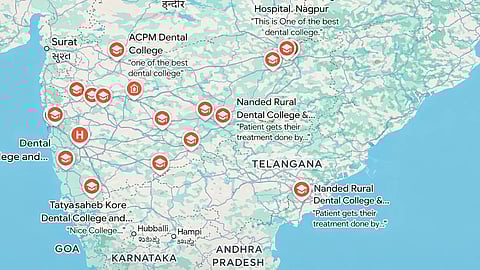
The state has 39 dental colleges, making it one of the largest contributors to dental education in India, second only to Karnataka in terms of total institutions.
The ecosystem includes a mix of government colleges and private/deemed universities, offering undergraduate (BDS) and postgraduate (MDS) programs regulated by national standards.
The foundation of dental education in Maharashtra can be traced to the establishment of the Government Dental College and Hospital, Mumbai, one of the earliest dental institutions in India.
Established in 1928 and affiliated with the Maharashtra University of Health Sciences, the institution played a pioneering role in:
Introducing structured dental education
Initiating postgraduate dental programs in India
Expanding clinical training facilities
Located in Mumbai’s Fort area, the college continues to serve as a major referral center and teaching institution.
See also: Dental Education in Karnataka: Top Colleges & Admission Guide
Another historic institution, Nair Hospital Dental College, dates back to the early 20th century. Its origins can be traced to a modest setup in 1927 with a single dental chair.
Today, it remains one of the oldest and most established dental colleges in the country.
Out of the 39 dental colleges in the state:
6 are government institutions
The remaining majority are private or deemed universities
Government colleges are limited but often associated with high patient inflow and subsidized education, while private institutions provide modern infrastructure and expanded intake capacity.
Key government institutions include:
Nair Hospital and Dental college
Government Dental College and Hospital, Nagpur
Government Dental College and Hospital, Mumbai
Government Dental College, Aurangabad
Govt. Dental College & Hospital, Jalgaon
Armed Forces Medical College, Pune-1
These institutions are known for strong clinical exposure and academic rigor.
Maharashtra also hosts several well-established private institutions:
Dr. D. Y. Patil Vidyapeeth (established 1992) which ranks 4th in the country
Bharati Vidyapeeth Dental College, Pune
Krishna Institute of Medical Sciences (KIMSDU), Karad
MGM Dental College and Hospital, Navi Mumbai
Rural Dental College, Loni
Among these, Dr. D. Y. Patil Vidyapeeth consistently appears among the top-ranked dental institutions in national rankings, reflecting its academic and clinical infrastructure.
The National Institutional Ranking Framework (NIRF) provides a standardized evaluation of higher education institutions in India.
Among Maharashtra dental colleges, notable rankings include:
These rankings reflect teaching quality, research output, and clinical training standards.
Dental colleges in Maharashtra, particularly those located in urban centers like Mumbai and Pune, offer:
High patient inflow
Exposure to diverse clinical cases
Opportunities for workshops, conferences, and research
Urban institutions often provide greater networking opportunities and interdisciplinary exposure.
Admission to dental programs in Maharashtra is based on national-level entrance examinations:
NEET-UG for Bachelor of Dental Surgery (BDS)
NEET-MDS for Master of Dental Surgery (MDS)
Admission is regulated through centralized counseling processes, ensuring merit-based selection.
Several factors contribute to Maharashtra’s prominence:
Large number of institutions
Presence of historic colleges
Strong clinical training infrastructure
Availability of both government and private options
Proximity to major urban healthcare centers
Dental education in Maharashtra reflects a blend of historical legacy, academic excellence, and clinical training capacity. With a diverse range of institutions and structured admission pathways, the state continues to play a significant role in shaping India’s dental workforce.