
- Home
- About Us
- Contact Us
- Biography
- MedBound Hub
- InternshipInternship
- Daily Pulse
- Medicine
- Physical Therapy
- InterviewInterview
- Pharmacy
- Biotechnology
- College/InstituteCollege/Institute
- Dentistry
- Blog
- Wellness & Nutrition
- Nursing
- Opinion

In an era dominated by prolonged screen time and sedentary lifestyles, poor posture has quietly become a widespread health concern. From students hunched over laptops to professionals working long desk hours, the need for effective posture correction is rising. Smart posture trackers offer a modern, technology-driven approach that focuses not just on correction, but on long-term behavioral change.
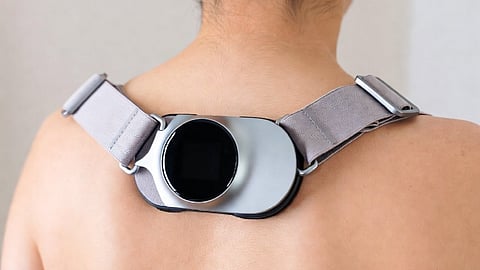
Smart posture trackers are small wearable devices placed on the upper back or neck. They are designed with motion sensors that continuously monitor spinal alignment and detect slouching in real time.
Unlike traditional braces, these devices are lightweight, discreet, and built for daily use. They integrate with mobile technology to provide real-time feedback and long-term posture insights, making them practical for consistent use.
These devices rely on accelerometers, gyroscopes, and posture sensors to track body position. Once activated, they establish a baseline for correct posture and continuously compare your posture against that standard.
When you begin to slouch, the device delivers a gentle vibration. This immediate feedback increases awareness and encourages you to correct your posture instantly. Over time, this repeated correction helps train the body to maintain proper alignment naturally.
Research such as the study titled “Wearable Posture Monitoring System with Vibration Feedback” highlights how real-time vibration alerts can effectively notify users of posture deviations and improve awareness. Additional clinical research also supports that wearable posture systems can detect spinal misalignment and provide timely feedback to correct it.
Real-Time Vibration Alerts
Devices vibrate when poor posture is detected. This acts as a subtle reminder rather than forcing the body into position.
App Integration and Data Sync
Most posture trackers connect to mobile apps where users can
Track posture habits over time
View daily and weekly performance
Receive posture insights and progress reports
Some platforms also provide visual posture mapping to improve understanding of alignment.
Habit Tracking and Behavioral Insights
These devices are designed for long-term improvement. Instead of temporary fixes, they build awareness and consistency through continuous monitoring.
Customizable Settings
Users can adjust sensitivity levels, posture thresholds, and alert frequency based on comfort and activity. This makes them suitable for sitting, standing, or walking.
Scientific evidence shows that wearable posture trackers can improve posture awareness and alignment in the short term. A 2025 study titled “Effectiveness of Wearable Devices for Posture Correction” reported improvements in posture, reduced discomfort, and better body awareness among users.
Clinical observations also suggest that these devices may help reduce forward head posture and shoulder misalignment. However, experts consistently emphasize that long-term results depend on combining wearable use with exercise, strengthening, and ergonomic adjustments.
Smart posture trackers should be seen as supportive tools rather than complete solutions.
Traditional posture braces hold the body in a fixed position. While they may offer temporary support, they do not encourage awareness or muscle engagement.
Smart posture trackers promote active correction. They train users to recognize and fix poor posture themselves. This leads to stronger habits and more sustainable results.
They also provide data and feedback, which older solutions lack. This makes progress measurable and personalized.
Behavior Correction
Ideal for individuals who want to break the habit of slouching through active awareness.
Students
Helpful for managing long study hours and reducing posture-related strain from screens.
Working Professionals
Useful for those with desk-based jobs who need consistent reminders throughout the day.
Long-Term Habit Building
Best suited for people focused on gradual, sustainable posture improvement rather than quick fixes.
Smart posture trackers represent a shift toward active, habit-based posture correction. By combining sensor technology, real-time feedback, and data tracking, they help users build awareness and improve posture over time.
When used alongside exercise and proper ergonomics, these devices can play a meaningful role in supporting spinal health and preventing long-term posture issues.
References:
1. Simpson, L. 2019. “The Role of Wearables in Spinal Posture Analysis.” Journal of NeuroEngineering and Rehabilitation. https://pmc.ncbi.nlm.nih.gov/articles/PMC6368717/
2. Freedom Physical Therapy Services.
“Is a Wearable Postural Correction Device For You?” Accessed April 24, 2026. https://freedompt.com/wearable-postural-correction-device/
