
- Home
- About Us
- Contact Us
- Biography
- MedBound Hub
- InternshipInternship
- Daily Pulse
- Medicine
- Physical Therapy
- InterviewInterview
- Pharmacy
- Biotechnology
- College/InstituteCollege/Institute
- Dentistry
- Blog
- Wellness & Nutrition
- Nursing
- Opinion

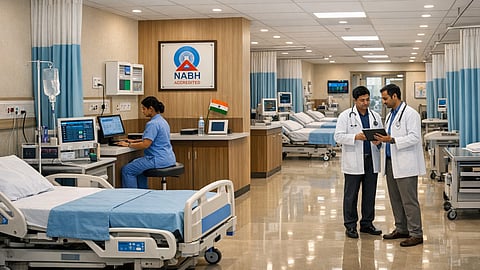
Lucknow is witnessing a steady rise in newly NABH-accredited hospitals, especially among mid-sized private institutions.
National Accreditation Board for Hospitals & Healthcare Providers accreditation is becoming a key marker of patient safety and quality standards in hospitals.
Government schemes like Ayushman Bharat are encouraging hospitals to adopt accreditation for wider patient access.
Increasing patient awareness and demand for standardized care is influencing hospital selection in urban India.
Lucknow’s growth reflects a broader trend of hospital accreditation expanding beyond metro cities into emerging healthcare hubs.
Accreditation has become an increasingly important marker of quality in India’s healthcare system. The National Accreditation Board for Hospitals & Healthcare Providers (NABH) sets standards for patient safety, clinical protocols, and hospital management. Traditionally associated with large corporate hospitals in metropolitan cities, accreditation is now being adopted by mid-sized and emerging healthcare institutions.
In recent years, Lucknow has witnessed a noticeable increase in newly NABH-accredited hospitals in Lucknow that are relatively lesser known. This pattern suggests a broader shift in how healthcare institutions in urban centres are aligning with national quality benchmarks.
NABH functions under the Quality Council of India and establishes standards for healthcare providers across the country.¹ Hospitals are evaluated on parameters such as patient rights, infection control, medication management, facility safety, and continuous quality improvement, all of which contribute to maintaining quality standards in hospitals.²
According to NABH listings, the number of accredited hospitals in India has steadily increased over recent years.²
NABH accreditation is structured into different levels, including entry-level certification and full accreditation, allowing hospitals at different stages of development to adopt standardized practices.²
Accreditation frameworks emphasize standardized documentation and clinical protocols, which are considered essential for continuity of care.³ Accreditation plays a key role in improving patient safety standards in hospitals.
Evidence from Indian studies suggests that NABH accreditation is associated with improvements in documentation, infection control practices, and patient care processes, although implementation varies across institutions.³
Accreditation is not a one-time process. Hospitals undergo periodic assessments to ensure continued compliance.² Accredited hospitals are required to maintain continuous quality indicators and undergo reassessment to retain accreditation status.²
NABH accreditation is also linked to empanelment under government schemes such as the Central Government Health Scheme, which further incentivizes hospitals to meet quality benchmarks.²
In addition to improving internal systems, NABH accreditation is often linked to empanelment under insurance schemes and government programmes such as Ayushman Bharat, which expands access to cashless treatment for eligible patients.⁴
As the capital of Uttar Pradesh, Lucknow serves as a centre for healthcare administration and regulatory implementation. This proximity allows hospitals to adopt accreditation frameworks more efficiently.
Lucknow has seen the expansion of mid-sized private hospitals offering multispecialty and focused care. These institutions are increasingly transitioning toward structured clinical and administrative systems aligned with hospital accreditation in India.
Public health insurance initiatives such as Ayushman Bharat have influenced hospital participation in accreditation. NABH certification improves eligibility for empanelment and supports cashless care delivery models.⁴
Patients are becoming more aware of quality indicators in healthcare. Accreditation is gradually being recognized as a marker of standardized care, influencing hospital selection.
Nearby metropolitan centres such as Delhi often experience higher patient loads and costs. This contributes to patient movement toward cities like Lucknow, where hospitals are strengthening quality standards to meet demand.
New hospitals and expansions in Lucknow are increasingly being planned with compliance requirements in mind. This reduces the time required to meet NABH standards and supports faster accreditation.
This broader shift is reflected in a cluster of NABH-accredited hospitals in Lucknow, many of which are mid-sized institutions transitioning toward standardized systems.
Location: B-1, Kanpur–Lucknow Road, behind Krishna Nagar Metro Station, Sindhu Nagar, Lucknow, Uttar Pradesh 226023
Lucknow Hospital provides emergency services and surgical care, including general surgery and gastroenterology-related services. The hospital also offers services in departments such as internal medicine, orthopedics, and critical care, reflecting a multidisciplinary approach to patient management.⁵
The Centre for Neurosciences & Trauma focuses on neurology, neurosurgery, and trauma management, with facilities for neurocritical care and emergency services. The hospital also includes diagnostic services such as imaging and supports specialties like orthopedics and intensive care for trauma patients.⁶
Location: A-3, Nirala Nagar, Lucknow, Uttar Pradesh 226020
Globe Medicare offers multispecialty outpatient and inpatient services, reflecting the transition of mid-sized hospitals toward structured healthcare delivery. According to its official information, the hospital also provides services in specialties such as cardiology, nephrology, oncology, and urology.⁷
Location: Sector 4, Vasant Khand, Gomti Nagar, Lucknow, Uttar Pradesh 226010
Healthcity Vistaar Superspeciality Hospital offers superspecialty services within a modern healthcare infrastructure. The facility includes departments such as cardiology, orthopedics, oncology, radiology, and critical care, supporting a broad range of advanced medical services.⁸
Location: Jainabad, Goyala, Deva Road, near Chinhat, Lucknow, Uttar Pradesh 226028
RSD Samarpan Hospital provides services across departments such as medicine, surgery, and critical care. Its departments also include obstetrics and gynecology, pediatrics, orthopedics, and emergency services, indicating a comprehensive multispecialty setup.⁹
Location: Amar Shaheed Path, near Ekana Stadium Road, Gomti Nagar Extension, Lucknow, Uttar Pradesh 226002
Tender Palm Hospital provides obstetric, gynecological, and general healthcare services, including maternal and newborn care. The hospital also offers services in pediatrics, internal medicine, and surgical care, supporting family-centered healthcare delivery.¹⁰
The increasing number of NABH-accredited hospitals in Lucknow reflects a shift toward structured and standardized healthcare delivery. Studies have shown that accreditation frameworks contribute to improved hospital processes, including documentation and patient safety practices.³
This shift may contribute to more uniform clinical practices and improved patient safety across different tiers of hospitals.³
It may also reduce variation in clinical practices between hospitals by promoting adherence to standardized protocols.³
This trend indicates that accreditation is expanding beyond large hospitals and is being adopted by mid-sized institutions that serve a significant portion of the population.
Lucknow’s emergence as a hub for newly NABH-accredited hospitals in Lucknow is influenced by administrative factors, private sector growth, insurance-linked incentives, and evolving patient expectations.
These developments indicate a broader transition in India’s healthcare system, where standardized quality frameworks are being integrated into a wider range of hospitals.
This shift reflects a gradual movement toward more consistent healthcare delivery across different levels of the system.
Lucknow is not just expanding its healthcare infrastructure. It is steadily aligning a growing number of its hospitals with national standards for patient care.
What is NABH accreditation in India?
National Accreditation Board for Hospitals & Healthcare Providers accreditation is a quality certification that ensures hospitals follow standardized protocols for patient safety, clinical care, and hospital management.
Why are more hospitals in Lucknow getting NABH accreditation?
Hospitals in Lucknow are increasingly adopting NABH accreditation due to policy support, rising patient awareness, insurance-linked incentives, and the need to meet standardized healthcare quality benchmarks.
Are NABH-accredited hospitals better for patients?
NABH-accredited hospitals follow defined clinical protocols, infection control measures, and patient safety standards, which can contribute to more consistent and structured healthcare delivery.
How can patients identify NABH-accredited hospitals in Lucknow?
Patients can check the official NABH website or look for accreditation certificates displayed within hospitals. Many hospitals also mention their NABH status on their official websites.
Quality Council of India. “National Accreditation Board for Hospitals & Healthcare Providers (NABH).” Accessed April 2026. https://nabh.co/
National Accreditation Board for Hospitals & Healthcare Providers. “Accreditation Programme.” Accessed April 2026. https://nabh.co/
Indian Journal of Public Health. “Effect of National Accreditation Board for Hospitals on Hospital Performance.” 2024. https://journals.lww.com/ijph/fulltext/2024/10000/effect_of_national_accreditation_board_for.6.aspx
National Health Authority. “Ayushman Bharat Pradhan Mantri Jan Arogya Yojana (PM-JAY).” https://pmjay.gov.in/
Lucknow Hospital. “About Us.” http://www.lucknowhospital.com/about.aspx
Centre for Neurosciences & Trauma Hospital. “About Us.” https://cnshospital.com/about-us
Globe Medicare. “Official Website.” https://globehealthcare.org/
Healthcity Vistaar Superspeciality Hospital. “About Us.” https://healthcityvistaar.com/about-us/
RSD Samarpan Hospital. “Departments.” https://www.rsdsh.org.in/departments
Tender Palm Hospital. “About Us.” https://www.tenderpalm.com/about-us
