
- Home
- About Us
- Contact Us
- Biography
- MedBound Hub
- InternshipInternship
- Daily Pulse
- Medicine
- Physical Therapy
- InterviewInterview
- Pharmacy
- Biotechnology
- College/InstituteCollege/Institute
- Dentistry
- Blog
- Wellness & Nutrition
- Nursing
- Opinion

By Meghan Galaxy
Mesothelioma is a rare cancer that begins in the thin tissue covering certain organs. It most often affects the lining around the lungs, but it can also develop around the abdomen, heart, or testicles. Because early symptoms can resemble common breathing or stomach problems, the disease is often hard to recognize.
For families facing a diagnosis, medical questions may mix with concerns about workplace exposure and financial support. Speaking with a corpus christi mesothelioma law firm can help Texas patients understand whether past asbestos exposure may support a legal claim while they focus on treatment and family needs.
Learning the basics can make conversations with doctors less overwhelming. Here is a look at what causes mesothelioma, which warning signs deserve attention, how doctors diagnose it, and which treatments are available.
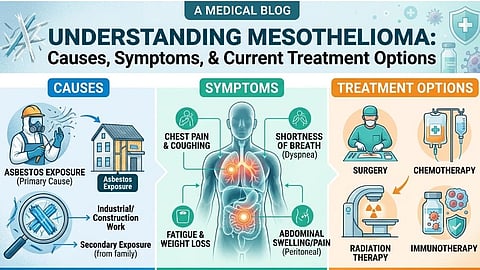
Exposure to asbestos is the leading known cause of mesothelioma. Asbestos is a group of heat-resistant minerals once widely used in insulation, construction products, shipbuilding materials, automotive parts, and industrial equipment.
When asbestos-containing material is cut, damaged, or disturbed, tiny fibers may enter the air. A person can breathe in or swallow them. Some fibers remain in the body, causing irritation and cellular damage over many years.
People were commonly exposed in:
Construction and demolition
Shipyards and naval service
Power plants and refineries
Automotive brake repair
Manufacturing and factory work
Plumbing and insulation trades
Family members may also have faced secondary exposure. Workers sometimes carried asbestos dust home on clothing, shoes, hair, or tools before modern safety practices became common.
Mesothelioma has a long latency period, meaning it may not appear until decades after exposure. Someone exposed at work in early adulthood might not notice symptoms until much later in life.
Symptoms vary depending on where the cancer develops. Pleural mesothelioma affects the lining around the lungs and is the most common form of the disease.
Possible pleural symptoms include:
Shortness of breath
Ongoing cough
Pain beneath the ribs
Chest tightness
Unexplained weight loss
Severe tiredness
Fluid may collect between the lung and chest wall, making breathing harder. This is called a pleural effusion.
Peritoneal mesothelioma develops in the abdominal lining. It may cause abdominal pain or swelling, constipation, nausea, reduced appetite, weight loss, or lumps in the abdomen.
These symptoms do not automatically mean someone has cancer. Many illnesses cause similar problems. Still, anyone with past asbestos exposure should tell their doctor and avoid ignoring symptoms that persist or worsen.
Imaging may include a chest X-ray, CT scan, MRI, or PET scan to look for fluid, thickened tissue, or unusual growths.
Imaging alone usually cannot confirm mesothelioma. Doctors often need a biopsy, which removes tissue or fluid for laboratory testing. A pathologist examines the sample to identify the cancer and cell type.
Treatment is different for every patient. Doctors consider the type, stage, cell pattern, tumor location, symptoms, prior care, and overall health.
Surgery may be considered when the cancer is limited enough to remove and the patient can handle a major operation. Procedures may remove diseased chest lining, nearby tissue, or, in selected cases, an entire lung.
Chemotherapy uses drugs that travel through the body to kill or slow cancer cells. Pemetrexed combined with a platinum drug, such as cisplatin or carboplatin, remains a common approach.
It may be given before or after surgery, or when surgery is not possible. Side effects can include fatigue, nausea, low blood counts, appetite changes, and infection risk.
Immunotherapy works by helping the body’s immune system identify and fight cancer cells. Nivolumab combined with ipilimumab is a first-line option for certain adults with unresectable pleural mesothelioma.
Pembrolizumab combined with pemetrexed and platinum chemotherapy is another first-line option for unresectable advanced or metastatic pleural mesothelioma. The best choice depends on cancer features, health conditions, and possible side effects.
Radiation may shrink tumors, relieve pain, or treat a specific area. It may also be used around surgery in selected cases.
Supportive care matters at every stage. Doctors can drain chest fluid, reduce repeat fluid buildup, manage pain, support nutrition, and address breathing problems. Palliative care can be provided alongside cancer treatment.
A second opinion may confirm the diagnosis, clarify whether surgery is realistic, or reveal a clinical trial. Patients should bring pathology reports, scans, medication lists, and exposure details.
Mesothelioma is serious, but patients now have more treatment choices than they once did. Surgery, chemotherapy, immunotherapy, radiation, symptom management, and clinical trials may all play a role.
The best next step is an evaluation by a team familiar with mesothelioma. Early planning helps patients understand their options, manage symptoms, and make decisions that reflect their health and goals.
No. Lung cancer begins inside lung tissue. Pleural mesothelioma begins in the lining around the lungs, although both can cause breathing problems and chest pain.
No amount of asbestos exposure is considered completely safe. Risk generally rises with heavier or longer exposure, but some patients report limited contact.
It is often difficult to cure because it may be found after spreading. However, treatment can slow the disease, relieve symptoms, extend survival, and improve comfort.
Anyone with a new diagnosis may benefit, especially when surgery, immunotherapy, or a clinical trial is being considered. A specialist can also confirm the cancer type.
MBTpg
