
- Home
- About Us
- Contact Us
- Biography
- MedBound Hub
- InternshipInternship
- Daily Pulse
- Medicine
- Physical Therapy
- InterviewInterview
- Pharmacy
- Biotechnology
- College/InstituteCollege/Institute
- Dentistry
- Blog
- Wellness & Nutrition
- Nursing
- Opinion
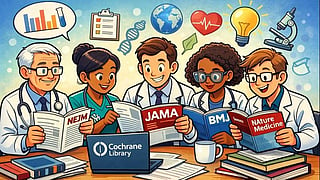

Every day, thousands of new medical studies are published around the world, but only a small proportion provide the high-quality evidence that influences clinical guidelines, healthcare policy, and patient care. For doctors, medical students, researchers, nurses, pharmacists, and other healthcare professionals, following trusted peer-reviewed medical journals remains one of the most reliable ways to stay informed about evidence-based medicine and advances in clinical practice.
Medicine is constantly evolving. New treatments emerge, existing therapies are refined, and clinical recommendations change as stronger scientific evidence becomes available. Staying current with these developments is essential not only for continuing professional education but also for delivering safe, effective, and evidence-based patient care.
Peer-reviewed medical journals remain the most reliable way to access validated medical knowledge. While thousands of journals exist, only a few consistently influence how medicine is practiced, taught, researched, and regulated worldwide.
Choosing the right journal depends on your area of practice and learning goals. Some journals focus on landmark clinical trials, while others emphasize public health, evidence synthesis, translational science, or medical education. The journals below are among the most respected publications in medicine and are widely used by clinicians, researchers, educators, and policymakers worldwide.
This article highlights six such journals and explains why they matter in everyday healthcare.
The table below compares the primary focus and ideal readership of each journal.
These journals differ in their scope, audience, and type of evidence they publish. Selecting the right one depends on whether your focus is clinical practice, research, public health, or medical education.
What It Covers
The New England Journal of Medicine (NEJM) publishes research across major clinical specialties, including internal medicine, cardiology, oncology, infectious diseases, neurology, endocrinology, and critical care.
Why It Matters
The journal is known for high-quality clinical trials and large studies that often change how diseases are treated. Many international treatment guidelines are influenced by evidence first reported in NEJM.
Clinical Value
Its strong focus on real-world outcomes makes NEJM especially relevant for clinicians making day-to-day decisions at the bedside.
NEJM is also recognized as one of the world's most influential medical journals and regularly publishes studies that shape recommendations from professional medical societies and healthcare organizations.
What It Covers
The Lancet goes beyond individual patient care to examine health at the population level. It addresses global health challenges, disease burden, health systems, and health equity.
Why It Matters
The journal publishes large international studies and policy-relevant research that often guide global health discussions.
Broader Impact
Healthcare professionals involved in public health, policy, or global medicine benefit from The Lancet’s wide-angle view of health and disease.
The Lancet is particularly well known for publishing influential global health commissions and multidisciplinary research addressing emerging public health challenges.
What It Covers
The Journal of the American Medical Association (JAMA) combines clinical research with medical education, ethics, and healthcare policy, making it relevant across specialties.
Why It Matters
Articles are presented in a clear and structured way, helping readers understand both the science and its practical implications.
Professional Relevance
JAMA is particularly helpful for clinicians and trainees navigating ethical dilemmas, regulatory issues, and evolving healthcare systems.
Its Clinical Guidelines Synopsis, Diagnostic Test Interpretation, and evidence review articles make it especially valuable for healthcare professionals seeking concise, practice-oriented updates.
What It Covers
The British Medical Journal (BMJ) focuses on evidence-based practice, patient safety, and quality of care. It is widely respected for promoting transparency in medical research.
Why It Matters
The journal encourages clinicians to question unnecessary tests and treatments and to reflect on how medicine is practiced.
Everyday Use
Its clinical reviews and practice-focused articles are especially useful for routine clinical decision-making.
BMJ also publishes clinical practice guidelines, opinion pieces, and educational content that support continuing professional development across healthcare disciplines.
What It Covers
The Cochrane Library specializes in systematic reviews and meta-analyses that summarize evidence from multiple studies.
Why It Matters
By carefully evaluating existing research, Cochrane reviews help clarify what works, what does not, and where uncertainty remains.
Evidence-Based Importance
These reviews are widely used when developing clinical guidelines and health policies, especially in areas with conflicting evidence.
What It Covers
Nature Medicine focuses on translational research, linking laboratory discoveries with clinical application.
Why It Matters
It highlights advances in areas such as genomics, immunotherapy, and precision medicine, often before they reach routine clinical use.
Looking Ahead
For clinicians and researchers interested in future therapies and technologies, this journal offers early insight into where medicine is heading.
Different journals serve different purposes depending on your role and interests.
While journal impact factors are updated annually and should not be viewed as the sole indicator of quality, journals such as NEJM, The Lancet, Nature Medicine, BMJ, and JAMA consistently rank among the world's most influential and widely cited medical publications. Their research frequently informs international clinical guidelines, healthcare policies, and future scientific investigations.
Access policies vary by publisher. While many articles require a subscription, several of these journals provide free editorials, selected research articles, clinical summaries, podcasts, newsletters, educational resources, or open-access content. Some research is also made freely available during public health emergencies or through open-access publishing models.
Each of these journals serves a distinct purpose in healthcare.
Whether you are a medical student, practicing clinician, researcher, or public health professional, regularly reading trusted medical journals helps you stay informed about the latest evidence, improve clinical decision-making, and support lifelong learning.
Choosing a combination of journals rather than relying on a single publication offers a broader perspective on modern healthcare.
Which medical journal has the highest impact?
Impact factors change every year, but journals such as The New England Journal of Medicine, The Lancet, Nature Medicine, JAMA, and BMJ consistently rank among the world's most influential and highly cited medical journals.
Which medical journal is best for doctors?
There is no single best journal for every doctor. Practicing clinicians commonly follow NEJM, BMJ, and JAMA for clinically relevant research and evidence-based practice, while specialists often read journals within their own medical fields.
Is NEJM better than The Lancet?
Neither journal is universally better. NEJM is widely recognized for publishing landmark clinical trials and practice-changing clinical research, whereas The Lancet has a broader emphasis on global health, public health, and health policy in addition to clinical medicine.
Are medical journals free?
Some medical journals require subscriptions, while others provide open-access articles or make selected content freely available. Many publishers also offer free educational resources, editorials, podcasts, and clinical summaries.
Why are peer-reviewed medical journals important?
Peer review helps ensure that research is critically evaluated by experts before publication, improving scientific quality, accuracy, and reliability. Healthcare professionals rely on peer-reviewed journals to support evidence-based clinical practice and informed decision-making.
The New England Journal of Medicine. About NEJM. https://www.nejm.org/about-nejm/about-nejm
The Lancet. About The Lancet. https://www.thelancet.com/about-us
Journal of the American Medical Association (JAMA). About JAMA. https://jamanetwork.com/journals/jama/pages/about-jama
The BMJ. About The BMJ. https://www.bmj.com/about-bmj
Cochrane Library. About the Cochrane Library. https://www.cochranelibrary.com/about/about-cochrane-library
Nature Medicine. Aims & Scope. https://www.nature.com/nm/aims
Clarivate. Journal Citation Reports. https://clarivate.com/academia-government/scientific-and-academic-research/research-discovery-and-workflow-solutions/journal-citation-reports/
