

The proposed changes to zero-hours contracts by the UK government have raised some concerns from leaders within the NHS and fire services.
These changes, as part of the Labour Government's rights for workers agenda, aim to improve worker security. Eligible workers will get guaranteed hours offers based on their usual patterns. Employers will also have to provide reasonable notice for shifts, and offer compensation if shifts are reduced, cancelled or changed with little notice. The government sought feedback on these proposed changes between June and August 2026. The exact date when the new rules will take effect has not yet been confirmed. The government is expected to provide an update after reviewing the feedback.
The changes will not completely end zero-hours contracts. Workers who are offered guaranteed hours can choose to reject the offer and continue working under a zero-hours contract if they prefer.
Although this aims to help workers avoid unpredictable shifts, NHS Employers believe this could cause issues with staffing flexibility in hospitals.
There are over 180,000 healthcare workers registered with NHS staff banks. These banks allow healthcare professionals to take up additional shifts at NHS hospitals when they are available, often alongside their regular jobs.
Of those working in staff banks, 85% already have a substantial contract in the NHS. They are taking on extra shifts as they wish to. Of those who work only in staff banks, 74% say they can work when they want to, and 79% would prefer to stay in staff banks.
NHS Employers believe this provides flexibility for both the hospital and workers. They fear that guaranteeing hours may cause issues. This could mean fewer people willing to take on extra shifts, meaning hospitals will have to use more agency staff. This could lead to increased staffing costs.
NHS Employers has suggested allowing bank staff to continue choosing their shifts instead of being offered guaranteed working hours. It has also recommended that NHS staff who already have permanent contracts should not be covered by these rules when they take up extra shifts through staff banks.
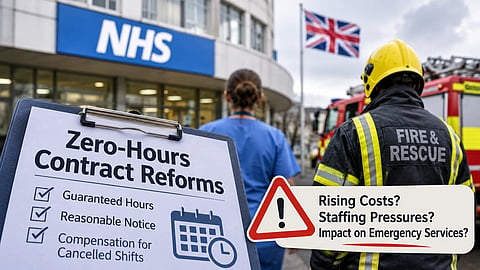
NHS Employers believe this could cost the NHS up to £900 million a year.
They also believe the NHS may need at least 800 extra full-time equivalent administration roles, and around 610 full-time equivalent management roles.
This could include looking at staff patterns, offering contracts, managing shift changes and compensation claims.
It should be noted that this is just an estimate from NHS Employers. They have highlighted that the financial impact should be considered.
Fire services representatives have also raised concerns. Around one third of firefighters work on a zero-hours basis. Many of these are retained or on-call firefighters who have other roles outside of the fire service.
As emergency call-outs cannot always be planned, fire service representatives believe it will be difficult to guarantee hours. There may be additional costs to services as they will have to ensure there are enough staff across over 1,000 fire stations. While guaranteeing hours, they may have extra costs as firefighters will not be needed for certain hours.
The government states that these changes aim to improve insecure employment. Unions have supported this as they want to improve protection for those who have unpredictable hours and earnings.
A government spokesperson said the responses received during the consultation were being considered to ensure the new employment rights work in practice, including in the NHS and other public services.
Rh/MF/MSM
