
- Home
- About Us
- Contact Us
- Biography
- MedBound Hub
- InternshipInternship
- Daily Pulse
- Medicine
- Physical Therapy
- InterviewInterview
- Pharmacy
- Biotechnology
- College/InstituteCollege/Institute
- Dentistry
- Blog
- Wellness & Nutrition
- Nursing
- Opinion

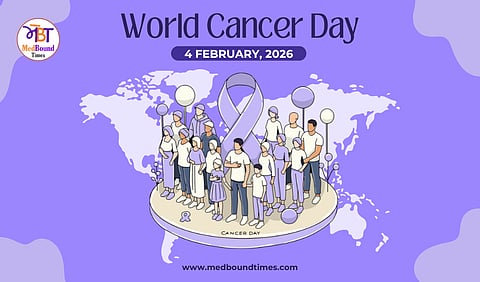
World Cancer Day is observed annually on February 4 to raise awareness, promote prevention, and encourage early detection and treatment.
The World Cancer Day 2026 theme is “United by Unique,” emphasizing people-centered and personalized cancer care explained through individual needs and experiences.
Prevention, early screening, and equitable access to treatment remain central to reducing the global cancer burden.
Advances such as biomarker testing in oncology and targeted therapy in cancer treatment are reshaping modern cancer care.
Clinicians increasingly adapt treatment plans based on tumor biology, patient priorities, and quality of life considerations.
World Cancer Day, observed annually on February 4, is a global initiative aimed at raising awareness about cancer, encouraging cancer prevention, screening, treatment, and fostering collective action to address the global cancer burden. The day is led by the Union for International Cancer Control (UICC) and has been observed since it was established through the Charter of Paris Against Cancer during the World Summit Against Cancer for the New Millennium on February 4, 2000.
World Cancer Day serves as a unifying platform on which individuals, healthcare providers, researchers, policymakers, and communities worldwide highlight the challenges associated with cancer and work toward solutions. It focuses on:
Raising awareness about cancer as a major public health issue;
Encouraging early detection and timely treatment, which are critical for improving survival outcomes;
Promoting cancer prevention strategies including lifestyle modifications and access to vaccines; and
Mobilising collective action to reduce inequalities in cancer care globally.
Cancer remains one of the leading causes of death worldwide, with millions of new cases and deaths annually and significant disparities in access to care between regions and populations.
The official theme for World Cancer Day 2026 is “United by Unique.” This theme is part of a broader three-year campaign (2025–2027) that places people at the center of cancer care and highlights the importance of personalized cancer care explained through patient-centered approaches.
“United by Unique” has two key ideas:
Every individual’s cancer experience is unique, influenced by their biology, environment, lifestyle, and personal circumstances.
While experiences may differ, the global community is united in the shared goal of improving cancer outcomes through better prevention, diagnosis, treatment, and supportive care.
World Cancer Day has always tried to raise awareness about early detection and prevention strategies.
Prevention - Many cancers are preventable by addressing modifiable risk factors such as tobacco use, harmful alcohol consumption, physical inactivity, unhealthy diets, and environmental exposures. HPV vaccination significantly reduces the risk of cervical cancer.
Early Detection and Screening - Regular screenings for specific cancers (e.g., breast, cervical, colorectal) significantly improve the chances of successful treatment.
Accessible Treatment and Care - Ensuring equitable access to effective cancer treatments, including surgery, radiation, systemic therapies, targeted therapy in cancer treatment, and supportive care is essential to reducing mortality and improving quality of life.
Participation in World Cancer Day activities takes many forms and may include:
Awareness campaigns and educational events to inform the public about cancer risks and prevention;
Community walks, runs, and local events that bring together survivors, healthcare professionals, and advocates;
Sharing personal stories or artwork to inspire and educate others;
Encouraging friends and family to undergo regular screening based on clinical guidelines.
This inclusive approach supports both individual action and broader public health goals.
In an interview with MedBound Times, Dr. K. Sreekanth, MS, MCh (Surgical Oncology), Senior Consultant Surgical Oncologist at Yashoda Hospitals, Hyderabad, explained how personalised cancer care is built through continuous decision-making rather than a fixed, one-time plan.
He illustrated this through the case of a man who first consulted him at the age of 55 with stage IV rectal cancer that had already spread to the liver and lymph nodes.
At this advanced stage, Dr. Sreekanth noted that based on standard oncological data and his clinical experience, average survival is approximately one to one-and-a-half years, and the treatment plan does not involve surgery. The initial treatment approach followed established oncology protocols, beginning with systemic chemotherapy.
Tumor tissue was simultaneously sent for genetic and biomarker testing to identify whether targeted therapies or immunotherapies could be effective. Although the genetic profile did not show highly favourable markers, a targeted monoclonal antibody (bevacizumab) was added to chemotherapy based on tumor location and known response patterns. Treatment response was monitored closely using blood tumor markers (CA) and imaging studies such as PET scans and MRI, which showed a meaningful reduction in both the primary rectal tumor and liver metastases.
As the disease evolved and his CA( Cancer antigen rose, treatment decisions were repeatedly adjusted and surgery was done based on the patient’s response, symptoms, and personal priorities.
Although surgery is not routinely recommended in metastatic rectal cancer without obstruction, the patient experienced significant daily distress due to bowel symptoms that affected his ability to travel and work.
After detailed discussion, surgery was performed outside standard protocol to improve quality of life and upon patient's request.
When cancer markers (CA) later rose again due to recurrent liver metastatic nodes, further genetic testing guided a switch to a different targeted therapy (cetuximab), followed by selective surgical removal of eight liver metastases, an approach typically avoided in cases with extensive spread but chosen here due to the patient’s request, overall fitness, informed consent, and sustained response to earlier treatments.
After a period, his CA rose again, surgery was no longer feasible in liver as it was already performed once, so targeted radiotherapy was used to control liver lesions.
Through this sequential, adaptive strategy, disease progression was repeatedly delayed, allowing the patient to remain active nearly three years after diagnosis, with improved bowel function and preserved daily independence. The patient is currently working actively and leading a quality life.
Dr. Sreekanth emphasized that such personalised treatment planning depends not only on tumor biology but also on patient-specific factors. These include genetic profiling of cancer cells, mental resilience, age, presence of other medical conditions, financial capacity, and most critically family support.
When asked about which are the main factors that affect the treatment outcome, he emphasized that financial ability and family support are the most important.
Dr. Srikanth explained that strong family involvement improves treatment adherence and outcomes by reducing psychological stress and ensuring continuity of care.
While younger patients often tolerate treatment better physically, their cancers may behave more aggressively, increasing recurrence risk. Dr. Sreekanth explains that "advances such as genetic profiling and biomarker testing now allow clinicians to identify therapies that act selectively on cancer cells while sparing normal tissue, improving effectiveness and reducing side effects."
He explains that, "genetic profiling is a modern approach in cancer care where doctors study the DNA of tumor cells using advanced tests like next-generation sequencing. Even if patients have the same type of cancer, such as breast or lung cancer, their tumor cells behave differently because each person’s genetic makeup is unique. By analyzing the tumor’s DNA, doctors can identify specific changes or biomarkers that indicate which treatments, such as targeted therapy, immunotherapy, or monoclonal antibodies are most likely to work."
When a tumor shows certain biomarkers (for example, EGFR in lung cancer, HER2 in breast cancer, or BRAF in melanoma), specific drugs can precisely target those cancer cells. These treatments act mainly on cancer cells rather than normal cells, leading to better response rates, improved survival, and fewer side effects compared to traditional chemotherapy. This approach, often called personalized or precision medicine, helps tailor treatment to each patient for more effective cancer care.
According to Dr. Sreekanth, personalised cancer care does not replace evidence-based protocols but builds upon them, ensuring that treatment decisions reflect both scientific data and the individual patient’s biology, circumstances, and goals, ultimately improving survival and quality of life, even when cure is not possible.
When is World Cancer Day?
World Cancer Day is observed every year on February 4 to promote awareness, prevention, early detection, and equitable cancer care worldwide.
What is the World Cancer Day 2026 theme?
The World Cancer Day 2026 theme is “United by Unique,” highlighting the importance of people-centered and personalized approaches to cancer care.
Why is personalized cancer care important?
Personalized cancer care is important because it tailors treatment based on tumor biology, genetic markers, patient health, and individual priorities, helping improve outcomes, reduce side effects, and preserve quality of life.
