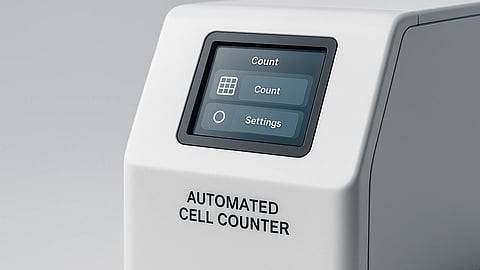
In the evolving landscape of laboratory science, automated cell counting technologies are changing the game. These innovations streamline processes, ensuring precision and efficiency in tasks once bogged down by manual labor. By embracing automation, laboratories are poised to enhance productivity and accuracy significantly.
Automated cell counting has transformed laboratory environments, offering unprecedented accuracy and speed. These technologies use advanced algorithms and imaging techniques to quickly quantify cells, eliminating the need for labor-intensive manual counting. In modern laboratories, this shift towards bioprocessing is crucial for maintaining competitiveness and meeting the demands of complex experiments. As laboratories integrate these systems, they can expect improved workflow and more reliable data analysis, which are essential for advancing scientific research.
Automated cell counting significantly boosts laboratory efficiency by reducing human errors commonly associated with manual counting methods. You will notice that automation systems provide consistent and precise results, which enhances the reliability of experimental data. This reduction in variability is vital for reproducibility in scientific experiments. Automation also allows for high-throughput analysis, enabling researchers to process larger sample sizes in less time.
The implementation of automated systems leads to considerable time savings, allowing scientists to focus on more critical aspects of their research. A task that would take hours manually can now be completed in minutes, thanks to these technologies. This increased throughput not only accelerates research timelines but also enhances the potential for discovery and innovation within the laboratory setting. The ability to handle large volumes of samples efficiently is a significant advantage in fast-paced research environments.
By integrating automated cell counting technologies, you can drive forward research and development efforts. These systems facilitate more sophisticated analyses, allowing researchers to explore complex biological questions with greater depth and precision. Automated counting provides consistent data that forms a solid foundation for innovative research approaches and applications.
Examples highlight successful implementations of these technologies across various fields of study. Laboratories focused on diverse research areas have adopted automated cell counters to streamline their processes, resulting in more accurate cell viability assessments. This enables researchers to explore potential treatments more effectively, ultimately advancing our understanding of diseases and potential therapies.
Despite their advantages, adopting automated cell counting technologies presents certain challenges that laboratories must navigate. Integrating these systems into existing workflows requires careful consideration of compatibility with current equipment and protocols. Training staff to use new technology effectively is essential to maximize its benefits without causing disruptions.
You must also consider the initial investment cost when transitioning to automated systems. However, many laboratories find that the long-term benefits, such as increased efficiency and reduced errors, justify the upfront expenses. Careful planning and strategic implementation are key to overcoming these challenges and unlocking the full potential of automated cell counting systems in your laboratory environment.
MBTpg