Top 5 Biotechnology Articles of 2025 on MedBound Times

The most impactful biotech stories of 2025, from artificial blood to AI-driven cancer detection
Abstract biotechnology landscape showing flowing DNA strands transforming into medical devices, AI circuits merging with biological cells, nanobots at microscopic scale
A roundup of MedBound Times’ most read biotechnology stories of 2025, covering AI, diagnostics, ethics, and innovation.AI image

2025 has been a landmark year in biotechnology and medical science. From universal artificial blood to portable cancer screening tools, innovations have pushed the boundaries of what is possible in diagnostics, treatment, and research ethics. Here are the most read and impactful biotech stories published by MedBound Times in 2025.

A close-up of laboratory test tubes filled with varying shades of red and purple blood, with blue caps.
Japan's artificial blood defies tradition, delivering compatibility, safety, and extended shelf life.AI image

In one of the most transformative developments of 2025, Japanese researchers reported a universal artificial blood product that could ease global blood shortages and change emergency care. The synthetic blood uses hemoglobin vesicles encapsulated in lipid membranes to mimic red blood cells. Because all blood type antigens are removed, the product can be given to anyone without typing. It also has a significantly longer shelf life than donated blood and does not require strict cold storage.

Why It Trended

The global shortage of blood supplies, especially in emergency and rural settings, makes universal blood a pressing need. This innovation represented a major step toward solving that challenge.

Latest Updates

Clinical trials led by Nara Medical University are underway in 2025, with the goal of validating safety and efficacy in broader populations. Japan aims to bring this technology into routine clinical use by 2030.

A humanoid robot and a medical researcher seated across a clinical trial desk
Artificial Intelligence is reshaping the clinical research ecosystem—driving innovation from protocol design to patient monitoring, while raising critical questions about ethics, equity, and data stewardshipAI image

This article examined how artificial intelligence is changing the clinical research ecosystem. It covered the many ways AI supports trials, from designing better protocols and analyzing complex data to improving patient recruitment and real-time monitoring. AI tools such as machine learning and natural language processing can process vast amounts of data, identify patterns, and help researchers adapt study designs dynamically. At the same time, the article discussed the risks associated with AI use, including issues of data privacy, algorithmic bias, and the need for ethical implementation and transparency.

Why It Trended

The article gained traction in 2025 as regulators, pharmaceutical companies, and research organizations worldwide expanded the use of AI driven tools in clinical development. Ongoing discussions around decentralized trials, real world data, and AI governance made the topic highly relevant to clinicians, researchers, and policymakers.

Latest Updates

AI tools are increasingly gaining regulatory acceptance globally. For example, the European Medicines Agency cleared an AI tool (AIM-NASH) for use in clinical trials for fatty liver disease, a step toward broader integration of AI in trial endpoints and data gathering. Additionally, the U.S. Food and Drug Administration qualified AI tools for liver disease drug development, demonstrating that AI is moving from concept to regulated clinical utility.

A gothic-inspired sketch of Mary Shelley writing Frankenstein by candlelight, with faint ghostly images of electricity, anatomy diagrams, and a shadowy figure of the Creature
Mary Shelley was only 18 when she began writing Frankenstein, published in 1818.AI image

This article on Frankenstein Day revisited the roots of modern medical science through the lens of Mary Shelley’s Frankenstein. Although literary in nature, the piece connected Shelley’s imagination to real scientific advancements. It explored historical and ethical links between early experiments in electricity and life with today’s technologies such as defibrillators, organ transplantation, neuromodulation, and bioprinting.

The article stood out for framing biotechnology in cultural context and reminding readers that today’s scientific achievements are built on centuries of inquiry and ethical reflection.

Why It Trended

The article resonated because 2025 saw intense global discussion about ethical frameworks for emerging biotech, including AI-assisted therapies, synthetic biology, and regenerative medicine.

Interest in the themes of Shelley’s classic surged not only because of ongoing debates about ethical frameworks for emerging technologies such as gene editing and synthetic biology, but also due to the cultural impact of the new 2025 Frankenstein film on Netflix. This adaptation, directed by Guillermo del Toro and starring Oscar Isaac and Jacob Elordi, premiered at the 82nd Venice International Film Festival on August 30, 2025, and was released on Netflix on November 7, 2025. The release of the film brought renewed global attention to Shelley’s work and to ethical questions about creation, responsibility, and the boundaries of science.

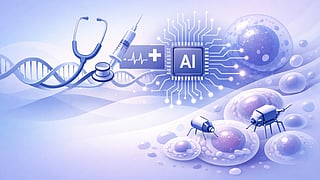
Image of Dr. Narayana Subramaniam
Now, diagnosing cancer could take just two minutes instead of days, enabling patients even in remote areas to access cutting-edge diagnostics on their own without visiting hospitals.Image from Dr. Narayana Subramaniam/Facebook and labs.dese.iisc.ac.in

In February 2025 the biotechnology world took note of a breakthrough covered in Detect Cancer in Two-Minutes!

This article reported on a novel diagnostic platform developed by collaborators in Bengaluru. Combining digital pathology with artificial intelligence, the device aims to screen cancer in under two minutes, drastically reducing diagnosis time compared to traditional methods. Supported by a US National Institutes of Health grant, this portable system could bring rapid cancer screening to underserved and remote areas.

Why It Trended

Cancer remains a leading cause of death globally, and delays in diagnosis contribute to poor outcomes. A fast, affordable diagnostic device could significantly improve early detection, especially in underserved regions. This article captured attention because it described a potentially revolutionary technology that could democratize cancer screening, especially in resource-limited settings.

Latest Updates

Developers secured a significant research grant from the National Institutes of Health in the United States for further development and clinical validation, with plans to scale testing and expand the device’s capabilities to detect other cancers beyond oral cancer.

Image showing IISc Researchers who developed  Magnetic Nanobots for Long-Term Sensitive Teeth Treatment.
IISc Researchers Develop Magnetic Nanobots for Long-Term Sensitive Teeth Treatment.@iiscbangalore/X

Also from Bengaluru, scientists from the Indian Institute of Science and a local startup Theranautilus , developed magnetic nanobots named CalBots. These microscopic bots can enter dentinal tubules and form durable seals that alleviate tooth sensitivity permanently.

Unlike traditional toothpastes that offer temporary relief, this nanobot treatment works at the anatomical source of sensitivity. Lab testing demonstrated deep penetration and effective sealing, with materials classified as safe and no observed toxicity in preliminary animal studies.

Why It Trended

Tooth sensitivity affects up to one in four people globally. A solution that provides lasting relief could improve quality of life for millions and represents a broader trend of nanotechnology moving into practical clinical innovations. This story combined cutting-edge nanotechnology with an everyday problem that affects millions, making it both scientifically intriguing and widely relatable.

What These Biotech Breakthroughs Mean for 2026

These top biotech articles of 2025 reflect a broader shift in biotechnology toward rapid diagnosis, global accessibility, ethical reflection, and materials innovation. From universal blood substitutes to AI-driven cancer screening and dental nanorobots, the stories that resonated with readers did so because they connected scientific progress to real-world impact.

If you are interested in how these trends evolve in 2026, MedBound Times will continue to bring in-depth coverage of advancements that matter to patient care, clinical practice, and scientific curiosity.

Abstract biotechnology landscape showing flowing DNA strands transforming into medical devices, AI circuits merging with biological cells, nanobots at microscopic scale
From Vaccines to Genomics: 10 Indian Biotech Trailblazers

Related Stories

No stories found.
logo
Medbound Times
www.medboundtimes.com