
- Home
- About Us
- Contact Us
- Biography
- MedBound Hub
- InternshipInternship
- Daily Pulse
- Medicine
- Physical Therapy
- InterviewInterview
- Pharmacy
- Biotechnology
- College/InstituteCollege/Institute
- Dentistry
- Blog
- Wellness & Nutrition
- Nursing
- Opinion

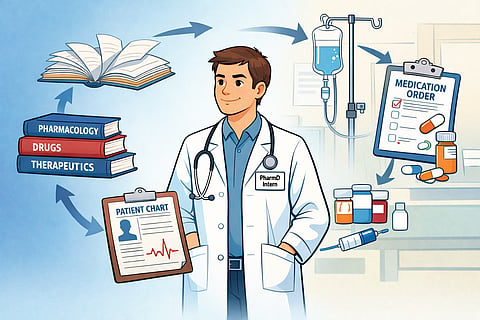
A 6th year PharmD clinical internship is a structured, year-long hospital training program in which students actively participate in supervised patient care, clinical rounds, and interprofessional healthcare delivery as part of their professional curriculum.
This article is a personal account intended to give fellow students and interested readers a realistic glimpse into what a 6th-year PharmD clinical internship looks and feels like.
This is the year when theory transforms from abstract concepts into life-saving actions.
Transition From Classroom to Clinical Setting
Making the leap from lecture halls to hospital wards is both thrilling and a bit daunting. Suddenly, pharmacology isn’t just about memorizing mechanisms; it’s about selecting the right medication for the right patient at the right moment.
Expectations vs Reality in Hospital Training
Many interns walk in expecting a smooth learning curve, but the reality often includes early mornings, lengthy rounds, and a barrage of questions. And honestly? That’s where the real education takes place.
Hospital Departments Covered During a 6th-Year PharmD Internship
One of the standout features of the PharmD internship is the chance to dive into various clinical departments, each providing its own unique learning opportunities.
General Medicine
General Surgery
Intensive Care Unit (ICU)
Pediatrics
Obstetrics and Gynecology
Emergency Department
Every department hones different clinical and communication skills, preparing interns for the diverse challenges they’ll face in their careers.
1. Common Conditions Encountered
General medicine truly serves as the foundation of clinical training. Right from the start, a variety of cases come pouring in.
2. Hypertension, Diabetes, and Infectious Diseases
Dealing with chronic conditions like hypertension and diabetes really highlighted the significance of long-term treatment, patient adherence, and effective counseling. The infectious disease cases underscored the importance of using antibiotics wisely and preventing resistance.
3. Learning Outcomes From the Surgery Department
Perioperative Medication Management
During my surgery rotations, I learned just how crucial it is to avoid even a single missed dose, as it can significantly impact patient outcomes.
Antibiotic Prophylaxis and Pain Control
Gaining insights into surgical prophylaxis, pain management, and post-operative care really drove home the need for precision in both dosing and timing.
4. Critical Care Exposure in the ICU During PharmD Internship
Monitoring High-Risk Medications
The ICU is where the intensity of pharmacology truly hits home. Medications like vasopressors, sedatives, and anticoagulants require constant vigilance.
Role of Clinical Pharmacist in ICU Rounds
Watching clinical pharmacists during rounds was eye-opening; their recommendations can make a real difference in saving lives.
5. Pediatric Department Experience During PharmD Clinical Training
Dose Calculations and Safety Challenges
Working in pediatrics taught me a valuable lesson in humility. A tiny miscalculation can lead to serious consequences.
Counseling Parents and Caregivers
Engaging with parents demanded a blend of empathy, patience, and clear communication—skills that no textbook can fully prepare you for.
6. Obstetrics and Gynecology Rotation: Medication Safety in Pregnancy
Medication Safety in Pregnancy and Lactation
This department really drove home the idea that not every medication is safe for everyone. Learning about FDA pregnancy categories and making evidence-based decisions was truly eye-opening.
7. Emergency Department Rotation: Fast-Paced Clinical Learning
Managing Acute Conditions
When it comes to emergencies, like myocardial infarction or anaphylaxis, quick thinking is essential.
Importance of Quick Clinical Decisions
In this environment, clinical judgment is just as crucial as knowledge. There’s no time to hit the pause button.
1) Prescription Review and Medication Reconciliation
Spotting drug interactions, duplications, and errors became second nature for me.
2) Patient Counseling and Communication
Breaking down therapies into simple terms really helped build patient trust and adherence.
3) Drug Information and Literature Evaluation
Incorporating evidence-based medicine into my daily routine became a habit, not just something I learned in school.
4) Interprofessional Collaboration in Healthcare
Working With Doctors, Nurses, and Pharmacists: Healthcare is definitely a team effort. Valuing each role made a noticeable difference in patient outcomes and boosted our professional confidence.
1. Knowledge Gaps and Confidence Issues
It’s important to remember that no one knows everything—and that’s perfectly fine. Learning to ask questions turned out to be a real strength.
2. Handling Workload and Time Management
Balancing case presentations, ward rounds, and self-study was tough, but ultimately rewarding.
Dealing with real patients brought real emotions into play. Ethics became more than just a theory; it became personal.
Impact of Clinical Internship on Career Goals
Choosing Between Clinical Practice, Research, and Medical Writing: This year really helped me clarify my career interests—whether it’s clinical pharmacy, research, pharmacovigilance, or even medical writing.
In India, the 6th year PharmD internship is a mandatory component defined under the Pharmacy Council of India curriculum. It is designed as a structured, supervised clinical training period conducted in recognized hospitals, with defined learning objectives, case documentation requirements, clinical presentations, and periodic assessment by academic and hospital preceptors. This framework ensures that PharmD graduates develop competencies aligned with patient-centered pharmaceutical care and clinical pharmacy practice.
The 6th-year clinical internship isn’t just a box to check off—it’s a real game changer. It is a formative phase that shapes professional identity, builds confidence, and reinforces responsibility toward patient care.healthcare professionals who are ready to make a real difference in the world.
What does a PharmD intern do in a hospital?
A PharmD intern participates in clinical rounds, reviews prescriptions, assists in medication reconciliation, counsels patients, evaluates drug information, and works alongside doctors and nurses under supervision.
Is the 6th year PharmD internship difficult?
Yes, the internship can be challenging due to long hours, clinical responsibilities, and the need to apply theoretical knowledge in real patient scenarios. However, it is also one of the most rewarding phases of PharmD training.
What skills do PharmD interns learn during internship?
Interns develop clinical decision-making, patient counseling, medication safety assessment, interprofessional communication, literature evaluation, and ethical responsibility in healthcare practice.
1. Pharmacy Council of India. Education Regulations 2020 for the PharmD Programme. New Delhi: PCI, 2020. https://pci.nic.in/education-regulations
