
- Home
- About Us
- Contact Us
- Biography
- MedBound Hub
- InternshipInternship
- Daily Pulse
- Medicine
- Physical Therapy
- InterviewInterview
- Pharmacy
- Biotechnology
- College/InstituteCollege/Institute
- Dentistry
- Blog
- Wellness & Nutrition
- Nursing
- Opinion

The 2026 British Academy Film Awards ceremony witnessed multiple on-stage disruptions after Tourette syndrome activist John Davidson shouted explicit language, including a racial slur, during the live event.
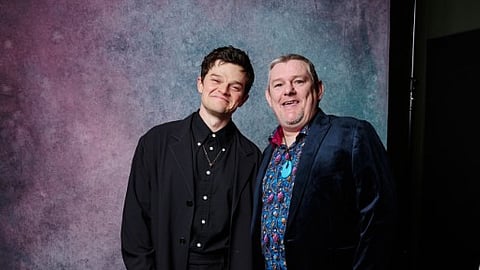
According to reports, Davidson, whose life inspired the film I Swear, was seated in the audience when actors Michael B. Jordan and Delroy Lindo were on stage. During their appearance on the stage, Davidson shouted the N-word.
Outbursts occurred during speeches as well. While BAFTA chair Sara Putt was addressing the audience, he shouted an obscenity telling her to "shut the f--- up". He also shouted "f--- you" when the directors accepting the award for Best Children’s and Family Film were on stage.
BAFTA host Alan Cumming interrupted the ceremony multiple times and issued at least one on-air apology for the swearing.
Reports further noted that during the broadcast, the BBC did not censor the racial slur when airing the show.
Davidson later confirmed that he left the show earlier when he got increasingly aware of the disturbances he was causing. He attended the event to show support for the film "I Swear" which is based on his life experiences and portrayed by Robert Aramayo. Robert Aramayo won both the Best Leading Actor and Rising Star awards at the 2026 BAFTA Film Awards for his role in I Swear.
Speaking to media after the event, Delroy Lindo stated that BAFTA organizers did not approach him or Michael B. Jordan following the ceremony. He added that Jordan and him "did what had to be done" in handling the situation during the live broadcast.
Following widespread criticism from viewers and several public figures, including actor Jamie Foxx, both British Academy Film Awards (BAFTA) and the BBC issued formal apologies.
The backlash intensified after it was noted that while portions of acceptance speeches, including references to “Free Palestine” by filmmaker Akinola Davies Jr., were reportedly edited, the racial slur directed at Michael B. Jordan and Delroy Lindo during the ceremony was not removed from the broadcast.
Jamie Foxx publicly questioned whether Tourette syndrome could account for the specific language used, stating that out of all possible words, the one spoken suggested intent rather than involuntary expression.
In a formal apology issued after the ceremony, BAFTA acknowledged that guests heard highly offensive language that carries profound trauma and pain for many people. The organization apologised to those affected and accepted responsibility for the situation. BAFTA stated that John Davidson MBE, who has Tourette syndrome and whose life inspired the nominated film I Swear, experiences involuntary verbal tics beyond his control. The statement clarified that such tics do not reflect an individual’s beliefs or intentions.
BAFTA said the audience had been informed prior to the ceremony and reminded during the event, that Davidson was present and might exhibit strong language or involuntary movements.
The organization apologised specifically to Michael B. Jordan and Delroy Lindo, who were on stage when the offensive term was shouted, and thanked them for their professionalism. It also noted that Davidson chose to leave the auditorium early and watch the remainder of the ceremony remotely.
The BBC separately apologised for not censoring the racial slur while airing the show. The broadcaster confirmed that the word remained on BBC iPlayer until Monday and stated that it would be removed from the on-demand version. The BBC said it regretted that the term had not been edited out prior to broadcast.
Tourette syndrome (TS) is a neurological disorder characterized by repetitive, involuntary movements and vocalizations called tics.
According to the National Institute of Neurological Disorders and Stroke (NINDS), Tourette syndrome typically begins in childhood, often between ages 5 and 10. Symptoms may improve during late adolescence or adulthood, though some individuals continue to experience tics throughout life.
Tourette syndrome involves two main categories of tics:
Eye blinking
Facial grimacing
Shoulder shrugging
Head jerking
Throat clearing
Grunting
Repeating words or phrases
In rare cases, involuntary swearing
Coprolalia refers to the involuntary utterance of socially inappropriate or taboo words, including obscenities or racial slurs. According to NINDS, only a minority of individuals with Tourette syndrome experience coprolalia.
It is important to note that coprolalia is not intentional and does not reflect the beliefs or character of the person experiencing it. The vocalizations are sudden, repetitive, and difficult to control.
The exact cause of Tourette syndrome is not fully understood. Research suggests involvement of:
Genetic factors
Differences in brain circuits involving movement control
Neurotransmitter imbalances, particularly dopamine
Tourette syndrome is often associated with other conditions such as:
Attention-deficit/hyperactivity disorder (ADHD)
Obsessive-compulsive disorder (OCD)
Anxiety disorders
There is no cure for Tourette syndrome, but treatment focuses on managing symptoms. Options may include:
Behavioral therapy (such as Comprehensive Behavioral Intervention for Tics – CBIT)
Medications to reduce tic severity
Supportive counseling
In many cases, education and awareness play a significant role in reducing stigma and misunderstanding.
Following the BAFTAs incident, discussions around Tourette syndrome, coprolalia, and involuntary vocal tics resurfaced in media coverage.
Billie Ellish, famous Grammy winning musical artist have opened up about her being diagnosed with Tourette syndrome at the age of 11.
The case highlights the complexities surrounding neurological disorders in public settings, particularly during live broadcasts.
(Rh)
