
- Home
- About Us
- Contact Us
- Biography
- MedBound Hub
- InternshipInternship
- Daily Pulse
- Medicine
- Physical Therapy
- InterviewInterview
- Pharmacy
- Biotechnology
- College/InstituteCollege/Institute
- Dentistry
- Blog
- Wellness & Nutrition
- Nursing
- Opinion

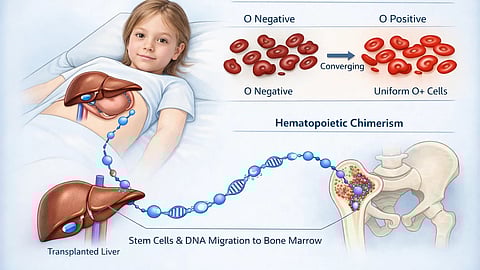
In 2008, a 9-year-old girl in Sydney experienced an extremely rare medical phenomenon following a liver transplant: her blood type and immune system were completely replaced by those of her organ donor.
The case has since been cited as one of the only documented instances of complete hematopoietic chimerism occurring after solid organ transplantation without chemotherapy or radiation conditioning.
In 2007, Demi-Lee Brennan was admitted to The Children’s Hospital at Westmead with acute liver failure at the age of 9. She underwent an emergency liver transplant using an organ from a deceased 10-year-old male donor.
At the time of transplantation:
Recipient blood group: O negative
Donor blood group: O positive
The transplant surgery was reported as successful, and she was started on standard immunosuppressive therapy to prevent organ rejection.
Approximately nine months after the transplant, routine blood testing revealed that Brennan’s blood type had changed from O negative to O positive, matching her donor.
Further investigation confirmed that donor-derived blood cells were circulating in her body.
This condition is known as chimerism, where two genetically distinct cell populations coexist within the same individual.
See also: She’s Female Everywhere—Except in Her Blood: The Astonishing Spontaneous Chimerism Case
Before the complete immune replacement occurred, Brennan developed severe intravascular hemolysis, a condition in which red blood cells are destroyed within the bloodstream.
Laboratory findings indicated partial chimerism, meaning both recipient and donor immune cells were present and active. The coexistence of two immune systems likely contributed to immune-mediated destruction of blood cells.
Standard therapies were attempted, including:
Blood transfusions
Steroids
Immunosuppressive adjustments
However, the hemolysis did not respond to conventional management.
See also: Father’s Liver Saves Toddler: Rare PFIC Transplant at Pune’s Jupiter Hospital
The medical team at The Children’s Hospital at Westmead made a gradual decision to withdraw immunosuppressive therapy.
Following this withdrawal:
Hemolysis resolved
Donor-derived stem cells expanded
Complete hematopoietic chimerism developed
Subsequent testing revealed that Brennan’s entire blood cell system, including immune cells originated from the donor, which was the first case in the medical history.
Complete hematopoietic chimerism occurs when donor stem cells fully repopulate the recipient’s bone marrow and blood-forming system.
This phenomenon typically requires:
Chemotherapy
Radiation therapy
Bone marrow transplantation
In Brennan’s case, no conditioning regimen was used. Researchers believe that stem cells within the transplanted liver migrated to her bone marrow and successfully engrafted. Generally, recipients undergo bone marrow transplantation to achieve this process.
The liver is known to contain hematopoietic progenitor cells, which may have facilitated this process.
Following complete immune replacement, Brennan’s body no longer recognized the transplanted liver as foreign.
This state is referred to as operational tolerance, meaning:
The transplanted organ functions normally
No ongoing immunosuppressive therapy is required
Achieving operational tolerance remains a major goal in transplant medicine, as long-term immunosuppression carries risks such as infection, malignancy, and metabolic complications, therefore this case was studied extensively for successful transplantations.
Reports indicate that this is the only documented case of complete hematopoietic chimerism following liver transplantation without prior bone marrow conditioning therapy.
While microchimerism (small numbers of donor cells persisting in the recipient) is relatively common after liver transplantation, full immune system replacement is extremely uncommon.
A 9-year-old girl in Sydney developed complete hematopoietic chimerism after receiving a liver transplant from a deceased donor. Following a period of severe hemolysis associated with partial chimerism, gradual withdrawal of immunosuppressive therapy led to full donor immune system engraftment and operational tolerance.
The case remains one of the most unusual, documented outcomes in transplant medicine.
