
- Home
- About Us
- Contact Us
- Biography
- MedBound Hub
- InternshipInternship
- Daily Pulse
- Medicine
- Physical Therapy
- InterviewInterview
- Pharmacy
- Biotechnology
- College/InstituteCollege/Institute
- Dentistry
- Blog
- Wellness & Nutrition
- Nursing
- Opinion

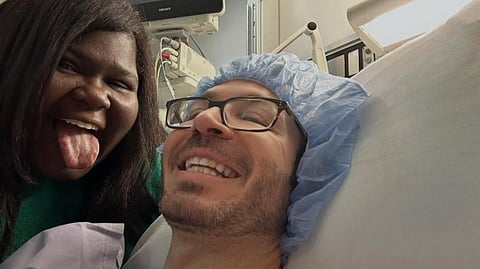
Brandon Frankel, the husband of actor Gabourey Sidibe, publicly shared that he was diagnosed with stage I papillary thyroid cancer. He disclosed the information in a social media post on February 20, 2026, explaining that the cancer was detected early and has already been surgically removed.
Frankel reported that he is currently recovering and remains under medical supervision. His update brought attention to the role of early testing and follow-up in thyroid cancer care.
According to Frankel, the diagnosis followed additional medical evaluation after he chose to pursue imaging despite initial reassurance. An ultrasound examination of the thyroid identified the suspicious lesion, which was later confirmed as papillary thyroid cancer on pathology.
He indicated that the tumor showed features that required careful follow-up, although it was still classified as stage I at the time of treatment. Surgical removal of the affected thyroid tissue was performed successfully.
Brandon Frankel, wrote in his Instagram post,
Things I never thought I’d have to post: I was diagnosed with Stage I Papillary Thyroid cancer.
Brandon Frankel
Papillary thyroid cancer is the most frequently diagnosed type of thyroid malignancy. It typically grows slowly and is often associated with favorable outcomes when identified in early stages.1
Stage I disease usually indicates that the cancer is limited in extent and has not spread widely. Standard management commonly involves thyroid surgery, followed by periodic monitoring. In selected cases, clinicians may also consider radioactive iodine therapy depending on risk assessment.
From a public health standpoint, early imaging and timely specialist referral can significantly influence prognosis.1
The thyroid gland is located in the front of the neck and regulates metabolism through hormone production. Thyroid cancer may present with:
A painless neck lump
Hoarseness or voice change
Difficulty swallowing
Neck discomfort
However, many patients remain asymptomatic, and tumors are sometimes discovered incidentally during imaging for unrelated reasons.
Medical guidance recommends evaluation of any persistent neck swelling or suspicious thyroid nodule.1
Frankel emphasized that seeking further evaluation helped lead to his diagnosis. His case reflects the importance of appropriate clinical assessment when concerns persist.
After thyroid cancer surgery, routine follow-up is standard. Monitoring typically includes clinical examination, thyroid hormone management, and laboratory markers such as thyroglobulin levels. Imaging may be used when clinically indicated.
Long-term surveillance helps detect recurrence early and ensures adequate hormone replacement.1
I refused to ‘wait and see.’ I refused to come back in 6–9 months. I made the calls. I leveraged connections. I chased cancellations. I made a LOT of noise. It worked.
Brandon Frankel
Frankel reported that he is healing well following surgery and continues regular medical follow-up. Early-stage papillary thyroid cancer generally carries a strong survival rate when managed according to established guidelines.
1. Limaiem, F., A. Rehman, and T. Mazzoni. “Papillary Thyroid Carcinoma.” In StatPearls [Internet]. Treasure Island, FL: StatPearls Publishing, March 13, 2024. PMID: 30725628.
(Rh/SS)
