- Home
- About Us
- Contact Us
- Biography
- MedBound Hub
- InternshipInternship
- Daily Pulse
- Medicine
- Physical Therapy
- InterviewInterview
- Pharmacy
- Biotechnology
- College/InstituteCollege/Institute
- Dentistry
- Blog
- Wellness & Nutrition
- Nursing
- Opinion

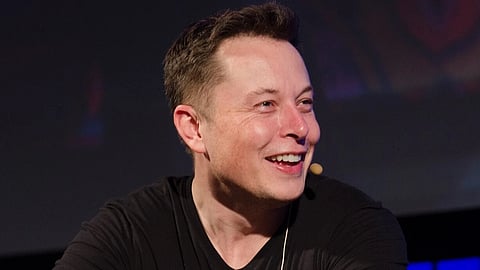
Elon Musk, CEO of Tesla, SpaceX, Neuralink, and xAI, recently stated that robots enhanced by artificial intelligence (AI) could replace human surgeons within the next three years, and that traditional medical education could become “pointless.” Musk made these remarks on the Moonshots podcast hosted by Peter Diamandis, generating significant attention and discussion online.
On the Moonshots podcast, Musk described several bold predictions about AI, robotics, and the future of work and healthcare:
Musk claimed that AI-powered robots such as Tesla’s Optimus humanoid robot will outperform human surgeons at scale within three years. He suggested that medical school could become “pointless” because AI will provide better medical care than humans and will be accessible broadly.
Musk argued that the global shortage of surgeons and long training timelines make current medical education unsustainable if AI can rapidly provide superior and scalable outcomes.
Musk’s comments reflect his longtime emphasis on AI’s rapid advancement and its potential to transform industries including healthcare.
Today, robotic systems primarily assist human surgeons, rather than replace them:
Systems like the da Vinci Surgical System are widely used in procedures such as prostatectomy and gynecologic surgeries. These robots translate surgeon hand movements into precise actions and can enhance control, reduce hand tremor, and improve visualization.
AI is increasingly used in planning, imaging, and diagnostic tasks to support clinical decision-making, but this does not constitute autonomous surgical practice.
Studies show that robot-assisted surgeries may improve precision and reduce complications in specific procedures when guided by skilled surgeons.
In modern clinical practice, robots function as tools under human supervision, and the human surgeon remains responsible for decision-making before, during, and after surgery.
Expert analyses and research generally differentiate between robot-assisted surgery and fully autonomous robotic surgery:
Robotic systems today improve precision and ergonomics but are not independent autonomous operators that can replace human judgment.
Surgical procedures often require complex judgement, adaptation to unpredictable anatomy, and real-time decisions that current AI does not reliably perform.
Research suggests that while AI may enable highly capable tools and collaborative systems, fully automated autonomous surgical robots remain a long-term goal, not an immediate reality.
The scientific literature on robot-assisted surgery reveals ongoing progress in precision and technology, but does not support claims of widespread autonomous surgical replacement within three years.
Current and emerging medical technology envisions augmented surgical practice where:
AI supports preoperative planning, imaging interpretation, and predictive analytics.
Robotic systems enhance physical precision in minimally invasive procedures.
Human surgeons retain responsibility for decision-making, ethical judgement, complication management, and patient communication.
Even in future advanced AI environments, human clinicians are expected to remain critical for interpretive, ethical, and supervisory roles.
(Rh)