
- Home
- About Us
- Contact Us
- Biography
- MedBound Hub
- InternshipInternship
- Daily Pulse
- Medicine
- Physical Therapy
- InterviewInterview
- Pharmacy
- Biotechnology
- College/InstituteCollege/Institute
- Dentistry
- Blog
- Wellness & Nutrition
- Nursing
- Opinion
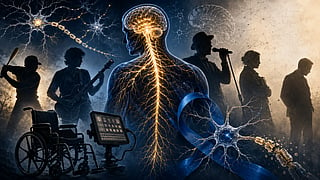

Amyotrophic Lateral Sclerosis (ALS) affects people regardless of fame, profession, or public influence. For many, awareness of the condition begins when a celebrity publicly shares their diagnosis, transforming a personal health battle into a wider public conversation.
Over the years, several well-known public figures from sports, music, film, and science have publicly shared their experiences with ALS. Many of these public figures also helped bring wider attention to ALS and the challenges faced by patients living with the disease.
According to the NHS and medical literature, Amyotrophic Lateral Sclerosis (ALS), a type of motor neuron disease, is a progressive neurological disorder that damages the nerve cells controlling voluntary muscle movement. As the disease advances, patients gradually lose the ability to walk, speak, swallow, and breathe independently.
Common symptoms of ALS include muscle weakness, paralysis, difficulty speaking, and breathing problems caused by progressive damage to motor neurons. In some cases, although rare, patients might experience cognitive and behavioral symptoms along with physical ones.
There is no cure for ALS as of yet; however, supportive measures can help patients.
ALS is a progressive motor neuron disease that affects the nerve cells controlling voluntary muscle movement.
There is currently no cure for ALS.
The disease affects functions such as walking, speaking, swallowing, and breathing.
Survival after diagnosis varies widely among individuals.
Supportive treatments and assistive technologies can help improve quality of life.
Lou Gehrig, the legendary New York Yankees first baseman, was diagnosed with ALS in 1939 after experiencing unexplained muscle weakness and declining athletic performance during games. The rapidly progressing neurological disease forced him to retire from baseball at the height of his career.
His emotional farewell speech at Yankee Stadium became one of the most memorable moments in sports history, eventually leading ALS to become widely known as “Lou Gehrig’s disease.”
Gehrig died from complications of ALS in 1941 at the age of 37, but his story continues to shape global awareness of the devastating condition.
Actor Kenneth Mitchell, known for his roles in Star Trek: Discovery and other television productions, was diagnosed with amyotrophic lateral sclerosis (ALS) in 2018. The progressive motor neuron disease gradually affected his ability to move and speak, eventually requiring full-time mobility and communication assistance.
Despite the progression of the illness, Mitchell continued to engage with his creative work and remained active in sharing his experiences publicly. His openness about living with ALS helped bring attention to how the disease affects individuals in the entertainment industry beyond their on-screen roles.
Mitchell died from complications of ALS in 2024 at the age of 49. His journey is often remembered for the dignity with which he approached the disease and the awareness he helped raise about motor neuron conditions in younger patients.
Stephen Hillenburg, the creator of SpongeBob SquarePants, revealed in 2017 that he had been diagnosed with ALS after experiencing symptoms linked to the terminal neurological illness. Despite his declining health, Hillenburg continued contributing to creative projects tied to the globally successful animated franchise.
Known for transforming children’s television with his unique storytelling style, Hillenburg remained connected to his work throughout his illness. He died from complications of ALS in 2018 at the age of 57.
His diagnosis also introduced many younger audiences to ALS through someone closely connected to a globally recognized cartoon franchise.
Joe Bonsall, longtime member of the Grammy-winning country group The Oak Ridge Boys, revealed in 2024 that he had been living with ALS, also known as Lou Gehrig’s disease. As the motor neuron disorder affected his mobility and muscle function, Bonsall retired from touring after decades in country music.
Despite worsening health, he remained active in writing and continued speaking openly about faith, resilience, and life with the disease. Bonsall died from complications of ALS in 2024 at the age of 76.
Virtuoso guitarist Jason Becker was diagnosed with ALS in 1989 at just 20 years old after developing weakness and difficulty controlling movements in his hands while pursuing a rising music career. Doctors initially gave him only a few years to live as the neurodegenerative condition rapidly advanced.
Although ALS left Becker almost completely paralyzed, he continued composing music using eye-controlled communication technology. Over the decades, he has remained active in the music world despite severe physical limitations.
Becker’s journey has become one of the most recognized examples of resilience and adaptation among people living with ALS, inspiring musicians and patients worldwide.
Grammy-winning singer Roberta Flack, best known for hits like Killing Me Softly With His Song, revealed in 2022 that she had been diagnosed with ALS after the progressive neurological disease affected her ability to sing and speak.
The diagnosis forced Flack to step away from performing, as ALS gradually impacted the muscle control required for vocal expression. Despite her health challenges, her influence on music and popular culture remains significant.
Flack continues to be remembered as one of the defining voices of her generation, while her diagnosis also drew renewed attention to how ALS can affect speech and communication in performing artists.
Broadway star Rebecca Luker, celebrated for acclaimed performances in productions such as The Phantom of the Opera and The Music Man, revealed in 2019 that she had been diagnosed with ALS after experiencing symptoms that affected her mobility and overall muscle function.
Despite the ALS, Luker continued sharing updates with fans and remained connected to the theatre community throughout her illness. Her diagnosis drew attention to how ALS can affect performers whose careers depend heavily on physical strength, movement, and vocal control.
Luker died from complications of ALS in 2020 at the age of 59, leaving behind a lasting legacy in musical theatre and greater public awareness of the disease.
Canadian activist Sue Rodriguez was diagnosed with ALS in 1991 after developing progressive muscle weakness linked to the neurodegenerative disease. As her condition gradually reduced her physical independence, Rodriguez became one of the most influential public voices in the global debate over assisted dying and patient autonomy.
Her legal battle reached the Supreme Court of Canada, where she argued for the right of terminally ill patients to choose medically assisted death. The case sparked international discussions surrounding dignity, disability, medical ethics, and end-of-life care.
Rodriguez died in 1994 at the age of 42, but her advocacy continues to shape bioethical and legal conversations worldwide.
Many readers associate motor neuron disease with physicist Stephen Hawking, one of the most recognized public figures to live with a neurodegenerative neurological condition. Hawking was diagnosed with motor neuron disease at the age of 21 and lived with the condition for more than five decades, a survival period that was exceptionally long compared with the typical course of ALS. His unusually slow disease progression has often been cited as atypical when compared with most ALS cases. Nevertheless, his life significantly increased global awareness of motor neuron diseases and demonstrated how assistive technologies can help individuals maintain communication, continue professional work, and maintain independence despite severe physical disability.6
Although Hawking's condition differed from the experience of many ALS patients, his public visibility helped bring worldwide attention to motor neuron diseases and inspired millions through his scientific achievements and resilience.6
According to the National Institute of Neurological Disorders and Stroke (NINDS), ALS is a progressive neurodegenerative disease that currently has no cure. However, advances in gene therapy, assistive communication technology, and neurological research continue to improve patient care and quality of life.
Celebrity diagnoses and public advocacy have also helped increase awareness, reduce stigma, and encourage funding for ALS research worldwide.
Public awareness of ALS increased dramatically in 2014 through the Ice Bucket Challenge campaign. The global movement inspired more than 17 million participants and raised substantial funding for ALS organizations, helping support research initiatives and contributing to discoveries of several ALS-associated genes. The campaign remains one of the most influential awareness efforts in the history of the disease.
For many people searching for famous people with ALS, celebrities with Lou Gehrig's disease, well-known ALS patients, or public figures diagnosed with ALS, these stories offer a deeper understanding of both the challenges of the disease and the resilience of those living with it.
While ALS remains one of the most challenging neurodegenerative diseases, the experiences of athletes, artists, scientists, and advocates who lived with the condition have helped transform public understanding of the disease. Their visibility has not only raised awareness but has also encouraged research, funding, and conversations about life with ALS around the world.
National Health Service (NHS). “Motor Neurone Disease.” NHS. Accessed June 4, 2026. https://www.nhs.uk/conditions/motor-neurone-disease/.
National Institute of Neurological Disorders and Stroke. “Amyotrophic Lateral Sclerosis (ALS).” National Institutes of Health. Accessed June 4, 2026. https://www.ninds.nih.gov/health-information/disorders/amyotrophic-lateral-sclerosis-als.
National Institute of Neurological Disorders and Stroke. “Motor Neuron Diseases.” National Institutes of Health. Accessed June 4, 2026. https://www.ninds.nih.gov/health-information/disorders/motor-neuron-diseases.
The ALS Association. “The ALS Ice Bucket Challenge.” Accessed June 4, 2026. https://www.als.org/fight-als/ice-bucket-challenge-spending.
The ALS Association. “How the ALS Ice Bucket Challenge Has Helped Spur Gene Discoveries.” Accessed June 4, 2026. https://www.als.org/stories-news/how-als-ice-bucket-challenge-has-helped-spur-gene-discoveries
Hawking, Stephen. “Stephen Hawking (1942–2018).” Nature 555, no. 7694 (2018): 147. https://doi.org/10.1038/d41586-018-02839-9.
