In an anonymous online discussion among U.S.-based physicians, a troubling incident in the emergency department (ED) sparked a debate over medical ethics, medication error documentation, and professional responsibility. The conversation highlighted the difficult decisions doctors face when medication errors occur and the pressures they sometimes experience from staff, particularly nurses, to alter existing records to prevent such incidents from being reported to authorities.
A physician shared his troublesome experience with a nurse:
“Last night, while working in the ED, I ordered 30 mg of Toradol IV. I was approached by a new nurse and her preceptor, who told me she had pulled the wrong concentration of the drug and gave 60 mg IV.”
He further added, “They asked me to change my order to match what she had given. I refused, saying that was not the dose I ordered and that they have a way to document medication administration errors, which is what they should do. I would not take responsibility for the wrong dosage being given.”
The doctor then admitted that he felt tempted to adjust the record and wrote, “I was tempted to change the order and then write a note stating that I had ordered a different dosage, but I was asked by the nursing staff to change the record. I felt that would have been passive-aggressive and worse.”
This incident was not isolated. The physician highlighted a similar situation involving a colleague:
“A similar thing happened to another doctor I work with when she ordered a dose of Decadron. That dose was given, but another nurse thought she heard Solu-Medrol and gave that as well. A week later, the assistant director asked her to go into the computer system and place an additional order for the Solu-Medrol (which she actually never ordered) because it would appease the nurses. She refused to do that as well.”
The post raised a central ethical question:
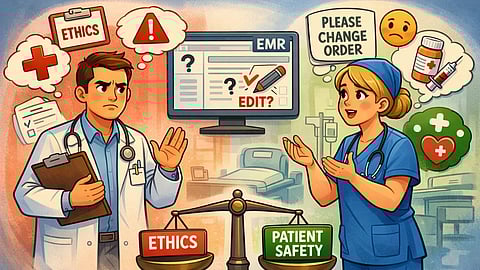
“Why should we be asked to falsify the medical record to account for nursing errors just because if we don’t, the nurses may be upset with us?”
Responses from the community largely supported refusing to alter orders. Many recommended reporting such incidents to hospital compliance, documenting the medical error accurately, and ensuring these are addressed through proper channels rather than through record falsification. The discussion reflected a strong opinion: patient safety and professional responsibility. Many healthcare professionals further shared their experiences, which include:
An obstetrician shared an experience from her residency:
“I've been asked to do this as a resident during my OB rotation. I refused. Reported. Spent the next couple of years being blackballed by OB nurses. I would do it again. It is your license. They can do a SAFE report.”
Another physician described how this practice was routine at a Northeast cancer center:
“This was a daily occurrence at a certain NE cancer center where I was a resident. It was expected by leadership and nurses that residents would change orders to protect the staff. On my last day in service, I refused. It caused a shitstorm, and I was considered ‘defiant’ since I refused to cover a medical error.”
While most physicians leaned toward refusing any request to falsify orders, a few argued for a more pragmatic approach in certain situations. One physician commented:
“I'll go against the grain here. If this were a verbal order, within reason, I would write the order to cover the mistake. 60 mg IV Toradol is high but not crazy. Part of the price of verbal orders is that mistakes like this will happen. It's on us as physicians to understand when such orders are okay, and when we should really use the computer order entry process so that there is no doubt.”
She later added the approach that healthcare professionals should take to avoid medication errors related to verbal orders:
“The inevitable response is for verbal orders to be highly restricted or refused by nurses, which is already the case at many facilities, but that would make our lives as physicians miserable and ultimately lead to worse care for everyone.”
Overall, nearly 90% of physicians participating in the discussion opposed altering medical records, emphasizing that such incidents should be formally reported and patient safety reports filed to prevent future medication errors. One physician summed up the prevailing sentiment:
“I would not only report the medication error, but also the fact that you were asked to fraudulently change your orders.”