
- Home
- About Us
- Contact Us
- Biography
- MedBound Hub
- InternshipInternship
- Daily Pulse
- Medicine
- Physical Therapy
- InterviewInterview
- Pharmacy
- Biotechnology
- College/InstituteCollege/Institute
- Dentistry
- Blog
- Wellness & Nutrition
- Nursing
- Opinion

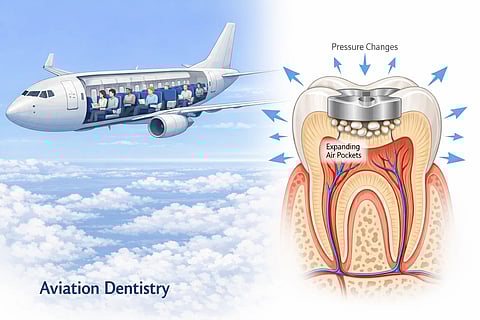
Air travel exposes passengers and aviation personnel to rapid changes in atmospheric pressure. While commercial aircraft cabins are pressurized, the pressure is still lower than at sea level. These variations can affect trapped gases inside the body, including within teeth.
Dental science that studies and manages these conditions is known as aviation dentistry.
Dr. Rashmi Anupam, a dentist explains about aviation dentistry in a recent post in MedBound Hub, a discussion forum for healthcare professionals and students.
During ascent, cabin pressure decreases. According to Boyle’s law, gas expands as pressure drops. If microscopic air pockets are trapped beneath dental restorations or within untreated cavities, or inside pulp tissue, this gas expansion can exert pressure on surrounding structures.
This may result in:
Barodontalgia (pressure-induced tooth pain)
Odontocrexis (fracture of a tooth or restoration due to pressure changes)
Loosening of crowns or temporary restorations
Sinus-related facial pain
Most people with a common cold might have experienced a sudden pain in their ears or head while flying due to the same effect. This is due to the trapped air in the eustachian tube. In severe conditions, it might even result in a ruptured eardrum.
A review published in the British Dental Journal describes barodontalgia as a symptom often associated with underlying dental pathology such as caries, defective restorations, pulpitis, or periapical disease.¹
Similarly, a study indexed on PubMed reports that pressure-induced dental pain is more common in individuals with untreated or inadequately treated dental conditions.²
Barodontalgia is a symptom triggered by environmental pressure changes. It has been documented in:
Military aviators
Pilots
Flight attendants
Scuba divers
Frequent flyers
Pain may occur during ascent, descent, or both. The condition can sometimes indicate undiagnosed pulp inflammation or necrosis.
In aviation settings, sudden dental pain can impair concentration and operational performance for pilots and aircrew staff, and may have serious consequences, particularly in military or commercial pilots.
Odontocrexis refers to the physical fracture of a tooth or restoration due to rapid pressure shifts. Teeth weakened by large restorations, secondary caries, or microleakage are more vulnerable.
Pressure changes can also affect the maxillary sinuses. An undetected oroantral communication (an abnormal opening between the oral cavity and maxillary sinus), which may occur after upper molar extraction, can worsen during altitude changes.
Symptoms may include:
Facial pressure
Sinus pain
Fluid passage between mouth and nose
Persistent discomfort during flights
Proper surgical technique and post-extraction evaluation are essential to prevent these.
A normal sinusitis might also exacerbate during a flight.
See also: Massage Guns for Sinus Relief? Allergist Warns of Serious Risks
Flying personnel may experience xerostomia (dry mouth) due to low cabin humidity and dehydration. Reduced saliva flow increases the risk of:
Dental caries
Gingivitis
Periodontal disease
Preventive strategies include hydration and regular dental evaluations.
With global air travel steadily increasing, dentists are more likely to encounter flight-related dental complaints. Aviation dentistry focuses on:
Pre-flight dental screening for pilots and aircrew
High-quality, well-sealed restorations
Appropriate crown cement selection
Avoiding temporary restorations before flying
Careful post-surgical clearance timelines
Military aviation programs in several countries incorporate mandatory dental fitness standards to minimize in-flight medical emergencies.
Routine dental check-ups
Radiographic evaluation of suspicious teeth
Definitive restorations instead of temporary fillings
Avoiding air travel immediately after extractions or endodontic therapy
Addressing sinus infections before flying
Early detection of dental pathology significantly reduces the risk of barodontalgia.
Aviation dentistry addresses the impact of atmospheric pressure changes on oral tissues and dental restorations. Conditions such as barodontalgia and odontocrexis highlight how even minor, undetected dental issues can become symptomatic at altitude.
As global air travel continues to expand, awareness among healthcare providers and patients remains essential to prevent in-flight dental emergencies.
References
Zadik, Yehuda. “Aviation Dentistry: Current Concepts and Practice.” British Dental Journal 206, no. 1 (January 10, 2009): 11–16. https://doi.org/10.1038/sj.bdj.2008.1121.
Lakshmi, Sakthi D. S. “Aviation Dentistry.” Journal of Clinical and Diagnostic Research 8, no. 3 (March 2014): 288–290. https://doi.org/10.7860/JCDR/2014/7232.4189.
Yadav, Aparna B., G. Srinivasulu, R. V. S. Krishna Kumar, and P. Prasanth. “Aviation Dentistry – A Review.” Journal of Medical and Dental Science Research 10, no. 3 (2023): 116–120.
