Dental Education in Kerala: High Dentist Density, Limited Top Colleges, and the Growing Challenge of Graduate Saturation

The dentist-to-population ratio in Kerala is estimated to be around 1:2200, which is significantly higher than the WHO-recommended ratio.
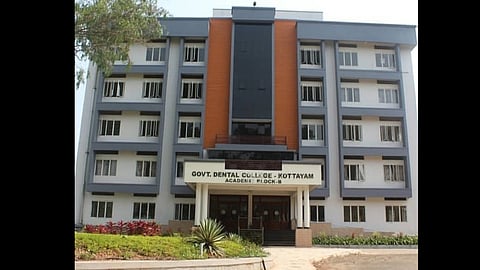
Government Dental College Kottayam building.
Kerala, along with states like Karnataka and Tamil Nadu, has one of the highest concentrations of dentists.Government Dental College Kottayam - Facebook
Published on
Updated on

Kerala has long been recognized as one of India’s most advanced states in healthcare and education. It has topped in literacy rates among other states in India and achieved many milestones in public and private healthcare systems.

However, when it comes to dentistry, the state presents a paradox, an oversupply of dental professionals.

NIRF Rankings Highlight Quality Gap in Kerala’s Dental Education

For a small state, Kerala has 27 dental colleges, among which 6 are public funded government colleges and the rest, private ones. Despite having these many dental colleges, Kerala has limited representation in national rankings.

According to the National Institutional Ranking Framework (NIRF) 2025, only two dental colleges from the state feature in the national rankings of Top 40:

  • Government Dental College, Thiruvananthapuram – Rank 35

  • Government Dental College, Kozhikode – Rank 38

Kerala has only these two institutions consistently appearing in national rankings.2

The NIRF data reflects a clear trend, government dental colleges in Kerala continue to outperform private institutions, both in terms of academic reputation and clinical training.

This aligns with broader national trends where government institutions are often preferred due to:

  • Better patient inflow and clinical exposure

  • Experienced faculty and academic legacy

  • Lower fees with higher return on investment

As seen across India, institutions like AIIMS Delhi and Maulana Azad Institute of Dental Sciences consistently top rankings due to strong clinical training and academic rigor.

Best Dental Colleges in Kerala

Kerala has a strong network of dental institutions, including both government and private colleges, and these are among the best.

  1. Government Dental College, Thiruvananthapuram

  2. Government Dental College, Kozhikode

  3. Government Dental College, Kottayam

  4. Government Dental College, Alappuzha

  5. Government Dental College, Thrissur

  6. Government Dental College, Pariyaram (Kannur)

In addition to these, numerous private dental colleges contribute significantly to the state’s dental workforce output.

Courses Offered in Dental Education

Dental education in Kerala follows national standards regulated by the Dental Council of India, which have been replaced with National Dental commission.

Undergraduate

  • BDS (Bachelor of Dental Surgery)

    • Duration: 5 years (including 1-year internship)

Postgraduate

  • MDS (Master of Dental Surgery)

    • Duration: 3 years

    • Specializations vary over orthodontics, oral surgery, prosthodontics, periodontics, and more

Other Academic Pathways for Higher Studies

  • PG Diploma courses

  • Fellowship programs (Implantology, Aesthetic Dentistry, Endodontics, etc.)

  • Continuing Dental Education (CDE) programs

Other Dentistry Diploma courses

  • Dental lab technician, duration varies according to the institutes

  • Dental hygienist, 2-year diploma program (DDH)

  • Dental assistant, 2-year diploma course

These pathways allow students to develop specialization and enhance career prospects in a competitive environment.

Dental education in Kerala dates back to 1959 with the establishment of the first dental college, Government Dental College, Thiruvananthapuram (1959)

This institution laid the foundation for structured dental education in the state and remains one of the most prestigious government dental colleges in India.

Government Dental College Trivandrum building.
Dental education in Kerala follows national standards regulated by the Dental Council of India, which have been replaced with National Dental commission.Government Dental College Trivandrum - Facebook

Scope of Dental Education in Kerala

Kerala offers strong academic infrastructure and clinical exposure, making it an attractive destination for dental education. Key advantages include:

  • High literacy and health awareness among patients

  • Advanced clinical exposure due to high patient inflow

  • Opportunities in private practice, academia, and research

Additionally, dentists may explore emerging fields such as:

  • Cosmetic dentistry

  • Implantology

  • Digital dentistry

  • Public health dentistry

However, it is important to recognize that the rapid increase in the number of dental colleges has raised concerns about variability in quality. Some private dental institutions may not consistently meet desired academic and clinical standards, particularly in terms of patient inflow and infrastructure. This is especially evident in standalone dental colleges that lack affiliation with a medical college or tertiary care hospital, potentially limiting adequate clinical exposure for students.

The Challenge: Saturation and Workforce Imbalance

Despite robust infrastructure, Kerala faces a significant challenge, graduate saturation.

India already produces over 24,000 dental graduates annually, contributing to an oversupply of professionals.
Kerala, along with states like Karnataka and Tamil Nadu, has one of the highest concentrations of dentisKerala, along with states like Karnataka and Tamil Nadu, has one of the highest concentrations of dentists.ts.

This has resulted in:

  • Intense competition among practitioners

  • Difficulty in establishing private clinics

  • Limited government job opportunities and immense competition for the vacancies

The dentist-to-population ratio in Kerala is estimated to be around 1:2200, which is significantly higher than the WHO-recommended ratio of 1:7500.
This indicates that Kerala has far more dentists than required, leading to increased competition, underemployment, and declining income levels for fresh graduates. 1

Why Many Dentists Opt for Specialization

Due to saturation, pursuing MDS or fellowships has become almost essential.

Specialization helps:

  • Increase earning potential

  • Improve clinical expertise

  • Gain competitive advantage

However, this also leads to:

  • Increased financial burden

  • Further crowding in specialized fields

Changing Career Pathways

With traditional clinical roles becoming competitive, many dental graduates are exploring alternative careers:

  • Academic and teaching roles

  • Research and public health

  • Healthcare management

  • Dental product industry

  • Medical writing and digital health

Kerala’s dental education system reflects a dual reality, while the state produces a large number of dentists, only a handful of institutions meet national benchmarks of excellence, reinforcing the importance of institutional choice for aspiring dental students.

References

  1. Ramanarayanan, V., C. Janakiram, J. Joseph, and K. Krishnakumar. “Oral Health Care System Analysis: A Case Study from India.” Journal of Family Medicine and Primary Care 9, no. 4 (2020): 1950–1957. https://doi.org/10.4103/jfmpc.jfmpc_1191_19.

  2. National Institutional Ranking Framework (NIRF). “Dental Ranking 2025.” Ministry of Education, Government of India. https://www.nirfindia.org/Rankings/2025/DentalRanking.html

Related Stories

No stories found.
logo
Medbound Times
www.medboundtimes.com