At-Home Teeth Whitening Kits in 2026: Types, Mechanisms, Safety, and What’s Available in the Market

A clinical overview of whitening strips, gels, LED kits, and tray systems for safe at-home use
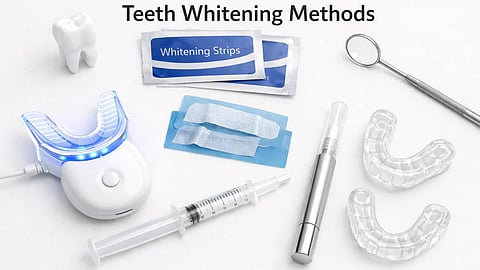
Various teeth whitening methods like strips, trays, led device etc.
At-home teeth whitening kits provide a non-invasive, accessible method for improving dental aesthetics.AI image
Published on
Updated on

At-home teeth whitening kits have become a widely used option for managing extrinsic tooth discoloration. These products are designed to lighten tooth shade using peroxide-based bleaching agents and are available in multiple formats including strips, gels, trays, and LED-assisted systems.

Their increasing popularity reflects a shift toward accessible cosmetic dental care, though their effectiveness and safety depend on formulation, concentration, and usage patterns.

How Teeth Whitening Works

Teeth whitening primarily relies on oxidation reactions using:

  • Hydrogen peroxide

  • Carbamide peroxide

These agents penetrate enamel and dentin, breaking down chromogens (pigmented molecules) into smaller, less visible compounds. This results in a lighter tooth appearance.

Whitening is most effective for:

  • Extrinsic stains (coffee, tea, smoking)

  • Mild intrinsic discoloration

It is less effective for:

  • Fluorosis

  • Tetracycline staining

  • Restorations (crowns, veneers)

After and before teeth collage.
Before and after pictures of teeth whitening. t없이 맑은, CC BY-SA 4.0, via Wikimedia Commons

Types of At-Home Teeth Whitening Kits

1. Whitening Strips

Thin, flexible plastic strips coated with peroxide gel.

Features:

  • Easy to apply

  • Uniform coverage on front teeth

  • Typically used for 10–14 days

Limitations:

  • May not reach posterior teeth

  • Can cause uneven whitening if misapplied

2. Whitening Gels and Pens

Applied directly to teeth using brushes or applicator pens.

Features:

  • Targeted application

  • Useful for touch-ups

  • Quick drying

Limitations:

  • Short contact time

  • Requires repeated application

3. Tray-Based Whitening Systems

Custom or pre-filled trays that hold bleaching gel against teeth.

Features:

  • More uniform coverage

  • Higher effectiveness due to longer contact time

  • Available as dentist-prescribed or OTC kits

Limitations:

  • Potential gum irritation

  • Requires proper fitting

4. LED-Activated Whitening Kits

Combine peroxide gel with a light-emitting device.

Mechanism:
The LED light is marketed to accelerate the whitening reaction, though evidence on its added benefit remains variable.

Features:

  • Popular consumer choice

  • Structured treatment cycles

Limitations:

  • Higher cost

  • Light activation may not significantly enhance bleaching beyond peroxide action

A social media influencer
While generally safe, they are best suited for mild to moderate discoloration, and users should be aware of limitations.AI image

Common Products Available in the Market (2026)

Market analyses and product reviews (including consumer-focused platforms and retail aggregators) highlight several widely used categories:

Widely Recognized Brands/Formats

  • Crest 3D Whitestrips – strip-based systems

  • Opalescence – gel and tray systems

  • Auraglow – LED-based kits

  • Snow – premium LED systems

  • Colgate Optic White – gels and pens

These products vary in peroxide concentration, delivery system, and treatment duration, influencing outcomes.

Effectiveness and Expected Results

Clinical observations suggest:

  • Visible results typically appear within a few days to 2 weeks

  • Maximum whitening depends on baseline tooth shade and stain type

  • Maintenance may require periodic reapplication

Professional (in-office) whitening generally produces faster and more pronounced results compared to at-home kits.

Safety and Side Effects

Teeth whitening is generally considered safe when used as directed, but potential side effects include:

Common Side Effects

  • Tooth sensitivity

  • Gum irritation

  • Temporary enamel dehydration

Precautions

  • Avoid overuse or prolonged exposure

  • Follow manufacturer instructions strictly

  • Consult a dentist if you have:

    • Cavities

    • Gum disease

    • Dental restorations

Who Should Avoid At-Home Whitening

  • Children under 16

  • Pregnant or lactating individuals (limited safety data)

  • Patients with untreated dental disease

  • Individuals with hypersensitive teeth

Recent Trends and Innovations in Teeth whitening

Modern whitening kits increasingly incorporate:

  • Lower-sensitivity formulations

  • Enamel-safe additives (e.g., fluoride, potassium nitrate)

  • Wireless LED devices

  • AI-guided shade tracking (in premium kits)

  • Eco-friendly and peroxide-free alternatives (limited evidence)

These innovations aim to improve user comfort and compliance while maintaining whitening efficacy.

At-home teeth whitening kits provide a non-invasive, accessible method for improving dental aesthetics. Their effectiveness depends on the type of system, active ingredients, and adherence to usage protocols.

While generally safe, they are best suited for mild to moderate discoloration, and users should be aware of limitations and potential side effects. For complex cases, professional dental consultation remains essential.

Related Stories

No stories found.
logo
Medbound Times
www.medboundtimes.com