
- Home
- About Us
- Contact Us
- Biography
- MedBound Hub
- InternshipInternship
- Daily Pulse
- Medicine
- Physical Therapy
- InterviewInterview
- Pharmacy
- Biotechnology
- College/InstituteCollege/Institute
- Dentistry
- Blog
- Wellness & Nutrition
- Nursing
- Opinion

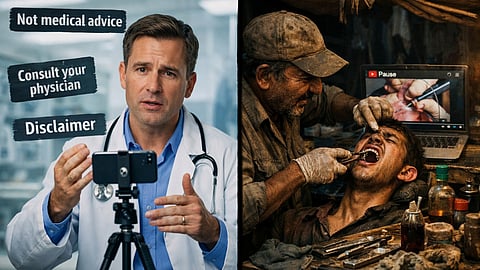
We live in a digital age where health information is everywhere. This should empower patients. Instead, it has created a dangerous paradox. Qualified doctors are forced to add long disclaimers whenever they speak online. “This is not medical advice.” “Consult your physician.” Every word is scrutinised. Yet, in the real world, unqualified individuals continue to treat patients illegally with crude instruments and face little accountability.
This is the hypocrisy we must confront.
Across India and beyond, self-styled practitioners openly run roadside clinics. Some use tools that resemble construction equipment rather than medical instruments. Procedures are performed without sterilisation, training, or ethical standards. And when harm occurs, action is slow or absent. Families are left devastated while the perpetrators quietly move to another street or district to continue their trade.
Meanwhile, doctors sharing educational content online must walk on eggshells. The disclaimer culture is necessary, but the imbalance is alarming. Why are trained professionals held to higher scrutiny than those actively endangering lives? Why is the system quicker to police responsible speech than criminal practice?
The problem has now multiplied online. Traditional quacks were geographically limited. Their reach ended at the street corner. Today, digital quacks operate on YouTube and social media. They reach millions. They promote miracle cures, unsafe diets, detox regimens, and even surgical procedures. Their authority is manufactured through views and followers, not credentials. Algorithms reward sensationalism, not science. Misinformation travels faster than verified medical advice ever could.
We have seen the consequences. A Tamil Nadu student died after consuming borax based on online weight loss advice. In Bihar, a teenager died following a procedure by a fake doctor who relied on online tutorials. In Uttar Pradesh, a woman lost her life after an untrained man attempted surgery by watching YouTube videos. Even in Europe, a fake dentist ran an illegal clinic for years after learning procedures from the internet.
These are not isolated incidents. They represent a systemic failure of regulation, enforcement, and digital accountability.
This is not ignorance. This is criminal negligence.
What makes it worse is monetisation. Many of these digital quacks earn revenue from views, sponsorships, and product promotions. Harmful content is not accidental. It is profitable. Platforms benefit from engagement while patients pay with their lives.
The solution must be firm. Quackery should be banned, offline and online. Enforcement must be strict. Digital platforms must be held accountable for promoting harmful content. Algorithms should not reward misinformation. Medical councils, cyber cells, and law enforcement must work together instead of functioning in silos.
Public health literacy must also improve. People must be taught how to differentiate between evidence-based medicine and viral nonsense. Trust must shift back to qualified professionals, not influencers with ring lights.
Social media has power. It can educate. But without regulation, it becomes a weapon of mass deception.
Patients deserve protection. Medicine demands accountability. It is time we stop policing doctors more than criminals.
