Do Screen Users Really Need Blue Light Filter Glasses? Ophthalmologist Explains

Examining whether blue light filter glasses are necessary, with insights from an Ophthalmologist
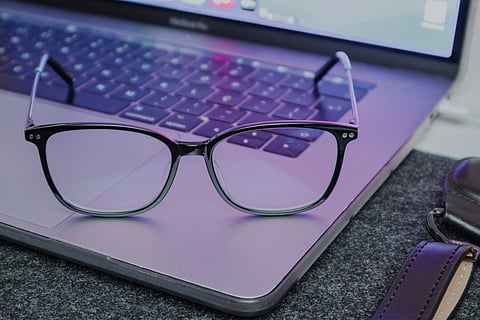
An open spectacle placed on the keyboard of a laptop
Blue light is a part of white light that has high penetrating powerUnsplash
Published on
Updated on

If you're a gamer, binge-watcher, or simply someone with high screen time usage, you've probably come across blue light filter glasses. These are claimed to provide protection for your eyes from blue light emitted from screens. But do we really need them? Let’s find out.

What Is Blue Light and Where Does Screen Exposure Come From?

Blue light belongs to the visible light region of the electromagnetic spectrum and has a wavelength range between 400–500 nm. It is a high-energy visible light component that forms part of white light, rather than appearing white on its own. 

The sun is the biggest source of blue light; it is also emitted by LEDs and other screens such as mobile phones, laptops, and televisions, but at a very low intensity compared to sunlight.[1]

Effects of Blue Light on the Eyes and Brain

Blue light has both positive and negative effects, irrespective of the source. They help improve alertness, mood, concentration and thinking ability.[2] This is also one of the reasons why work settings have LED lights: to make the environment lively. 

However, blue light waves have high energy and can penetrate the retina, causing eye damage. This can only happen when the eyes are exposed to high-intensity light for a prolonged period.

Do Blue Light Glasses Reduce Eye Strain?

Today, blue light blocking glasses are marketed to help reduce eye discomfort and headaches related to screen usage. Medically, this condition is called digital eye strain (DES) or computer vision syndrome (CVS). It is characterized by eye discomfort, dry eyes, blurred vision, headaches, neck pain, and shoulder pain.[2] 

But there is no proven evidence to back this claim. Moreover, DES is caused by factors such as poor eye blinking and posture while using screens. To know whether these glasses are a necessity for screen users, MedBound Times connected with Dr. Smitha Shyam Kumar, a consultant ophthalmologist at Dr. Sreeni Edakhlon's Malhaari Eye Care.

According to Dr. Smitha, blue light glasses are not a necessity for all screen users. She argues that if they were necessary, these glasses would have been available since the time screens were manufactured. However, she recommends them for those who complain about eye pain while using screens.

How Blue Light Affects Sleep and Melatonin Levels

Illustration of blue light waves highlighting their effect on melatonin production
Blue light can help regulate the biological clock, improve cognition, memory, and alertnessAI generated

Sleep is an important reset button regulated by the body's circadian rhythm, which controls our sleep-wake cycle. It is responsible for releasing melatonin, a hormone that promotes sleep. The more we’re exposed to light, the less melatonin will be produced, leading to poor-quality sleep.


Dr. Smitha recommends screen eye protection in the form of blue light glasses for those who are constantly in front of screens till late at night, such as an IT professional.  She believes that using them at night would help decrease the amount of blue light entering their eyes. However, she doesn’t recommend it for normal screen users.

Screen-Related Headaches: Is Blue Light to Blame?

A woman holding a phone in one hand, while the other massages her forehead
Headaches due to screen usage can affect one’s productivity and well-beingAI generated

Most individuals today complain of headaches due to screen usage. This is because of tension in the neck muscles due to less movement while using screens. Though there is no concrete evidence that blue light is responsible for causing headaches in screen users, a few small observational studies and short-term clinical trials have suggested that blue light glasses may help reduce headache frequency in some individuals. 

Dr. Smitha advises blue light glasses for screen users who experience headaches. She explains that our eyes become dry due to a lack of blinking, which can result in a headache. Also, our eyes blink when we adjust the glasses, so this could help prevent dryness of the eyes based on her clinical experience.

Should Children Use Blue Light Glasses? An Ophthalmologist’s Advice

Like adults, children nowadays have a busy routine due to their schoolwork and extra-curriculars. Also, many use screens at night as a means of unwinding and entertainment. This leads them to a late bedtime and poor sleep quality. 

Further, children with late bedtime show poor concentration, daytime irritability, and even aggressive behaviour. It has also been reported that children and early-adolescents are more sensitive to nighttime light exposure than older adolescents and adults.[4]


Though this could be corrected by a healthy sleep routine in children, Dr. Smitha recommends blue light glasses for children above four years who have prolonged screen time. According to her, children today experience migraines due to long screen time and these glasses would help prevent it.

Quick Comparison: Blue Light Glasses vs Other Screen Protection Methods

Frequently Asked Questions

Q

Is blue light harmful?

A

No, it isn’t. Blue light has both positive and negative effects. It can only become harmful when we are exposed for a long time and under high intensity light.

Q

Are blue light glasses necessary for screen users?

A

No, for an average user, it isn’t necessary. But if you are someone who experiences eye pain while using screens, these glasses are recommended for you.

Q

Can these glasses help in better nighttime sleep?

A

Yes, in individuals who use screens continuously from day to night, like an IT professional. However, for a normal user, it is not required.

Q

Will they help in reducing headaches due to long screen use?

A

Yes, because using blue light glasses can help in preventing eye dryness.

Q

Should children use blue light glasses at night?

A

Yes, for children above four years old who have high screen time, these glasses are advised.

Conclusion

Though blue light filter glasses are not a necessity, they can still be used to ease some of the discomfort you may face while using screens. If you are someone planning to buy them, first consult an ophthalmologist because these glasses are just recommendations and not a cure.

References:-

  1. Mark Rosenfield, MCOptom,PhD. 2019. “Living with blue light exposure.”https://www.researchgate.net/profile/Mark-Rosenfield/publication/335272829_Blue_light_Review_of_Optometry_paper/links/5d5bf5334585152102526fef/Blue-light-Review-of-Optometry-paper.pdf

  2. Salal Khan, Kamal Pant, Jamshed Ali, Zainul Abedin, Ragni Kumari, Sunil Kumar Gupta. 2025. “Impact of blue light exposure on the ocular structures and its preventive measures or management options.” EPRA International Journal of Research and Development (IJRD).  https://www.researchgate.net/profile/Salal-Khan/publication/391267473_IMPACT_OF_BLUE_LIGHT_EXPOSURE_ON_THE_OCULAR_STRUCTURES_AND_ITS_PREVENTIVE_MEASURES_OR_MANAGEMENT_OPTIONS/links/68218007bd3f1930dd708ade/IMPACT-OF-BLUE-LIGHT-EXPOSURE-ON-THE-OCULAR-STRUCTURES-AND-ITS-PREVENTIVE-MEASURES-OR-MANAGEMENT-OPTIONS.pdf

  3. Edem G.D, David J.U, Amadi, M.A 3, Nwajah, S.D. 2024. “The Impact of Blue Light on Eye Health- A Brief Review.” https://www.researchgate.net/profile/Gabriel-Edem/publication/387180524_The_Impact_of_Blue_Light_on_Eye_Health-A_Brief_Review/links/67633c5f2adc9f12e2116ba1/The-Impact-of-Blue-Light-on-Eye-Health-A-Brief-Review.pdf

  4. Naoya J. Maeda-Nishino, Ryohei Yoshimoto, Taisuke Ono, Shintaro Chiba. Seiji Nishino. 2025. “Partial blue light blocking glasses at night advanced sleep phase and reduced daytime irritability, disruptive behavior and improved morning mood, but did not alter salivary melatonin secretion in Japanese male schoolchildren.” https://pmc.ncbi.nlm.nih.gov/articles/PMC12574898/

Related Stories

No stories found.
logo
Medbound Times
www.medboundtimes.com