
- Home
- About Us
- Contact Us
- Biography
- MedBound Hub
- InternshipInternship
- Daily Pulse
- Medicine
- Physical Therapy
- InterviewInterview
- Pharmacy
- Biotechnology
- College/InstituteCollege/Institute
- Dentistry
- Blog
- Wellness & Nutrition
- Nursing
- Opinion

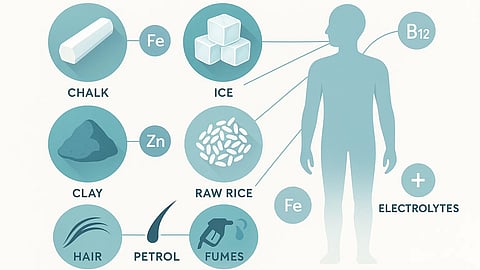
Most of us experience occasional strong food cravings, for chocolate, spicy snacks, or salty treats. But sometimes, people crave things that are not normally consumed as food (like chalk, clay, ice, hair or raw rice) or show an unusually strong urge for certain tastes or textures.
When such cravings become recurrent or persistent, experts may consider the possibility of a condition known as Pica, an eating behaviour characterized by persistent ingestion of non-food or non-nutritive substances.
A summary of craving and deficiency associations is has been explained on an educational Instagram reel by Dr. Priyanka Reddy, Dermatologist, who outlined common clinical patterns observed in patients reporting unusual cravings.
She also mentioned craving for salty food might be related to low blood pressure, dehydration or linked to Addison's disease.
While many sources link Pica behaviours with mineral or nutrient deficiencies (iron, zinc, sometimes calcium or other micronutrients), the exact cause and even the direction of cause-effect remains unclear in many cases.
In some documented cases, the craving/disorder predates detectable deficiency; in others, the behaviour may worsen or even begin only after low nutrient levels arise.
Moreover, psychological, social, cultural, or behavioral factors may play a major role, especially in adults with long-standing cravings, or cravings directed at non-food substances for comfort, stress relief or habit.
Ingesting non-food items (like clay, soil, paint, chalk) can be dangerous. There’s risk of poisoning (heavy metals, toxins), parasite infections (especially with soil or dirt), intestinal blockage, dental damage, and other digestive complications.
If the craving is due to a nutritional deficiency (e.g. iron, zinc), leaving it uncorrected may worsen anemia or other deficiency-related issues.
In some cases, especially in pregnant individuals, untreated Pica may pose risks to both mother and fetus.
Therefore, persistent or concerning cravings, particularly for non-food items, should prompt medical evaluation rather than being dismissed as “just a habit.”
According to Dr. Priyanka Reddy, because cravings or Pica behaviours may be linked to nutritional, metabolic, or even psychiatric causes, a broad panel of tests may be considered, depending on the physician’s evaluation. Below are commonly suggested investigations:
Complete Blood Count (CBC) + Iron Studies (Serum iron, ferritin, transferrin, TIBC) - to detect iron-deficiency anemia.
Serum Zinc Level - as zinc deficiency has been associated with altered appetite, taste disturbances, and Pica-like cravings.
Serum Calcium, Magnesium, and Other Micronutrients - sometimes multiple nutrient deficits coexist.
Biochemical Panel / Electrolytes - to detect metabolic imbalances (especially if clay or soil ingestion, which may disrupt electrolyte balance).
Lead Level (or heavy metal screening) - especially if substances like paint chips, chalk, mud from contaminated soil are involved.
Stool or Parasitic Examination - if soil, clay or dirt ingestion has occurred, to rule out intestinal parasites or infections.
If required, Imaging (X-ray / CT / Endoscopy) - in cases of suspected intestinal blockage (e.g. hair ingestion) or complications.
Clinical & Psychiatric Assessment - if behavior persists, to rule out contributing mental health disorders (e.g. obsessive-compulsive behaviors, stress-related causes).
There is a documented association between Pica (or Pica-type cravings) and iron deficiency / anemia, particularly in pregnancy, children, or populations at risk of malnutrition.
However, the precise mechanism by which iron (or other deficiencies) might trigger cravings for non-food items remains unclear. Some scientists propose biochemical alterations in appetite/brain enzymes, changes in taste perception, or compensatory behavior, but none of these hypotheses has universal acceptance.
In some cases, Pica continues even after supplementation or correction of deficiencies; in others, it subsides once nutrient levels are restored.
Psychological, behavioral, cultural, and environmental factors often contribute, meaning that craving alone may not be a definitive diagnostic sign.
Therefore, unusual cravings should be interpreted as possible signals, not as definitive proof of deficiency or disease. Medical evaluation, including history, lab tests, and possibly mental health assessment, remains essential.
Unusual cravings, for things like clay, chalk, ice, raw rice or hair can sometimes reflect underlying nutrient deficiencies (especially iron or zinc), metabolic disturbances, or psychosocial factors. While cravings alone are not diagnostic, they often serve as clues prompting further medical evaluation. Through appropriate blood tests, clinical assessment, and follow-up, underlying problems such as anemia, mineral deficiency, toxicity or behavioral conditions can be identified and addressed.
