
- Home
- About Us
- Contact Us
- Biography
- MedBound Hub
- InternshipInternship
- Daily Pulse
- Medicine
- Physical Therapy
- InterviewInterview
- Pharmacy
- Biotechnology
- College/InstituteCollege/Institute
- Dentistry
- Blog
- Wellness & Nutrition
- Nursing
- Opinion

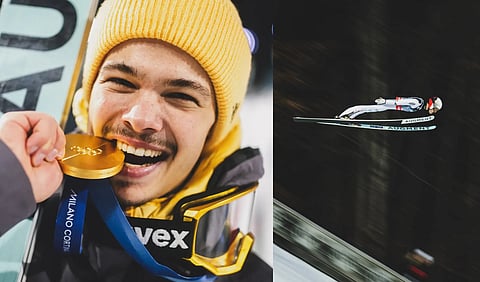
Philipp Raimund won Olympic gold in ski jumping at the 2026 Winter Olympics
He has publicly acknowledged living with a fear of heights
Fear of heights does not automatically limit elite athletic performance
Sports psychology strategies can help athletes compete despite anxiety
Philipp Raimund of Germany won the gold medal in men’s ski jumping at the 2026 Winter Olympics in Italy, delivering the top performance in the normal hill event. His victory drew attention not only for the sporting achievement but also because Raimund has openly spoken about living with a fear of heights.
Raimund has acknowledged that he experiences intense discomfort at extreme heights, a condition commonly referred to as fear of heights. According to multiple reports, this fear has influenced his competition choices in the past, including withdrawing from ski flying events where jumps occur from significantly greater elevations than standard Olympic hills.
Despite this, Raimund successfully competed under Olympic conditions, where ski jumpers descend from steep inruns at high speed before becoming airborne. His performance demonstrated that fear of heights does not prevent elite athletic performance when athletes are adequately trained and psychologically prepared.
Fear of heights, clinically known as acrophobia, is a type of anxiety disorder. People with this condition experience excessive fear when exposed to elevated places, even when there is no immediate danger. Symptoms may include dizziness, rapid heartbeat, sweating, muscle tension, and a strong urge to escape the situation.
It is important to note that not all fear of heights qualifies as acrophobia. Many people experience situational discomfort at heights without meeting the clinical criteria for a phobic anxiety disorder.
Acrophobia results from the brain’s threat response system becoming overactive. 1 The condition does not reflect physical weakness or lack of skill. Many individuals with acrophobia function normally in daily life but experience distress in height related situations.
Sports psychology research shows that athletes can perform effectively despite fear when they develop mental coping mechanisms. Techniques such as repeated exposure, controlled breathing, visualization, and structured training can help regulate fear responses. These strategies do not eliminate fear entirely but reduce its impact on focus and motor control.
Studies on athletic performance note that anxiety affects attention and reaction time, but consistent training can allow athletes to operate efficiently even when anxiety is present. This principle applies across multiple sports, including those involving height, speed, or perceived danger.
Fear related challenges are not unique to ski jumping. One well documented example is Cullen Jones, an Olympic swimmer from the United States.
Jones developed a fear of water after surviving a near drowning incident at the age of five. Following the incident, he avoided swimming and experienced anxiety around water. His family later enrolled him in swimming lessons for safety reasons. Through structured training and gradual exposure, he learned to manage his fear.
Jones went on to become a professional swimmer and won Olympic gold medals as part of the United States relay teams at the 2008 Beijing Olympics and the 2012 London Olympics. He has spoken publicly about how fear did not disappear completely but became manageable through training and confidence building.
Medical literature recognizes this process as exposure based adaptation, where repeated safe exposure reduces fear responses over time. This approach is commonly used in anxiety treatment and sports psychology.
Experts note that fear and phobia responses originate in the brain’s amygdala, which processes perceived threats. Athletes who compete despite fear often rely on conditioning and learned responses that allow motor skills to function independently of emotional discomfort.
Raimund’s Olympic performance illustrates how psychological adaptation and physical training can coexist with fear. His achievement highlights the role of mental resilience in elite sport rather than the absence of fear.
What is fear of heights?
Fear of heights, or acrophobia, is an anxiety disorder characterized by intense fear when exposed to elevated places, even without real danger.
Can athletes compete successfully with acrophobia?
Yes. With appropriate training, exposure strategies, and psychological preparation, athletes can perform at elite levels despite fear of heights.
Why did Philipp Raimund avoid ski flying events?
Ski flying involves significantly greater heights than standard Olympic ski jumping hills, which can intensify fear responses in individuals with acrophobia.
Does fear reduce athletic performance?
Fear can affect focus and reaction time, but structured training and coping strategies can allow athletes to perform effectively despite anxiety.
Cleveland Clinic. Acrophobia (fear of heights)
https://my.clevelandclinic.org/health/diseases/21956-acrophobia-fear-of-heights
Team USA. Cullen Jones athlete profile
https://www.teamusa.com/profiles/cullen-jones
USA Swimming. Cullen Jones biography and Olympic achievements
https://www.usaswimming.org
National Institutes of Health. Anxiety, exposure therapy, and performance adaptation
https://www.ncbi.nlm.nih.gov
Raj, Deepak. “From Anxiety to Achievement: Unlocking Your Full Athletic Potential.” International Journal of Sports, Health and Physical Education (2025). https://www.physicaleducationjournal.in/archives/2025/vol7issue2/PartF/7-2-59-808.pdf.
Brown, Poppy. “How to Overcome a Fear of Heights.” Psyche. Accessed February 11, 2026. https://psyche.co/guides/how-to-overcome-a-fear-of-heights-step-by-careful-step.
Gabrys, Katarzyna, and Antoni Wontorczyk. “Sport Anxiety, Fear of Negative Evaluation, Stress and Coping as Predictors of Athlete’s Sensitivity to the Behavior of Supporters.” International Journal of Environmental Research and Public Health 20, no. 12 (June 8, 2023). Accessed February 11, 2026. https://www.ncbi.nlm.nih.gov/pmc/articles/PMC10298221/.
(Rh/MSM)
