Can Sleep Earbuds Improve Your Sleep? What Studies Reveal About Noise Reduction and Better Rest

Research suggests sleep earbuds may help reduce nighttime disturbances and improve sleep quality.
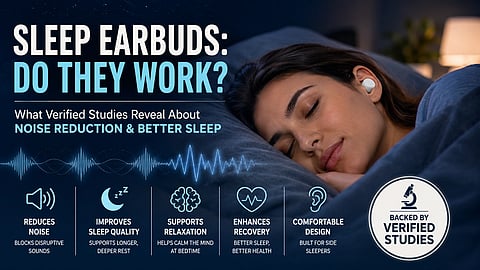
A woman sleeping with earbuds on and text on poster.
Many sleep earbuds rely on white noise, ambient sounds, or nature soundscapes rather than simply blocking sound.AI image
Published on
Updated on

Getting a good night's sleep has become increasingly difficult in today's noisy world. Traffic sounds, snoring partners, neighborhood activity, and other environmental disturbances often interrupt sleep, leaving people tired and less productive the next day. In response, sleep earbuds have emerged as a popular sleep technology designed to mask unwanted sounds and create a more restful sleep environment.

But do sleep earbuds actually work?

A growing body of scientific evidence suggests that noise-masking sleep earbuds and related sound-based sleep interventions may improve sleep quality, particularly for people exposed to disruptive nighttime noise. While researchers continue to study their long-term effectiveness, several peer-reviewed studies have reported encouraging results.

Scientific Studies Suggest Sleep Earbuds Can Improve Sleep Quality

One of the most relevant studies examining sleep earbuds is "The Effect of Noise-Masking Earbuds (SleepBuds) on Reported Sleep Quality and Tension in Health Care Shift Workers" by Duggan and colleagues, published in JMIR Formative Research in 2022.

The researchers evaluated noise-masking earbuds among healthcare shift workers, a population known to experience sleep difficulties because of irregular work schedules. Participants used earbuds designed to reduce environmental noise while playing calming sounds throughout the night.

The study found significant improvements in self-reported sleep quality. Participants also reported lower levels of daytime sleepiness and reduced tension. Researchers noted that the greatest benefits were observed among individuals who initially experienced poorer sleep.

These findings suggest that sleep earbuds may be particularly helpful for people whose sleep is regularly disrupted by external noise.

White Noise May Be the Secret Behind Better Sleep

Many sleep earbuds rely on white noise, ambient sounds, or nature soundscapes rather than simply blocking sound.

Support for this approach comes from the 2021 study "The Effects of White Noise on Sleep and Duration in Individuals Living in a High Noise Environment" by Ebben and colleagues.

Researchers investigated whether white noise could improve sleep among people exposed to environmental noise. The study found improvements in both subjective and objective measures of sleep quality. Participants experienced better sleep continuity and longer sleep duration when white noise masked disruptive sounds.

These findings support one of the primary mechanisms used by modern sleep earbuds: replacing unpredictable environmental noise with consistent background audio.

Systematic Review Finds Promise in Noise-Masking Sleep Aids

Individual studies provide valuable insights, but systematic reviews help determine whether findings remain consistent across multiple investigations.

In 2021, researchers published "Noise as a Sleep Aid: A Systematic Review," examining available evidence on white noise and sound masking as sleep interventions.

The review found that sound masking may reduce the disruptive effects of sudden environmental noises that often fragment sleep. The authors concluded that sound-based sleep aids show promise but emphasized the need for larger and higher-quality clinical studies to strengthen the evidence base.

Despite these limitations, the review supports the growing interest in non-drug approaches to improving sleep quality.

New Research Continues to Explore Electronic Sleep Earbuds

Researchers have also begun studying modern electronic sleep earbuds more directly.

A 2024 pilot study examining electronic noise-masking earbuds and sleep outcomes investigated how these devices influenced both perceived and objective sleep measures.

The researchers reported improvements in participants' perceptions of sleep quality and suggested that electronic noise-masking earbuds may serve as a useful non-pharmacological sleep aid. However, they also noted that additional large-scale studies are necessary before firm conclusions can be drawn.

The study reflects increasing scientific interest in wearable sleep technology and its potential role in improving sleep health.

A woman sleeping on pillow.
Current evidence suggests that sleep earbuds are generally safe when used appropriately.Andrea Piacquadio/Pexels

What About Pink Noise?

Many sleep earbuds now include pink noise soundscapes alongside traditional white noise.

Pink noise differs from white noise because it emphasizes lower frequencies, creating a softer and more balanced sound profile. Research investigating pink noise has suggested potential benefits for slow-wave sleep, often referred to as deep sleep.

Some studies have also linked pink noise exposure during sleep with improved memory consolidation and reduced sleep fragmentation. Although these studies did not specifically investigate sleep earbuds, they provide additional support for sound-based sleep interventions.

Sleep Earbuds vs. Traditional Earplugs

Sleep Earbuds Available Today

As interest in sleep technology grows, several companies have introduced products specifically designed for overnight use.

Ozlo Sleepbuds

Ozlo Sleepbuds were developed by former members of the team behind Bose Sleepbuds. The earbuds are designed specifically for sleep rather than music listening and feature noise-masking sounds intended to reduce disturbances from snoring, traffic, and other environmental noises. The company also emphasizes comfort for side sleepers and overnight wear.

Soundcore Sleep Series by Anker

The Soundcore Sleep series includes sleep-focused earbuds designed with features such as sound masking, sleep audio libraries, and sleep tracking capabilities. These products aim to create a quieter and more comfortable sleeping environment.

SleepPhones by AcousticSheep

SleepPhones use a different approach by placing flat speakers inside a soft fabric headband. Developed by physician Dr. Wei-Shin Lai, the product allows users to listen to white noise, meditation content, or calming audio without inserting earbuds into the ear canal, making it an alternative for users who find traditional earbuds uncomfortable.

Are Sleep Earbuds Safe?

Current evidence suggests that sleep earbuds are generally safe when used appropriately. Comfort, hygiene, and appropriate volume levels remain important considerations for regular users.

Although sleep earbuds are not a treatment for chronic insomnia or underlying sleep disorders, they may offer a useful, non-drug option for people seeking better sleep in noisy environments.

A woman sleeping with earbuds on and text on poster.
Are Sleeping Masks Effective? What Science Says About Eye Masks, Sleep Quality, and Alertness
logo
Medbound Times
www.medboundtimes.com