
- Home
- About Us
- Contact Us
- Biography
- MedBound Hub
- InternshipInternship
- Daily Pulse
- Medicine
- Physical Therapy
- InterviewInterview
- Pharmacy
- Biotechnology
- College/InstituteCollege/Institute
- Dentistry
- Blog
- Wellness & Nutrition
- Nursing
- Opinion

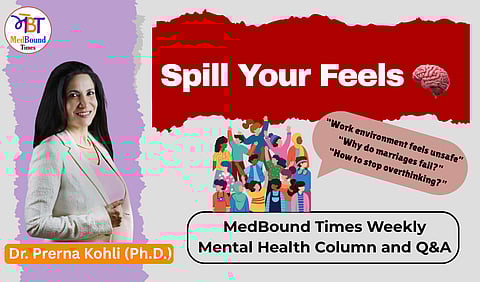
Welcome to Spill Your Feels – a special weekly column on MedBound Times where readers can send in their queries on mental health, emotional wellbeing, relationships, marriage, and sex. Each week, Dr. Prerna Kohli shares her insights and practical advice to help you navigate challenges and live a healthier life. From stress and parenting to work-life balance and relationships, this column sheds light on the everyday pressures of life with compassion and expertise.
Dr. Prerna Kohli is an eminent clinical psychologist with a Ph.D. in Clinical Psychology from Aligarh Muslim University, UP, India. Awarded among the 100 Women Achievers of India by the President of India, she is a public speaker, researcher, and social worker. With decades of experience, Dr. Kohli specializes in issues such as substance abuse, parental and marital counselling, relationship challenges, eating disorders, depression, and more.
Anonymous asks:
I am a married 31-year-old woman on TB medication since June 2025. I used to be extroverted, energetic, and active. I have a mild TB infection and strong support at home, especially from my husband. But the medication has left me exhausted and nauseous. My office peers know this, yet one male colleague keeps questioning my targets and performance. I had a verbal argument with him in front of my manager and broke down. I’m usually strong, but lately I cry easily. My work environment feels unsafe and unsupportive. What should I do?
Dr. Prerna Kohli: Your fatigue is not a character flaw, it’s a medical side effect. TB medication is harsh, even when the infection is mild. Crying doesn’t mean you’ve become weak, it means your system is under strain. At work, stop explaining yourself repeatedly. Put your health status and temporary limitations in writing through HR or your manager. That protects you. You’re not responsible for educating insensitive colleagues. Lean on the support you have at home and save your energy for healing. This phase will pass. Recovery is your priority, not proving strength.
Lenovo asks:
Do most marriages fail due to ego clashes? If so, should couples consider relationship counselling beforehand as a precaution?
Dr. Prerna Kohli: Marriages don’t fail because of ego alone. They fail when listening stops and scorekeeping begins. Ego is just the symptom. Premarital counselling helps couples talk about money, boundaries, families, sex, and expectations before resentment builds. It’s not a sign of weakness, it’s preparation. You don’t wait for illness to see a doctor. Marriage deserves the same foresight. Love brings people together, but skills keep them together.
Dr. Sunny asks:
I have been under treatment for mild depression for the past month and have seen improvement. My medication dose has been reduced. I still overthink a lot and want to break the chain. How do I keep overthinking in check?
Dr. Prerna Kohli: Overthinking slows when you stop feeding it. When you notice your mind looping, shift your body. Walk, stretch, or breathe slowly. Movement interrupts thought better than logic. Set aside a daily worry window and postpone overthinking until then. Most worries never show up. Write thoughts down instead of carrying them all day. You’re already improving, so don’t rush yourself. Healing isn’t a silent mind, it’s knowing when not to listen.
This is your space to ask, share, and reflect. Write to Spill Your Feels with your queries on relationships, mental health, marriage, or personal struggles. Selected questions will be answered in upcoming editions of this column on MedBound Times.
Submit your question here!
