When Dinesh Thakur walked away from a senior leadership role at Ranbaxy Laboratories in 2005, he could not have anticipated that his decision would expose one of the largest pharmaceutical fraud cases in history. His evidence of falsified drug data and manufacturing violations ultimately led to an eight-year investigation by United States authorities, a historic $500 million settlement, and increased global scrutiny of drug manufacturing standards.
More than a decade after the settlement, Thakur continues to advocate for stronger pharmaceutical regulation through public writing, litigation, and testimony before lawmakers in both India and the United States. He has consistently argued that patient safety must take precedence over commercial interests and that stronger regulatory oversight is essential to ensuring medicine quality.
Before joining Ranbaxy, Thakur spent nearly ten years at Bristol-Myers Squibb in the United States, where he trained in pharmaceutical research, drug development, and manufacturing. In 2003, he returned to India to join Ranbaxy Laboratories as Director and Global Head of Research Information and Portfolio Management.
His responsibilities gave him access to scientific data, manufacturing records, and regulatory submissions prepared for health authorities worldwide. During his tenure, he began identifying serious inconsistencies in the company's quality and regulatory documentation.
According to Thakur, his role also involved reviewing data used to support drug approvals across multiple international markets, including submissions to the U.S. Food and Drug Administration (FDA), giving him a broad understanding of the company's global operations.
Between 2003 and 2005, while serving as Director and Global Head of Research Information and Portfolio Management at Ranbaxy Laboratories, Dinesh Thakur uncovered widespread evidence of falsified laboratory data, manipulated manufacturing records, and systemic violations of current Good Manufacturing Practices (cGMP). According to later findings by U.S. authorities, these records were among the data and documentation submitted to regulators, including the U.S. Food and Drug Administration (FDA).
Rather than viewing the irregularities as isolated incidents, Thakur believed they reflected deeper failures within the company's quality systems. He first raised his concerns with Ranbaxy's senior management, hoping the issues would be investigated and corrected.
When the company failed to take adequate corrective action, he resigned in 2005 and reported his findings to the U.S. FDA. In 2007, he filed a whistleblower lawsuit under the U.S. False Claims Act, allowing federal investigators to examine the evidence while the case remained under seal.
According to documents released after the settlement, Thakur spent approximately two years working confidentially with U.S. authorities, helping investigators understand the technical aspects of the company's manufacturing and data practices before the case became public.
Over the next eight years, Thakur worked closely with investigators from the U.S. FDA and the Department of Justice, helping them understand Ranbaxy's internal records and regulatory submissions.
The investigation concluded that the company had submitted false statements to the FDA, falsified drug data, and failed to comply with required manufacturing standards. According to the U.S. Department of Justice, some drugs manufactured at Ranbaxy's Paonta Sahib (Himachal Pradesh) and Dewas (Madhya Pradesh) facilities were adulterated under U.S. law because they were not produced in compliance with current Good Manufacturing Practice regulations. The government also alleged that certain medicines differed from approved specifications or were not manufactured according to FDA-approved formulations.
On May 13, 2013, Ranbaxy USA Inc. pleaded guilty to seven felony charges, including manufacturing adulterated drugs and making false statements to the FDA. The guilty plea covered adulterated batches of several medicines, including atorvastatin, gabapentin, ciprofloxacin, and amoxicillin/clavulanate, along with making false statements to the FDA regarding the acne medication Sotret (isotretinoin).
The company agreed to pay $500 million to resolve criminal and civil allegations, making it the largest drug safety settlement involving a generic pharmaceutical manufacturer at the time. The settlement included $150 million in criminal fines and forfeitures and $350 million to resolve civil claims under the False Claims Act.
The Department of Justice stated that Ranbaxy knowingly manufactured, distributed, and sold certain drugs whose strength, purity, or quality differed from approved specifications or were not manufactured according to FDA-approved formulations. The settlement also followed an FDA injunction that prevented products from the Paonta Sahib and Dewas facilities from entering the U.S. market until the plants complied with regulatory requirements and required the company to review and verify data submitted in previous drug applications. The FDA also placed multiple Ranbaxy manufacturing facilities under import alerts over several years, preventing products manufactured at those facilities from entering the U.S. market until regulatory deficiencies were addressed.
The case is widely regarded as a turning point in global oversight of generic drug manufacturing, prompting greater international attention to data integrity and quality assurance practices.
The civil settlement also resolved allegations that false claims had been submitted to U.S. government healthcare programs, including Medicare, Medicaid, TRICARE, the Department of Veterans Affairs, the Federal Employees Health Benefits Program, and USAID-supported programs, for drugs manufactured at the affected facilities.
As the whistleblower whose evidence initiated the case, Thakur received approximately $48.6 million under the False Claims Act's qui tam provisions.
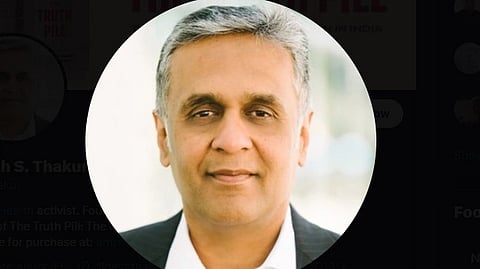
Although the U.S. case had concluded, Thakur believed similar regulatory concerns persisted in India.
In 2016, he filed a Public Interest Litigation (PIL) in the Supreme Court of India, alleging that Indian drug regulators had failed to adequately enforce existing quality standards. The petition sought greater transparency, stronger inspections, and more rigorous implementation of drug safety regulations.
Speaking to Reuters at the time, Thakur argued that the issue was not India's pharmaceutical industry itself, but inconsistent regulatory enforcement. He maintained that robust oversight was essential to maintaining public confidence in medicines manufactured in the country.
Among the reforms sought in his legal challenge were stronger systems for recalling unsafe medicines and greater accountability in India's drug approval and regulatory framework.
Thakur has continued to campaign for stronger pharmaceutical regulation long after the Ranbaxy case.
In 2022, he co-authored The Truth Pill: The Myth of Drug Regulation in India, examining weaknesses in India's drug regulatory system and calling for structural reforms.
On February 6, 2024, he testified before the U.S. House Committee on Energy and Commerce, where he highlighted the growing global dependence on medicines manufactured outside the United States. In his testimony, he argued that overseas inspections should be as rigorous as domestic inspections and stressed that regulators must have reliable access to manufacturing data to ensure medicine quality. Thakur has repeatedly argued that regulators cannot assure medicine quality when they cannot trust the underlying manufacturing and laboratory data submitted by manufacturers. He emphasized that ensuring data integrity, manufacturing quality, and effective regulatory oversight is critical as pharmaceutical supply chains become increasingly global.
References:
1. Thakur, Dinesh. “About.” Dinesh Thakur: Safe and Effective Generic Medications. Accessed July 14, 2026. https://dineshthakur.com/about-2/
2. Thakur, Dinesh S. Witness Testimony before the House Committee on Energy and Commerce, Subcommittee on Oversight and Investigations: "Protecting American Health Security: Oversight of Shortcomings in the FDA's Foreign Drug Inspection Program." 118th Cong., 2nd sess., February 6, 2024. U.S. House of Representatives. PDF. https://www.congress.gov/118/meeting/house/116819/witnesses/HHRG-118-IF02-Wstate-ThakurD-20240206.pdf
3. U.S. Department of Justice, Office of Public Affairs. “Generic Drug Manufacturer Ranbaxy Pleads Guilty and Agrees to Pay $500 Million to Resolve False Claims Allegations, cGMP Violations and False Statements to the FDA.” Press release, May 13, 2013. Accessed July 14, 2026. https://www.justice.gov/archives/opa/pr/generic-drug-manufacturer-ranbaxy-pleads-guilty-and-agrees-pay-500-million-resolve-false?
4. U.S. Food and Drug Administration. “FDA Prohibits Manufacture of FDA-Regulated Drugs from Ranbaxy’s Mohali, India, Plant and Issues Import Alert.” Press release, September 16, 2013. Accessed July 14, 2026. https://wayback.archive-it.org/7993/20161023125642/http:/www.fda.gov/NewsEvents/Newsroom/PressAnnouncements/ucm368445.htm
5. U.S. Food and Drug Administration. “FDA Takes New Regulatory Action Against Ranbaxy’s Paonta Sahib Plant in India.” Press release, February 25, 2009. Accessed July 14, 2026. https://wayback.archive-it.org/7993/20170112025855/http://www.fda.gov/NewsEvents/Newsroom/PressAnnouncements/2009/ucm149532.htm
6. Bansal, Deepak, and Sanjay Kumar. “The Ranbaxy Story: A Continuing Legacy of Regulatory Failure.” Journal of Pharmacology and Pharmacotherapeutics 11, no. 2 (2020): 53-56. Accessed July 14, 2026. https://pmc.ncbi.nlm.nih.gov/articles/PMC7309676/