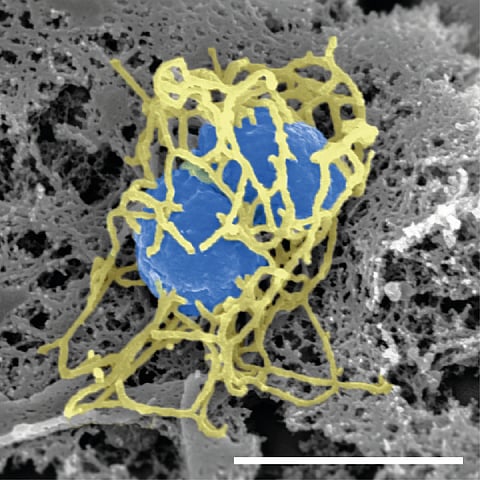
Scanning electron micrograph of a single N. meningitidis cell (colorized in blue) with its dense meshwork of pili (colorized in yellow).
Health teams intensify surveillance at Assam Regimental Centre, Shillong, following suspected meningococcal infection cases.Arthur Charles-Orszag/Wikimedia commons

Meningococcal Infection Scare at Shillong Army Centre After Two Agniveer Deaths Triggers Urgent Surveillance and Isolation Measures

Two Agniveer deaths prompt intensified surveillance and preventive measures at Shillong training facility
Published on

Meghalaya, 28 February, 2026: Health authorities in Meghalaya have intensified surveillance after two Agniveer trainees died from a suspected meningococcal infection at the Assam Regimental Centre (ARC) in Shillong. Officials have launched an epidemiological investigation and initiated containment measures while awaiting laboratory confirmation.

Suspected Meningococcal Cases Reported at Meghalaya Army Training Centre

The Meghalaya government began a detailed probe following the deaths of two trainees who developed symptoms of severe bacterial illness during training at the ARC. Both were admitted to the Military Hospital in Shillong but did not survive.

The fatalities occurred within a short interval, prompting heightened medical surveillance inside the military facility and nearby areas. Authorities are working to determine whether Neisseria meningitidis is the confirmed cause.

The advisory released by Health Commissioner Dr. Joram Beda stated that,

The State Surveillance Unit (SSU) has been notified of suspected cases of meningococcal infection. The District Surveillance Unit (DSU), East Khasi Hills, in coordination with the SSU, has initiated an active epidemiological investigation.

Dr. Joram Beda, Health Commissioner

What Is Meningococcal Disease and Why It Is Serious

Meningococcal disease is a bacterial infection caused by Neisseria meningitidis. It can present as meningitis, septicemia, or both. The illness can progress rapidly and may become life-threatening if treatment is delayed.

Public health experts note that although outbreaks are uncommon, the infection demands urgent response because deterioration can occur within hours.

Case investigation, contact tracing, laboratory review, and surveillance strengthening measures are currently underway. The SSU reassures the public that the situation is being closely monitored and is presently under control, and no new suspected cases have been detected in any other area.

Dr. Joram Beda, Health Commissioner

Who Is at Higher Risk of Infection

The current cluster involves young adult trainees living in close quarters, a known high-risk environment. Meningococcal bacteria spread through respiratory droplets and prolonged close contact.

Institutional settings such as military barracks, hostels, and dormitories are particularly vulnerable because crowding facilitates transmission.

Early Symptoms of Meningococcal Infection to Watch For

Health authorities have advised the public and personnel to remain alert for warning signs, which may include:

  • Sudden high fever

  • Severe headache

  • Vomiting

  • Neck stiffness

  • Sensitivity to light

  • Unusual skin rash

How Neisseria meningitidis Spreads in Close Settings

The bacterium typically colonizes the upper respiratory tract and spreads via droplets from coughing, sneezing, or close contact. Shared living spaces increase exposure risk, which explains the concern in the training centre environment.

Many carriers remain asymptomatic, making surveillance and contact tracing essential during suspected clusters.

Containment Measures Implemented by Health Authorities

State and military health teams have initiated multiple control steps, including:

  • Activation of the State Surveillance Unit

  • Contact tracing and medical observation of exposed trainees

  • Preventive antibiotic administration

  • Strengthened hygiene and sanitation measures

  • Expanded monitoring in surrounding areas

Several trainees have been kept under observation, most of whom are reported to be stable.

In a statement issued on Thursday, the Army reported that no new suspected cases of meningococcal bacterial infection have been identified at the Assam Regimental Centre in Shillong.

“Intensive monitoring and surveillance is being carried out by the Army medical authorities. Medical facilities have been augmented as necessary. As a precautionary measure, contacts of the earlier case have been detained under isolation at MH Shillong. Masking and restricted movement protocols continue to be in place,” the statement said.

Importance of Early Diagnosis and Treatment

Meningococcal infection requires rapid antibiotic therapy and supportive care. Early recognition, chemoprophylaxis for contacts, and coordinated surveillance are critical to preventing secondary cases.

The ongoing laboratory investigation will determine whether additional interventions, such as broader screening or vaccination, are necessary.

Public Health Advisory for High-Risk Communities

The Meghalaya Health Department has urged residents to maintain hand hygiene, follow respiratory etiquette, and seek medical care promptly if symptoms develop. Authorities have also advised the public to avoid spreading unverified information and to remain calm while investigations continue.

At present, officials report that the risk to the general public appears low, but monitoring remains active as the probe continues.

References

1. Borrow, Ray, et al. 2025. “Current Global Trends in Meningococcal Disease Control, Risk Groups and Vaccination: Consensus of the Global Meningococcal Initiative.” Journal of Infection 91 (5): 106635. https://doi.org/10.1016/j.jinf.2025.106635.

(Rh/SS/MSM)

Scanning electron micrograph of a single N. meningitidis cell (colorized in blue) with its dense meshwork of pili (colorized in yellow).
UK: 31-Year-Old Mother of Three Dies after Waking up from a Nap
logo
Medbound Times
www.medboundtimes.com