Nagpur’s medical fraternity and patients are in shock following the sudden death of Dr. Chandrashekhar Pakhmode, a prominent neurosurgeon whose career spanned more than 25 years. Dr. Pakhmode died from a heart attack on 31 December 2025 at the age of 53, collapsing early in the morning outside his home in Ramdaspeth before being rushed to hospital. Despite resuscitation efforts by senior cardiologists, he could not be revived.
Dr. Pakhmode was widely recognised as one of central India’s leading brain and spinal surgeons, affiliated with Neuron Hospital in Dhantoli, Nagpur. Over his more than two decades of practice, he handled numerous complex neurological and neurosurgical cases, gaining respect for both his surgical skill and his compassionate care for patients.
An alumnus of Government Medical College and Hospital (GMCH), Nagpur, Dr. Pakhmode’s clinical impact extended beyond individual cases, with colleagues and medical institutions praising his role in advancing neurosurgical practice in the region.
Dr. Pakhmode reportedly stepped out of his residence around 6 a.m. on 31 December 2025 when he suddenly collapsed due to a massive heart attack. His wife, Dr. Manisha Pakhmode, an anaesthetist, immediately attempted resuscitation and took him to the hospital, where he was put on ventilator support and underwent extensive emergency care, including prolonged chest compressions and electrical shocks to correct irregular heart rhythms. Despite these efforts, he could not be revived.
Colleagues noted that Dr. Pakhmode had no known health issues and had undergone a routine ECG just three days earlier, which reportedly showed no abnormalities, underscoring how sudden cardiac events can occur even in individuals without obvious warning signs.
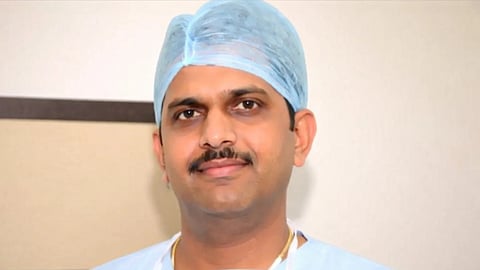
The news of Dr. Pakhmode’s passing prompted an outpouring of tributes from across the medical community, institutions and public figures:
GMCH officials described him as a “gem” whose loss was a “huge shock” to society and patients.
Union Minister Nitin Gadkari and Maharashtra Chief Minister Devendra Fadnavis expressed deep sorrow, acknowledging his contributions to saving countless lives through complex neurosurgical procedures.
AIIMS Nagpur leadership and peers highlighted his skill, humility and compassionate patient care.
Thousands of colleagues, former patients, relatives and well-wishers attended his funeral at Mokshadam, paying homage to his life and service.
The unexpected nature of Dr. Pakhmode’s death has also sparked broader discussion on cardiac risk factors that may not be evident on routine tests. Cardiologists note that even individuals with a normal ECG and otherwise healthy lifestyle can suffer acute myocardial infarction if underlying risk factors such as stress, burnout, or hidden arterial plaque, go undetected. Standard ECGs mainly assess electrical activity and may not detect coronary artery blockages or plaque vulnerability, which can lead to sudden events.
Medical professionals emphasise that regular comprehensive cardiovascular evaluations, including lipid profiles, stress testing and advanced imaging where appropriate, may help identify hidden risk.
Dr. Pakhmode is survived by his 80-year-old mother, his wife Dr. Manisha Pakhmode, his son Dr. Advait, and his daughter Ananya, a medical student. His dedication to his patients and personalized care has left a lasting legacy in Nagpur’s healthcare landscape.
(Rh/TL)