Supreme Court Allows Medical Degrees for Students with Invalid ST Certificates, Citing Doctor Shortage

Top Court Rules in Favor of Two MBBS Graduates Denied Degrees Over Tribal Certificate Irregularities
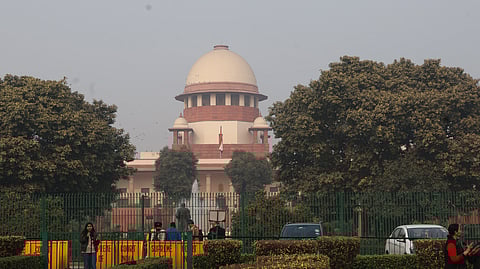
Supreme court building.
The students petitioned the Supreme Court, arguing that they had completed the entirety of their medical education, including clinical training and passing exams, and should not be denied degrees.Newsgram
Published on
Updated on

The Supreme Court of India has upheld the awarding of medical degrees to two MBBS graduates who had secured admission based on invalid Scheduled Tribe (ST) certificates, while also directing each student to pay ₹10 lakh in compensation, citing the nation’s acute shortage of qualified doctors and the need to avoid wasting trained medical professionals, according to reporting by Medical Dialogues.

Background: Admission With Invalid Tribal Certificates

The case concerns two students who gained admission to an MBBS programme in a state medical college in Maharashtra using ST certificates that were later found to be invalid by authorities. As part of the admissions verification process, the certificates were challenged, and the students were consequently denied their degrees despite having completed the full course and exams.

The contention was that admission into a reserved category seat based on an invalid certificate made the admission process flawed, and that the students’ degrees could not be formally issued.

Legal Petition and Supreme Court Ruling

The students petitioned the Supreme Court, arguing that they had completed the entirety of their medical education, including clinical training and passing exams, and should not be denied degrees that would prevent them from practising medicine.

In its judgment, the Supreme Court acknowledged the shortage of doctors in India, noting that withholding degrees after years of medical education would be disproportionate to the administrative error. The court stated that invalidity of the ST certificate at the time of admission should not render the entire professional qualification void, especially given the national need for medical professionals.

Accordingly, the court directed that the two students be issued their MBBS degrees, allowing them to register with medical councils and practise medicine following completion of licensing requirements. However, each was ordered to pay ₹10 lakh in compensation within 3 months to Maharashtra University of Health Sciences (MUHS), reflecting a judicial balance between remedy and deterrence.
Building of Maharashtra University of Health Sciences, Nashik Maharashtra
Maharashtra University of Health Sciences, Nashik Maharashtra@NSSMUHSNASHIK - X

Doctor Shortage in India: Context

India has a longstanding shortage of doctors relative to population. The World Health Organization (WHO) recommends a minimum threshold of 1 doctor per 1,000 population, but India’s national average varies widely by state and often falls below this benchmark, particularly in rural regions.

Shortages are compounded by uneven geographic distribution, with urban centres having far higher doctor density than rural and underserved areas.

The Supreme Court’s reference to the doctor shortage reflects these systemic workforce constraints. Ensuring that trained medical graduates enter the workforce is considered critical to meeting healthcare delivery needs across the country.

The ruling highlights the judicial balancing act between enforcing administrative eligibility rules and preventing loss of trained healthcare personnel. The condition of compensation seeks to acknowledge procedural irregularities while not unduly penalising medically educated individuals.

(Rh)

Related Stories

No stories found.
logo
Medbound Times
www.medboundtimes.com