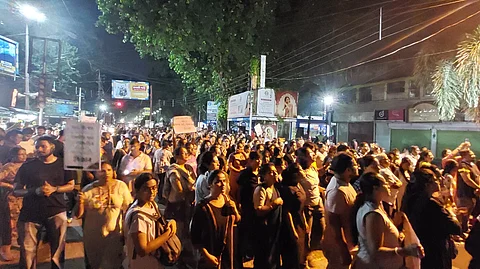
Female activists who have taken to the streets to protest say the incident brings to light the sexual violence women in India face despite stricter laws established in 2012 after the gang rape and murder of a 23-year-old student on a moving bus.
This wave of demonstrations has drawn support from civil society groups, women’s rights advocates, and medical students, all of whom argue that the tragedy has once again exposed the gap between existing laws and ground-level implementation. The 2012 reforms were meant to significantly enhance safety and speed up justice for survivors, but activists insist that cultural change and stronger enforcement are still lacking.
Protesters are demanding stricter laws surrounding attacks on on-duty medics, including making any attack a crime without the possibility of bail and increasing security at hospitals.
Doctors’ unions have emphasized that many hospitals do not have functioning CCTV systems, secure duty rooms, or adequate staffing during night shifts—factors that leave medical workers, especially women, vulnerable. Their demands also highlight the emotional toll on young professionals who already work in high-pressure environments with limited institutional support.
The government is asking doctors to return to work and has said that it will set up a committee to evaluate the demands.
Officials have urged medical staff to balance public safety with protest action, noting that prolonged disruptions could affect patient care nationwide. At the same time, they acknowledged the seriousness of the incident and promised that the committee would include representatives from various medical bodies to ensure transparency and fairness in the review process.