
- Home
- About Us
- Contact Us
- Biography
- MedBound Hub
- InternshipInternship
- Daily Pulse
- Medicine
- Physical Therapy
- InterviewInterview
- Pharmacy
- Biotechnology
- College/InstituteCollege/Institute
- Dentistry
- Blog
- Wellness & Nutrition
- Nursing
- Opinion

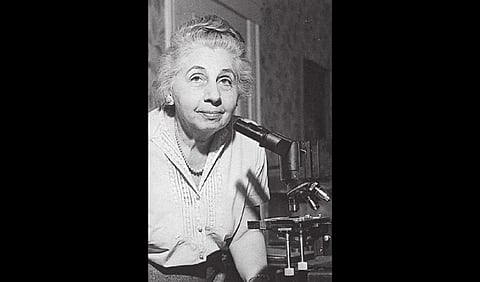
Andromachi Papanikolaou supported early research that contributed to the development of the Pap smear for cervical cancer screening.
The Pap smear was developed by cytopathologist George Nicholas Papanicolaou to detect abnormal cervical cells early.
She assisted with laboratory work and participated in early cervical cytology studies.
Research conducted at Cornell University Medical College helped establish Pap smear testing.
Pap smear screening has significantly reduced cervical cancer deaths worldwide.
Cervical cancer screening has played an important role in reducing cancer-related deaths among women worldwide. One of the most widely used screening methods is the Papanicolaou test, commonly known as the Pap smear.
The test was developed by cytopathologist Dr. George Nicholas Papanicolaou, whose research showed that cancerous and precancerous changes could be detected by examining cervical cells under a microscope.³
However, the early laboratory work that contributed to this discovery was not carried out alone. His wife, Andromachi “Mary” Mavrogeni Papanikolaou, played an important supporting role in the research that helped establish cervical cytology as a method of early cancer detection.¹ ²
Through her assistance in laboratory work and participation in experimental studies, she contributed to research that would later transform cervical cancer prevention worldwide.¹ ³
Andromachi Mavrogeni Papanikolaou was born in Greece around 1890. She later married physician and researcher George Papanikolaou. In 1913, the couple moved to the United States, where George began working at Cornell University Medical College in New York.2
The couple emigrated to the United States soon after their marriage in search of research opportunities. During their early years in America, they experienced financial difficulties and Andromachi worked in different roles to support the household while George pursued his scientific work. ⁵
During the early years of their work in the United States, Andromachi supported the research conducted by her husband. Although she did not hold a formal scientific position, she assisted with laboratory work and helped manage many of the routine tasks necessary for maintaining ongoing experiments.¹
She also worked as George Papanicolaou’s laboratory assistant at Cornell, preparing slides, helping with specimen handling, and assisting with the daily operations of the research laboratory. ⁴ ⁵
Andromachi Papanikolaou contributed to the research that led to the development of the Pap smear, a screening test used to detect abnormal cervical cells before they progress to cancer. The method involves examining cells collected from the cervix under a microscope to identify early cellular changes associated with malignancy.³ ⁶
A significant part of her contribution involved serving as a research participant for many years. She allowed cervical cell samples to be collected regularly so that the microscopic structure and changes of cervical cells could be studied. These repeated samples allowed researchers to observe the characteristics of normal cells and compare them with abnormal cellular patterns.¹ ⁴
Her participation helped researchers understand the cyclic changes that occur in cervical and vaginal cells during the menstrual cycle, which was important for interpreting cytological findings. ³
These observations helped Dr. Papanikolaou develop the method of examining exfoliated cervical cells through cytological analysis, which later became known as the Pap test.
The research that eventually resulted in the Pap smear began in the early twentieth century at Cornell University Medical College in New York. During the 1910s and 1920s, George Papanikolaou conducted studies on cellular changes in the female reproductive system using microscopic examination of vaginal and cervical smears.²
In 1928, he reported that cancer cells could be identified through cytological examination of cervical samples. He first presented these findings at the Third Race Betterment Conference in Battle Creek, Michigan.³ ⁴
Although the method initially received limited attention, further studies during the 1940s demonstrated its value as a screening test for early detection of cervical cancer.³
The test gained wider acceptance after collaborative work with gynecologist Herbert Traut, which helped demonstrate the diagnostic accuracy of cervical cytology in identifying malignant cells.⁴
Early research in cytology required repeated human samples for observation. At the beginning of his work, George Papanikolaou had limited access to patients from whom samples could be collected. Andromachi’s participation allowed continuous observation of cervical cell samples, which was essential for studying cellular patterns over time.¹
She also encouraged other women to participate in the research by providing samples, which helped expand the pool of data available for cytological comparison. This helped researchers identify the differences between healthy cervical cells and those showing precancerous or cancerous changes.
Her willingness to repeatedly participate in the studies helped provide consistent specimens for the early cytological investigations that later formed the foundation of cervical cancer screening.¹
The Pap smear became one of the first effective cancer screening tools used in preventive medicine. By identifying abnormal cervical cells before they progress to invasive cancer, the test allows early treatment and improved outcomes.³
Following the introduction of organized screening programs in many countries during the mid-twentieth century, rates of cervical cancer incidence and mortality declined significantly.
In countries where regular screening programs were implemented, cervical cancer incidence and mortality decreased substantially over the following decades, demonstrating the effectiveness of cytology-based screening.³
The Pap smear remains an important component of women’s health screening and is often combined with testing for human papillomavirus (HPV), the primary cause of cervical cancer.³
Andromachi Papanikolaou supported her husband’s scientific work throughout his career. After George Papanikolaou’s death in 1962, she remained involved with efforts to preserve his research legacy, including work associated with the Papanicolaou Cancer Research Institute in Miami.¹
George Papanicolaou is widely regarded as a pioneer of modern cytopathology because his work demonstrated that malignant cells could be detected through microscopic examination of exfoliated cells.⁴
Although the Pap smear carries George Papanikolaou’s name, the development of this screening method relied on collaborative laboratory work and long-term experimental observation. Andromachi Papanikolaou’s participation in these early studies contributed to research that later transformed cervical cancer prevention worldwide.
Ladies in History. “Andromachi Papanikolaou: The Woman Who Saved Millions of Lives.” Accessed March 9, 2026. https://ladiesinhistory.com/andromachi-papanikolaou-woman-who-saved-millions-of-lives/
University of Texas Medical Branch. “The Woman Behind the Pap Smear.” MD News Podcast. Accessed March 9, 2026. https://www.utmb.edu/mdnews/podcast/episode/the-woman-behind-the-pap-smear.
Nayar, Ritu, and David C. Wilbur. “The Pap Test and Bethesda System.” Journal of Cytology / related cytology literature. PubMed. https://pubmed.ncbi.nlm.nih.gov/31051722/.
Vilos, George A. “Remembering George Papanicolaou: A Revolutionary Scientist.” Journal of Lower Genital Tract Disease 27, no. 1 (2023). https://journals.lww.com/jclgtp/fulltext/2023/01020/remembering_george_papanicolaou__a_revolutionary.1.aspx.
Greek City Times. “This Is the Story of Georgios Papanikolaou and His Wife Andromachi Mary Mavrogeni.” October 7, 2024. https://greekcitytimes.com/2024/10/07/this-is-the-story-of-georgios-papanikolaou-and-his-wife-andromachi-mary-mavrogeni-2/.
National Cancer Institute. “Pap Test.” Accessed March 9, 2026. https://www.cancer.gov/types/cervical/screening/pap-test.
Papanicolaou, George N. Dr. George Papanicolaou: The Visionary Who Revolutionized Cancer Detection. Historical archive document.
Diamantis, A., et al. “George N. Papanicolaou (1883–1962): Discoverer of the Pap Smear.” Diagnostic Cytopathology. https://pmc.ncbi.nlm.nih.gov/articles/PMC4613936/.
