
- Home
- About Us
- Contact Us
- Biography
- MedBound Hub
- InternshipInternship
- Daily Pulse
- Medicine
- Physical Therapy
- InterviewInterview
- Pharmacy
- Biotechnology
- College/InstituteCollege/Institute
- Dentistry
- Blog
- Wellness & Nutrition
- Nursing
- Opinion

Ageusia is a rare condition involving complete loss of taste, often linked to smell disorders.
Common causes include infections, medications, neurological conditions, and nutritional deficiencies.
Taste and smell training may help restore sensory function, especially in post-viral cases.
Early intervention and identification of reversible causes improve chances of recovery.
Recovery timelines vary, ranging from weeks to months depending on the underlying cause.
Imagine your favorite food suddenly tasting bland. This is ageusia. The ability to taste and smell plays a crucial role in guiding our nutritional choices. Loss of taste affects physical and mental well-being.
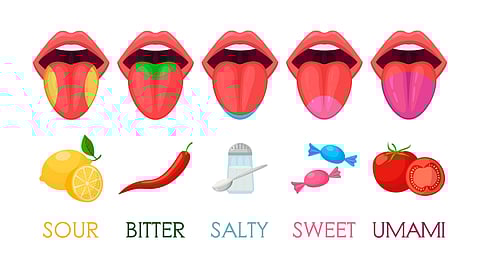
Ageusia is a rare condition characterized by the complete loss of taste function of the tongue, particularly sourness, saltiness, sweetness, bitterness, and umami. It is uncommon to have true ageusia. Although it is a medical condition in itself, it is often a symptom of anosmia, which is a loss of the sense of smell.
Taste and smell work so closely together that many people who believe they’ve lost their sense of taste actually discover it’s their sense of smell that’s affected. It’s common for doctors to find a smell disorder rather than a true taste problem in such cases.
Ageusia should be distinguished from related conditions such as dysgeusia, which refers to a distorted sense of taste, and hypogeusia, which refers to reduced taste sensitivity rather than complete loss. These distinctions are clinically important when evaluating patients with taste complaints.
Although ageusia is not a life-threatening condition, it can cause discomfort. It can lead to loss of appetite and weight loss, and can have a severe impact on a person's nutritional status. In those already dealing with health issues, stopping certain medications due to taste loss can create additional complications. Beyond the physical effects, the condition can also take a significant psychological toll. [9]
Several factors contribute to loss of taste:
Genetic disorders
Birth trauma or infections in the newborn period.
Head and Neck Tumors
Diabetes
Kidney failure
Liver damage
Alzheimer's disease
Viral
Bacterial
Fungal
Parasitic infections
Nutritional deficiencies are involved in taste alterations, such as zinc and copper deficiencies. [10]
Antibiotics like ampicillin, macrolides, metronidazole, quinolones, and tetracycline
Blood pressure medications, diuretics
Thyroid medications
Antidepressants
Antifungals
Antivirals
Bronchodilators
Neurologic medications (anti-Parkinsonism, CNS stimulants, migraine medications)
Ageing affects taste perception over time.
Use of dentures
Poor oral hygiene
Taste mainly serves three important functions:
Helps us filter out foods that are toxic and rotten
Prepares the body for digesting the food after ingestion
Tasting and eating are personal experiences. It helps us form happy memories when we eat our favorite things.
According to the NIDCD fact sheet on Taste Disorders, more than 200,000 people visit a doctor each year for issues related to taste and smell disorders.[1]
Taste buds on your tongue act as tiny receptors that can detect sweet, sour, salty, and bitter flavors. Nerves carry the signals from the front and back of the tongue via the facial and glossopharyngeal nerves and from the throat and epiglottis via the vagus nerves. These signals reach the brain stem nucleus, where information is processed. Signals travel via the thalamus to the taste center of the brain.
The gustatory cortex in the brain plays a role in taste recognition, while the orbitofrontal cortex combines taste with smell to perceive flavors.
Olfactory receptors are tiny cells in the nasal cavity that detect odours, sending messages to the olfactory bulb at the base of the brain via the olfactory nerve. The olfactory bulb sends signals to the olfactory cortex in the brain, where smells are recognized and identified. The smell signals also travel to the memory centers of the brain, linking smells with memories and emotions.
Our senses of taste and smell are closely linked. Food releases smell particles that travel via the retronasal pathway from the mouth to the nose, and olfactory receptors in the nose detect these particles and signal the brain. The brain combines these signals with the taste signals, creating the perception of flavor.
Research shows that this interlinking happens in brain areas such as the anterior insula and the orbitofrontal cortex (OFC), which combine gustatory and retronasal olfactory signals to create a unique flavor perception.
Cold and flu that lead to nasal congestion often block the retronasal pathway, obstructing the flow of smell particles from reaching the olfactory receptors, and the brain receives signals from the taste buds and misses the aroma information, resulting in food tasting bland.[2] [3] [4]
Taste rehabilitation is a set of techniques that were developed to help improve the sense of taste in patients with ageusia.
Taste and Sensory Training: Individuals suffering from loss of taste are exposed to the five basic tastes- sweet, sour, salty, bitter, and umami in different amounts over a period of time. The primary goal of taste and sensory training is to retrain the brain and taste buds to recognize and distinguish various flavors. It is often combined with olfactory training. [6]
Enhancement of Flavor: Spices and flavor enhancers are used to enhance the perception of flavors and the overall eating experience.
Nutritional Measures: Zinc, Vitamin A, and B12 deficiencies are often linked with loss of taste. Supplementing with these vitamins and minerals can help in cases of partial loss of taste.
Medications: Adjusting or switching off the offending drugs can help in partial recovery. No standard drug has been approved for Ageusia as of now.
Laser Therapy: Photomodulation with a diode laser showed promising results as a potential treatment for post-COVID dysgeusia.[5]
Patients can do olfactory training at home with several commercially available kits (usually including essential oils of rose, lemon, eucalyptus, and clove) or with free online protocols based on the classical Hummel method. [7]
When a person experiences a sudden loss of taste or smell, taste rehabilitation can occur within a few weeks after ruling out red-flag causes and getting acute inflammation or infection under control. It is often advised to begin rehabilitation early because data show that worse outcomes are associated with delayed treatment.
Treatment response depends on multiple factors. While some patients respond quickly in 2-3 months, chronic cases may require 6–12 months of regular practice.[8]
MedBound Times connected with Dr. Pratyusha Borugadda, MBBS, MD (Medicine) working as a Consultant Physician at Yashoda Hospital, Hyderabad.
She states,
Taste rehabilitation and olfactory training have become valuable components in supporting patients with ageusia, especially when the loss of taste is due to viral infections or inflammation. Because taste and smell work so closely together, structured re-exposure to basic taste profiles paired with daily scent training can activate residual pathways and gradually strengthen recovery. Management also involves identifying reversible contributors such as oral health issues, nutritional deficiencies, or medication effects. While recovery is often slow and may span several months, many patients do regain partial or even substantial taste function with consistent, early, and guided training.
Dr. Pratyusha Borugadda, MD General Medicine, Consultant, Yashoda Hospital, Hyderabad, India
Minor damage can be repaired within one to two weeks because taste buds typically regenerate every 10 to 14 days. For ageusia caused by COVID-19, viral infections, or cancer treatments, it may take longer to recover. Severe brain or nerve damage can cause permanent loss.
Many new approaches are currently being tested, such as neuromodulation to stimulate taste-related nerves. Researchers are also exploring ways to regenerate taste receptor cells, but this is still in its early stages, and patients do not have access to it just yet.
There is hope for those who suffer from ageusia, which can impact their nutrition and overall quality of life. With the right combination of early and consistent olfactory and gustatory training, flavor enhancement, dietary support, and lifestyle measures, many people can regain their taste. Adopting simple at-home tactics can restore enjoyment to eating, but recovery requires time, patience, and practice. Some advanced therapies are still being researched. Reconnecting with your favorite foods and rediscovering the joy of flavor is within reach with the correct approach.
Disclaimer: The information provided in this article is intended for general educational and informational purposes only and should not be considered a substitute for professional medical advice, diagnosis, or treatment. Ageusia and other taste or smell disorders can have multiple underlying causes. Always seek the advice of a qualified physician or otolaryngologist (ENT specialist), with any questions you may have regarding a medical condition or before starting any rehabilitation, training program, supplement, or therapy. The authors and publishers of this content are not responsible for any adverse effects or consequences resulting from the use of any information presented herein.
1. Taste Disorders | NIDCD. 2023 [cited 2026 Jan 26]. Available from: https://www.nidcd.nih.gov/health/taste-disorders.
2. Small DM. Flavor is in the brain. Physiol Behav. 2012; 107(4):540–50
3. Small DM, Bender G, Veldhuizen MG, Rudenga K, Nachtigal D, Felsted J. The role of the human orbitofrontal cortex in taste and flavor processing. Ann N Y Acad Sci. 2007; 1121:136–51.
4. Samuelsen CL, Fontanini A. Processing of Intraoral Olfactory and Gustatory Signals in the Gustatory Cortex of Awake Rats. J Neurosci. 2017; 37(2):244–5
5. Parreira LFS, Pinheiro SL, Fontana CE. Photobiomodulation in the Treatment of Dysgeusia in Patients with Long COVID: A Single-Blind, Randomized Controlled Trial. Photobiomodul Photomed Laser Surg. 2024; 42(3):215–24.
6. Otsubo Y, Miyagi M, Sekiya H, Kano O, Ebihara S. Improving taste sensitivity in healthy adults using taste recall training: a randomized controlled trial. Sci Rep. 2022; 12(1):13849.
7. Hummel T, Rissom K, Reden J, Hähner A, Weidenbecher M, Hüttenbrink K-B. Effects of olfactory training in patients with olfactory loss. Laryngoscope. 2009; 119(3):496–9.
8. Kronenbuerger M, Pilgramm M. Olfactory Training. In: StatPearls. Treasure Island (FL): StatPearls Publishing; 2025 [cited 2026 Jan 26]. http://www.ncbi.nlm.nih.gov/books/NBK567741/
9. Taste Disorders | NIDCD [Internet]. 2023 [cited 2026 Jan 26]. https://www.nidcd.nih.gov/health/taste-disorders.
10. Rathee M, Jain P. Ageusia. In: StatPearls [Internet]. Treasure Island (FL): StatPearls Publishing; 2025 [cited 2026 Jan 26]. http://www.ncbi.nlm.nih.gov/books/NBK549775/
MSM
