
- Home
- About Us
- Contact Us
- Biography
- MedBound Hub
- InternshipInternship
- Daily Pulse
- Medicine
- Physical Therapy
- InterviewInterview
- Pharmacy
- Biotechnology
- College/InstituteCollege/Institute
- Dentistry
- Blog
- Wellness & Nutrition
- Nursing
- Opinion

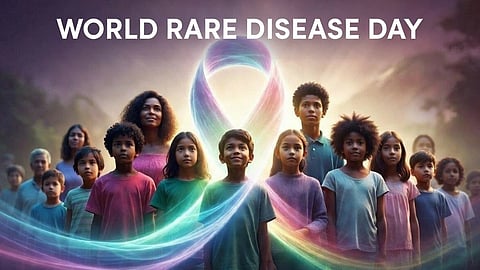
On the last day of February, the world observes Rare Disease Day, a global campaign dedicated to raising awareness about rare diseases and improving access to diagnosis, treatment, and care. Behind every statistic is a family navigating fear, uncertainty, and often silence.
The campaign slogan ‘More Than You Can Imagine’ serves as both a global call to action and a meaningful reminder that while each rare disease may affect a small number of individuals, collectively they impact millions around the world. Every diagnosis represents not just a medical condition, but a person, a family, a complex healthcare journey, and a story that often goes unheard.
In India, one of the strongest voices in this movement belongs to Mr. Vikas Bhatia, founder of MERD India Foundation. MedBound Times connected with him, to understand his take: rare disease advocacy is not professional work. It is personal.
He lost all three of his sons to Pyruvate Carboxylase Deficiency, a rare metabolic disorder. What he experienced was not just grief. It was the pain of delayed awareness, limited screening, and systemic gaps.
Instead of withdrawing, he chose to act.
A rare, inherited metabolic disorder that affects the body’s ability to process certain nutrients properly.
Caused by mutations in the PC gene and inherited in an autosomal recessive pattern, meaning both parents are typically carriers.
Leads to a buildup of lactic acid in the blood, which can become life-threatening.
Primarily affects the brain and nervous system, but can also impact other organs.
Type A (infantile form)
Begins in infancy.
Developmental delay, poor muscle tone, lactic acidosis.
Many children survive into early childhood.
Type B (severe neonatal form)
Symptoms appear at or shortly after birth.
Severe lactic acidosis, breathing difficulties, neurological impairment.
Often fatal in early infancy.
Type C (mild form)
Less severe symptoms.
May allow longer survival and milder developmental impact.
Failure to thrive
Seizures
Muscle weakness
Developmental delays
Breathing problems in severe cases
MedBound Times also connected with Dr. Munish Kumar Raizada, MD, FAAP (Neonatologist), he explained Pyruvate carboxylase:
"Pyruvate carboxylase ( PC) deficiency is a type of inborn error of metabolism. It’s a autosomal disorder that means both parents contribute recessive gene for the disease to manifest. In PC deficiency, blood citrulline levels are elevated, thus leading to the suspicion of the disease."
He added, "In the US, PC deficiency is not routinely tested in the newborn screening ( NBS)."
After losing his children, Mr. Bhatia immersed himself in understanding rare metabolic disorders. He studied medical literature, spoke to specialists, and educated himself about inborn errors of metabolism and newborn screening.
In 2011, along with his wife Poonam, he founded MERD India Foundation to support families affected by metabolic and rare genetic disorders.
What began as one father’s search for answers grew into a nationwide advocacy effort connecting hundreds of families across India.
His mission is clear and urgent.
“First of all, newborn screening is not universal.”
He emphasizes that while some states have screening centers, India still does not provide universal newborn screening to every child.
“The need of the nation is that a policy should be made where newborn screening should be given to every newborn baby.”
For him, this is the turning point in rare disease care.
“There are many diseases which, if we detect timely and diagnose confirmed, then we can treat the kids.”
Early diagnosis can prevent irreversible damage. In some metabolic conditions, even dietary intervention can save a life. But without screening, families often discover the disease only after symptoms appear, when it may already be too late.
Rare Disease Day focuses on public awareness, but Mr. Bhatia believes the awareness gap runs deeper. He acknowledges that the government has taken steps, including financial assistance under the Rare Disease Policy. For Mr. Bhatia, education of healthcare professionals is as critical as educating families.
But policy alone is not enough if frontline doctors are unaware of it. For Mr. Bhatia, education of healthcare professionals is as critical as educating families.
Rare diseases are often manageable, not curable. Treatment can be lifelong and extremely expensive. He explains that even if a family manages to arrange funds for one or two years, sustaining treatment is nearly impossible.
This is why he advocates for genetic and rare disease insurance. He believes every couple purchasing insurance should at least be offered rare disease coverage.
He said:
“Government of India has included sixty three diseases in rare disease policy. Insurance companies should be advised and bound for this. Cyclone may come once in thousands or lakhs. Rare disease may affect one out of ten thousand or twenty thousand. But it should be covered.”
Access to treatment remains another major challenge. Some medicines are imported and expensive, while Indian alternatives are more affordable but not always widely promoted. He stresses the need to promote Indian drug development and manufacturing.
When a rare disease patient needs medicine urgently and it is unavailable, the consequences can be fatal. Until India develops sufficient local drugs, he believes essential medicines must be made available from outside without delay.
Beyond diagnosis and cost lies another battle. Social stigma. Parents often face whispers, blame, and superstition when a child is diagnosed with a visible or severe condition. Mr. Bhatia addresses this directly through science. He encourages preventive awareness.
“When we talk about genetics and science, most of the time parents are carriers. One gene is normal and one is defective. One chromosome comes from the mother and one from the father. This is a very normal thing. It is not a big deal.”
Mr. Bhatia summarizes the solution in four clear priorities:
First is awareness
Not only among families, but also among doctors, general physicians, and policymakers.
Second is early diagnosis
Universal newborn screening plays a big role in detecting rare diseases in time.
Third is growth and development
Strong support systems must help affected children live fuller and healthier lives.
Fourth is genetic insurance
Rare diseases must be included in insurance coverage to reduce the financial burden on families.
Unless rare diseases are addressed from all sides, families will continue to struggle alone.
Reference:
Duque Lasio, Maria Laura, April N. Lehman, Ayesha Ahmad, and Jirair K. Bedoyan. “Pyruvate Carboxylase Deficiency.” In GeneReviews® [Internet], edited by Mike F. Adam, Jennifer Bick, Girisha Mirzaa, et al. Seattle (WA): University of Washington, Seattle 1993–2026. June 2, 2009; updated May 30, 2024. https://www.ncbi.nlm.nih.gov/books/NBK6852/.
