
- Home
- About Us
- Contact Us
- Biography
- Column
- MedBound Hub
- InternshipInternship
- Daily Pulse
- Medicine
- Physical Therapy
- InterviewInterview
- Pharmacy
- Biotechnology
- College/InstituteCollege/Institute
- Dentistry
- Blog
- Wellness & Nutrition
- Nursing
- Opinion

In recent years, "slugging" has become one of the most talked-about skincare trends on social media. The technique involves applying a thin layer of petroleum jelly as the final step in a nighttime skincare routine to lock in moisture and strengthen the skin barrier. While it may seem like a modern beauty hack, dermatologists have recommended petroleum jelly for decades to treat dry skin, protect wounds, and support skin healing.¹
Long before it became a viral skincare essential, petroleum jelly had a far more unexpected beginning. Its story started in the oil fields of Pennsylvania during the mid-19th century, where a sticky, wax-like residue was regarded as an inconvenient byproduct of drilling operations.
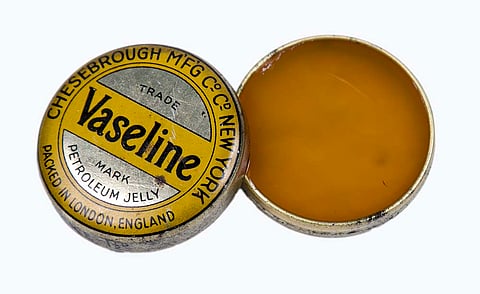
Today, better known by its iconic brand name Vaseline, petroleum jelly is used worldwide for skin barrier protection, wound care, postoperative healing, and the management of various dermatological conditions.¹²
The origins of petroleum jelly date back to 1859, when American chemist Robert Augustus Chesebrough traveled to the rapidly growing oil fields of Titusville, Pennsylvania, following the success of the country's first commercial oil well. Originally trained to extract kerosene from whale oil, Chesebrough became interested in the expanding petroleum industry and visited drilling sites to study its byproducts.²
During his visit, he noticed oil workers applying a thick, wax-like residue known as "rod wax" to cuts, burns, and cracked skin. The substance accumulated on drilling rods and frequently clogged machinery, making it an inconvenience for workers. Despite this, many believed it helped wounds heal faster and protected damaged skin.³
Rather than dismissing the residue as waste, Chesebrough recognized its potential as a therapeutic product.
Chesebrough collected samples of rod wax and returned to his laboratory in Brooklyn, New York, where he spent the next 11 years refining the crude material into a purified, stable substance suitable for medical use. Through repeated purification, he removed impurities while preserving the protective characteristics that workers had observed in the oil fields.²
The product was initially introduced as "Wonder Jelly." In 1870, Chesebrough officially launched it under the name Vaseline, a word believed to combine the German term wasser (water) with the Greek word elaion (oil). The purification process developed during that period remains the foundation of petroleum jelly production today.⁴
Although the product showed promise, convincing people to use it proved difficult. Pharmacists were reluctant to stock an unfamiliar product, and consumers questioned its effectiveness.
To demonstrate its benefits, Chesebrough adopted an unconventional marketing approach. During public exhibitions, he intentionally created minor cuts and burns on his own skin before applying petroleum jelly to the injuries. He also distributed free samples so people could experience the product themselves. These demonstrations gradually built public confidence, and demand increased rapidly. By 1874, Vaseline was reportedly selling at a rate of one jar every minute in the United States.²,⁴
By the 1880s, the high-quality, purified form of Vaseline petroleum jelly had become a trusted household essential across North America. Its wide range of uses, from helping prevent diaper rash in babies to soothing dry, cracked skin caused by harsh weather and demanding work, made it a reliable skincare product for families and workers alike.
Its versatility and reliability soon extended beyond homes into hospitals and medical practice.
Petroleum jelly gained further recognition during both World War I and World War II. Military medical personnel used it to protect burns, cover minor wounds, reduce skin irritation, and prevent excessive drying of injured tissue.²
During the Second World War, the U.S. Surgeon General commissioned sterile petroleum jelly-coated gauze dressings for military use, reflecting its growing importance in wound care. Its long shelf life, affordability, and ease of application made it especially valuable in field hospitals.⁴
Unlike moisturizers that add water to the skin, petroleum jelly works by forming an occlusive barrier over the skin surface. This barrier significantly reduces transepidermal water loss (TEWL), allowing the skin to retain moisture and repair itself naturally.¹
Studies have shown that petroleum jelly can reduce water loss from the skin by more than 50%, making it one of the most effective occlusive moisturizers available. It also penetrates the outermost layer of the skin, helping restore barrier function while maintaining hydration.¹
Keeping wounds moist rather than allowing them to dry completely has become an important principle of modern wound management. Petroleum jelly helps maintain this moist environment, promoting re-epithelialization and reducing scab formation.
Several clinical studies have found that petroleum jelly performs as effectively as topical antibiotic ointments for clean surgical wounds while avoiding the risk of antibiotic resistance and reducing the likelihood of allergic contact dermatitis associated with some antibiotic preparations.¹
More than 160 years after its accidental discovery, petroleum jelly continues to play an important role in dermatology and everyday skincare. It remains a widely recommended treatment for dry skin, chapped lips, eczema, diaper rash, minor wounds, and postoperative skin care.
What began as an unwanted byproduct of oil drilling eventually became one of the most trusted products in skincare and wound care.
Today, petroleum jelly remains a simple yet highly effective skin protectant, demonstrating that some of the most valuable medical discoveries arise from curiosity, persistence, and practical observation rather than chance alone.
Divya, J. N., Roy Joydeep, Gupta Bhaskar, Paul Arup, and Kar Shromona. 2024. "Petroleum Jelly: A Brief Review of its History, Uses and Safety." International Journal of Pharmaceutical and Clinical Research 16 (10): 914–921. e-ISSN: 0975-1556, p-ISSN: 2820-2643
Pender, Emily. 2021. “H07: Mr Chesebrough’s Wonder Jelly! A History of Petrolatum and the Skin.” British Journal of Dermatology 185 (S1): 163–164. https://doi.org/10.1111/bjd.20340.
FactsPress. 2024. "Vaseline Was Discovered by Oil Rig Workers Who Complained About a Waxy Substance." Accessed July 6, 2026. https://factspress.com/vaseline-was-discovered-by-oil-rig-workers-who-complained-about-a-waxy-substance/
Vaseline. n.d. "Our History." Accessed July 6, 2026. https://www.vaseline.com/us/en/who-we-are/our-history.html
