JFK’s Granddaughter Tatiana Schlossberg Dies at 35 After Battle With Rare Leukemia

Environmental journalist and JFK family member’s rare leukemia journey sheds light on aggressive blood cancers.
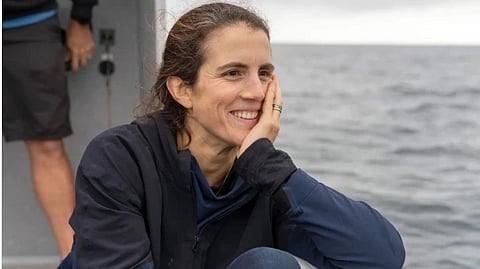
A portrait of Tatiana Schlossberg sitting on a boat in the sea.
Tatiana Schlossberg was born in 1990 to Caroline Kennedy, former U.S. ambassador and daughter of President Kennedy, and Edwin Schlossberg, a designer and author. jfklibraryfdn- Instagram
Published on
Updated on

Tatiana Schlossberg, an American environmental journalist and granddaughter of President John F. Kennedy, died on December 30, 2025, at the age of 35 after a battle with acute myeloid leukemia (AML), her family announced through the John F. Kennedy Library Foundation. Her passing came less than a year after she was diagnosed.

Early Life and Career

Tatiana Schlossberg was born in 1990 to Caroline Kennedy, former U.S. ambassador and daughter of President Kennedy, and Edwin Schlossberg, a designer and author. She grew up in a family with a legacy in public service and scholarship. Schlossberg pursued environmental journalism and worked for major publications, including The New York Times, focusing on climate change, energy, and environmental issues.

She married George Moran, a physician, in 2017; the couple had two young children, a son and a daughter, at the time of her diagnosis.

Leukemia Diagnosis and Medical Details

In May 2024, Schlossberg received a routine blood test shortly after the birth of her second child, which showed an unusually high white-blood-cell count far above the normal range of about 4,000–11,000 cells per microliter. Further testing led to a diagnosis of acute myeloid leukemia (AML), a cancer that originates in the blood-forming cells of the bone marrow. Her leukemia subtype featured a rare genetic mutation known as Inversion 3, which occurs in a small percentage of AML cases and is associated with aggressive disease behavior and poor prognosis.

AML is characterized by the rapid growth of abnormal white blood cells, which interfere with normal blood cell production. Symptoms can include fatigue, infections, easy bruising or bleeding, and high white blood counts that disrupt normal physiology. Standard treatment typically involves chemotherapy and may include bone marrow or stem cell transplantation, depending on patient factors.

Treatment Journey of Tatiana Schlossberg

Schlossberg disclosed her diagnosis publicly in November 2025 through a personal essay in The New Yorker titled “A Battle With My Blood.” In that essay, she detailed her experience with multiple rounds of chemotherapy, two bone-marrow transplants, and participation in clinical trials, including advanced therapies such as CAR-T cell therapy, an immunotherapy designed to train immune cells to attack cancer cells. Despite aggressive treatment, her disease remained refractory.

Medical teams informed her that the leukemia’s rare mutation made it unlikely to be cured with standard therapies, and her lifespan was aroound a year. Such high-risk genetic features in AML often necessitate intensive treatment approaches and are associated with lower survival rates compared with more common AML subtypes.

Family Announcement and Legacy

The family announced Schlossberg’s death in a statement shared by the JFK Library Foundation on social media:
“Our beautiful Tatiana passed away this morning. She will always be in our hearts.”

She is survived by her husband, their two children, her parents Caroline and Edwin Schlossberg, and her siblings, including Rose and Jack Schlossberg.

About Acute Myeloid Leukemia

Acute myeloid leukemia (AML) is a type of cancer affecting the bone marrow and blood. It is more commonly diagnosed in older adults but can occur at any age. AML disrupts the normal maturation of white blood cells, leading to an accumulation of immature blasts that compromise immunity and normal hematopoiesis. Genetic abnormalities, such as chromosomal inversions and translocations, can influence disease behavior and response to treatment. Inversion 3 specifically alters genetic regulation within leukemic cells and is considered a poor prognostic factor.

Diagnosis typically involves blood tests, bone marrow biopsy, and genetic analysis to identify cytogenetic and molecular features that guide therapy. Treatment protocols vary but often include intensive induction chemotherapy to achieve remission, followed by consolidation therapy or stem cell transplantation in eligible patients to reduce relapse risk.

(Rh/TL)

Related Stories

No stories found.
logo
Medbound Times
www.medboundtimes.com