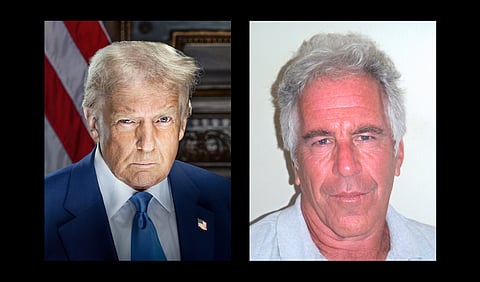
The release of nearly twenty thousand pages of documents from the Jeffrey Epstein estate by the U.S. House Committee on Oversight and Reform has revived public scrutiny of Epstein’s network, reshaped discussion about Donald Trump’s past associations and renewed calls for justice from survivors of human trafficking. The disclosures, consisting of emails, notes and memorabilia from Epstein’s estate, have become a focal point in congressional debates and media coverage. Democrats have also acknowledged that the files released so far represent only a portion of the full estate production, underscoring the limits of what the public currently knows.
Among the documents is a 2011 email exchange between Epstein and Ghislaine Maxwell that has drawn national attention. In the message Epstein wrote that “the dog that hasn’t barked is Trump,” adding that a redacted victim had “spent hours at my house with him” but Trump “has never once been mentioned.” Maxwell replied that she had been thinking about it.¹ Reporters reviewing the documents note that these remarks are Epstein’s statements and not court-tested evidence.
Further emails released by the committee include a 2015 exchange between Epstein and journalist Michael Wolff. Wolff told Epstein that CNN was preparing to ask Trump about his relationship with Epstein. Epstein asked how Trump should answer. Wolff responded that Trump might deny visiting Epstein’s home or boarding his plane and suggested that such a denial could become politically damaging if contradicted later.²
Another email, dated 2019, had Epstein claiming that Trump “knew about the girls” and had asked Maxwell “to stop.”³ Media outlets emphasize that this is Epstein’s claim in private correspondence. Trump has repeatedly denied knowing about Epstein’s illegal activities or participating in them.
Additional items from Epstein’s estate include personal memorabilia, such as materials from a scrapbook created for Epstein’s fiftieth birthday. Several items in the book appear to reference Trump, though Trump has denied authorship of certain notes and drawings attributed to him.⁴ News organizations describe these artifacts as reflective of Epstein’s social environment rather than evidence of criminal conduct.
April 2011 exchange between Jeffrey Epstein and Ghislaine Maxwell
In one email from April 2011, Epstein wrote to Maxwell that the "dog that hasn't barked is trump" and added that a named victim had "spent hours at my house with him" and "he has never once been mentioned." Maxwell replied that she had been "thinking about that." The committee redacted the victim’s name when releasing the email publicly; Republicans provided an unredacted version to some outlets and said the name was one of Epstein’s publicly known accusers. Reporting notes that the limited excerpt does not provide fuller context and cannot, by itself, establish what occurred.
December 2015 exchanges between Epstein and Michael Wolff
Emails between Epstein and journalist Michael Wolff show Wolff telling Epstein that CNN might ask Trump about his relationship with Epstein and asking what Trump should say. Epstein and Wolff discussed possible responses and the political implications of different answers. Wolff told reporters he could not recall the full context but said he had pressed Epstein for information about Trump while reporting. These messages concern media strategy and what Epstein told a reporter, not new direct allegations against Trump.
January 2019 email in which Epstein wrote that Trump "knew about the girls"
A 2019 message from Epstein to Wolff included a line saying Trump "knew about the girls." The meaning of that line is not explained in the isolated excerpt, and reporting stresses that the emails do not, in themselves, establish the factual circumstances the words might imply. The Oversight Committee and news outlets have emphasized that the released snippets lack broader documentary context that might clarify them.
The release of the twenty thousand documents followed significant political pressure inside the U.S. House of Representatives. The chamber has 435 members and a majority requires 218 votes. Reports indicate that Democrats were joined by a small number of Republicans in pushing for the release of the Epstein files, placing pressure on House Speaker Mike Johnson to allow the process to move forward.⁵
Some lawmakers have also supported a discharge petition intended to force a full House vote on making additional Epstein-related materials public, including files held by the Department of Justice. The bipartisan interest demonstrates that the push for transparency extends beyond party lines.
Survivors of Epstein’s sex trafficking network and advocates have held demonstrations in Washington, calling on Congress to release all remaining documents and provide greater support for victims of trafficking and exploitation. Several women publicly urged political leaders to ensure justice for survivors and pressed for transparency in the handling of Epstein-related materials.
Their appeals intensified after the death of Virginia Roberts Giuffre, one of Epstein’s most prominent accusers, who died by suicide in April 2025 at age 41.⁶ Giuffre had been a leading public voice for survivors. Her death prompted widespread discussion about the long-term psychological and physical toll that abuse and trafficking have on victims.
Medical experts note that survivors of sexual exploitation often experience chronic mental health challenges such as post-traumatic stress disorder, depression, anxiety and a heightened risk of suicide. Public exposure and renewed discussion of past trauma may be triggering for some survivors, while also creating opportunities for expanded resources and mental health support.
Despite the intense focus on the new Epstein estate files, Trump’s prior public controversies form a separate but relevant backdrop.
The appearance of Trump’s name in the newly released Epstein emails adds to a long public record of allegations surrounding his interactions with women and young contestants during his years as a businessman and reality television figure.
Trump owned the Miss Universe Organization from 1996 to 2015. Multiple former contestants have publicly stated through interviews and reporting that Trump would visit backstage areas during competitions, including dressing rooms.⁷ These claims have been widely documented in reputable news reporting and books, though they are separate from the Epstein materials.
In the political sphere, Trump’s past resurfaced during the 2016 presidential election when the Access Hollywood tape was released. In the recording Trump described touching women without consent in graphic terms.⁸ The episode led to national controversy and renewed scrutiny of allegations against him.
Trump’s history has also been the subject of several investigative books. The 1993 biography The Lost Tycoon: The Many Lives of Donald Trump explored his business practices and personal controversies.⁹ The 2019 investigative book All the President’s Women: Donald Trump and the Making of a Predator documented dozens of allegations of misconduct.¹⁰ These works are part of a long-standing public record on Trump that predates the Epstein document release.
Trump has consistently denied the misconduct allegations presented in books and reporting.
Separate from the Epstein estate files, writer E. Jean Carroll brought civil actions against Trump alleging sexual assault and defamation. A 2024 jury found Trump liable for sexual abuse and defamation, resulting in a judgment requiring him to pay more than eighty-three million dollars. A federal appeals court upheld the judgment in September 2025.¹¹
Trump has denied Carroll’s claims and continues to appeal aspects of the case, but the ruling stands as one of the most significant legal outcomes involving allegations of misconduct by the former president.
Despite their provocative wording, the emails have glaring gaps.
The House Oversight Committee made clear that the release of private estate materials does not represent a determination of criminal guilt. The presence of names within emails or personal notes does not indicate participation in illegal acts. Reporters stress that many statements in the documents are opinions, assertions or fragments of conversations that lack context.
Any potential legal consequences would require evaluation by law enforcement agencies, which have not made new charges based on the publicly released materials.
The twenty thousand pages of newly released Epstein documents are expected to be combed through by journalists, researchers, prosecutors and advocacy groups. Additional congressional action could determine whether further sealed records are made public.
For survivors, the disclosures represent progress toward transparency but also risk reopening trauma. For lawmakers and the public, the documents underscore ongoing questions about influence, accountability and the networks that allowed Epstein’s crimes to continue for many years.
What did the newly released Epstein emails show?
They contain suggestive remarks about Trump but provide no verified evidence of criminal activity.
Do the emails prove Trump explicitly committed a crime?
No. The excerpts as of now are limited, redacted, and lack context.
Why did House Democrats release the emails?
They argue the material raises important questions and supports the need for broader disclosure.
How did Republicans respond to Trump-Epstein Emails?
They called the release selective and politically motivated.
ABC News. “House Democrats Release New Epstein Emails Referencing Trump.” November 12, 2025.
https://abcnews.go.com/Politics/house-democrats-release-new-epstein-emails-referencing-trump/story?id=127435983
ABC News. “What Virginia Giuffre Has Said About Trump and Jeffrey Epstein.” November 12, 2025.
https://abcnews.go.com/US/virginia-giuffre-trump-jeffrey-epstein/story?id=127468657
The Guardian. Luscombe, Richard. “Trump Knew About Epstein’s Conduct, Newly Released Emails Suggest.” November 12, 2025.
https://www.theguardian.com/us-news/2025/nov/12/jeffrey-epstein-new-emails-donald-trump
The Guardian. Holmes, Oliver. “Epstein Emails: Key Takeaways from 20,000 Pages of Newly Released Files.” November 13, 2025.
https://www.theguardian.com/us-news/2025/nov/13/epstein-files-key-takeaways
House Committee on Oversight and Reform. “Oversight Committee Releases Additional Epstein Estate Documents.” November 12, 2025.
https://oversight.house.gov/release/oversight-committee-releases-additional-epstein-estate-documents/
PBS NewsHour. “Virginia Giuffre, Plaintiff in Epstein Abuse Case, Dies at 41.” April 26, 2025.
https://www.pbs.org/newshour/nation/virginia-giuffre-plaintiff-in-epstein-abuse-case-dies-at-41
The Guardian. “Release of Sexually Suggestive Epstein ‘Birthday Book’ Piles Pressure on Trump.” September 8, 2025.
https://www.theguardian.com/us-news/2025/sep/08/trump-epstein-birthday-letter
The Washington Post. “House Democrats Release Epstein Email Claiming Trump ‘Never Once Mentioned’ Victim.” November 12, 2025.
https://www.washingtonpost.com/politics/2025/11/12/house-democrats-epstein-email-trump/
The Washington Post. “Transcript: The 2005 Access Hollywood Tape.” October 2016.
https://www.washingtonpost.com/video/politics/full-transcript-the-access-hollywood-tape/2016/10/07/8b3f0d70-8d87-11e6-8758-d58e76e11b12_video.html
BBC News. “Miss Universe Contestants Say Trump Walked Into Dressing Rooms.” December 2017.
https://www.bbc.com/news/world-us-canada-42263774
The New York Times. “At Miss Universe, Trump Displayed Claiming Access to Dressing Rooms.” December 2017.
https://www.nytimes.com/2017/12/12/us/politics/trump-miss-universe-dressing-rooms.html
O’Brien, Timothy. The Lost Tycoon: The Many Lives of Donald Trump. New York: Birch Lane Press, 1993.
Levine, Barry, and Monique El-Faizy. All the President’s Women: Donald Trump and the Making of a Predator. New York: Hachette, 2019.
CBS News. “Appeals Court Upholds E. Jean Carroll’s $83.3 Million Defamation Judgment Against Trump.” September 2025.
https://www.cbsnews.com/news/appeals-court-upholds-e-jean-carrolls-83-3-million-defamation-judgment-against-trump/