
- Home
- About Us
- Contact Us
- Biography
- MedBound Hub
- InternshipInternship
- Daily Pulse
- Medicine
- Physical Therapy
- InterviewInterview
- Pharmacy
- Biotechnology
- College/InstituteCollege/Institute
- Dentistry
- Blog
- Wellness & Nutrition
- Nursing
- Opinion

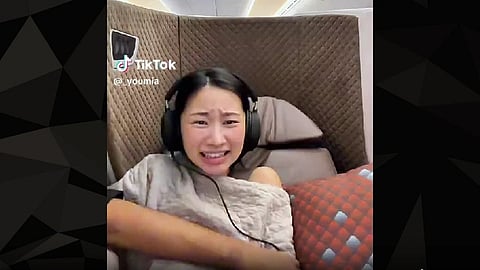
A Korean influencer identified as Mia (TikTok handle @_youmia), based in Singapore, posted a video on January 13 showing herself eating an in-flight meal and then screaming and crying as turbulence struck the aircraft. The clip, captioned “Full panic attack on a plane” and visually showing her reaction, rapidly accumulated millions of views on TikTok.
In the video Mia notes symptoms such as visible shaking and emotional distress while filming herself in the cabin. The footage sparked widespread attention and numerous online comments questioning whether the reaction reflected an authentic panic attack.
Many viewers criticised the video as being “performative” or exaggerated, with comments suggesting that real panic attacks might not appear this way. Some commenters stated that a panic attack would make it difficult for someone to film themselves, leading to claims the content might be staged. Critics on social platforms wrote that Mia’s reaction did not align with their personal experiences of panic attacks.
In response to the accusations, Mia posted a follow-up video on January 14 explaining that her reaction was linked to past traumatic experiences during severe turbulence on Singapore Airlines Flight SQ321 on May 21, 2024, travelling from London to Singapore. That flight encountered extreme turbulence that resulted in the death of a 73-year-old British passenger and dozens of injuries among passengers and crew.
Mia shared that during that 2024 incident she was in the aircraft lavatory. She reported suffering a fractured spine as a result of the turbulence and said that her fear of flying had intensified following the event. To support her account, she shared images including an X-ray of her spine and hospital photos. In her explanation, she also acknowledged that she might have edited her original video in a way that made it appear staged to some viewers and asked for understanding that “fear looks different for everyone.”
A panic attack is a sudden episode of intense fear or discomfort that reaches a peak within minutes and includes multiple physical and psychological symptoms.
According to psychological sources, panic attack symptoms can include palpitations, sweating, trembling, shortness of breath, sensations of choking, chest pain, dizziness, feelings of unreality, fear of losing control, and fear of dying. These episodes often occur without apparent danger and may resemble other conditions such as heart issues or respiratory events. Panic attacks are commonly part of broader anxiety disorders such as panic disorder but can also occur in isolation.
Unlike generalized anxiety, panic attacks are characterised by their sudden onset and intense peak, typically lasting around 10–15 minutes, though intensity and duration may vary between individuals. Different types of panic attacks exist, including those triggered by specific situations and those occurring without an obvious external trigger.
Panic attacks may result from a mix of biological, genetic, psychological, and situational factors. Some research suggests that people with panic attacks may have heightened sensitivity to internal physical cues (e.g., changes in breathing or heart rate), which the brain may misinterpret as threatening, triggering fear responses. Panic attacks can occur in individuals with or without an anxiety disorder and may be diagnosed when attacks are recurrent and accompanied by sustained fear of additional episodes.
Treatment for panic attacks and panic disorder often includes psychotherapy, medication, or a combination. Cognitive behavioural therapy (CBT) is an evidence-based psychological approach that helps individuals understand and manage panic symptoms. Medications such as selective serotonin reuptake inhibitors (SSRIs) or anti-anxiety drugs can also reduce symptom frequency and intensity, though they are typically tailored to individuals based on clinical evaluation. In all cases, professional assessment is advised to differentiate panic attacks from other medical conditions that may mimic similar symptoms. 1
The viral video of a panic reaction aboard a Singapore Airlines flight drew diverse public reactions, with some on social media questioning its authenticity and others expressing empathy for fear responses. The creator’s explanation linked her reaction to past severe turbulence trauma and injury, underscoring the varied ways individuals may experience and express intense anxiety. Panic attacks are complex physiological and psychological events that may be part of broader anxiety conditions, and responses can differ significantly from person to person.
National Institute of Mental Health. Panic Disorder: When Fear Overwhelms. Accessed 16th January 2026. https://www.nimh.nih.gov/health/publications/panic-disorder-when-fear-overwhelms.
Craske, Michelle G., and David H. Barlow. “Panic Disorder and Agoraphobia.” The Lancet Psychiatry 3, no. 3 (March 2016): 249–260. https://doi.org/10.1016/S2215-0366(15)00576-5.
