
- Home
- About Us
- Contact Us
- Biography
- MedBound Hub
- InternshipInternship
- Daily Pulse
- Medicine
- Physical Therapy
- InterviewInterview
- Pharmacy
- Biotechnology
- College/InstituteCollege/Institute
- Dentistry
- Blog
- Wellness & Nutrition
- Nursing
- Opinion

At-home vitamin D tests may be useful for screening, but not all kits perform equally.
Mail-in dried blood spot tests generally have stronger evidence than rapid self-tests.
Accuracy can be affected by assay quality, sampling technique, and result interpretation.
Home kits may help expand access, but some results may need laboratory confirmation.
At-home vitamin D tests are generally better viewed as screening tools, not stand-alone diagnostic tests.
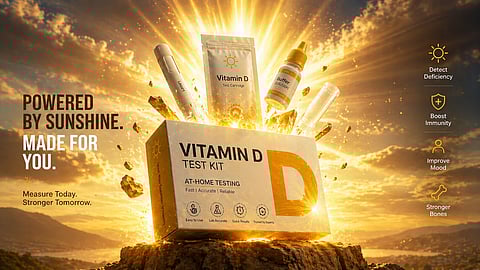
Vitamin D deficiency has become one of the most discussed nutritional concerns worldwide. Despite abundant sunlight in many regions, deficiency and insufficiency remain common, including in India.¹ Growing awareness of this has fueled interest in at-home vitamin D testing kits, marketed as convenient tools to check vitamin D status without visiting a clinic or diagnostic laboratory.
These products now range from mail-in finger-prick kits analyzed in laboratories to rapid self-tests sold online and in pharmacies. Their appeal is straightforward: convenience, privacy, and easier access to screening.
Market analyses project sustained growth in vitamin D testing demand, driven by rising deficiency awareness, preventive health interest, and expansion of home and remote testing models. One industry analysis projects the global vitamin D testing market to grow from about USD 1.07 billion in 2025 to about USD 2.34 billion by 2035, reflecting continued growth in this sector.⁹ While market projections do not establish clinical value, they help explain why consumers are seeing more at-home testing products. The category increasingly sits at the intersection of preventive care, consumer diagnostics, and digital health, which has driven innovation from both laboratory providers and home testing brands.
But do they work?
The answer is nuanced. Some at-home vitamin D tests can provide useful screening information, but their reliability depends on the type of test, the quality of the assay, proper sample collection, and how results are interpreted. Questions such as how accurate are at-home vitamin D tests, are home vitamin D kits reliable, and how vitamin D home test vs lab test performance compares all depend heavily on these factors.
A key distinction often missed in consumer discussions is that two different categories exist.
These generally involve:
Finger-prick blood collection
Dried blood spot sampling
Mailing the sample to a laboratory
Laboratory measurement of 25-hydroxyvitamin D [25(OH)D]
This is the type of home testing most often represented in published scientific studies.² ³ A mail-in vitamin D test kit is therefore different from an instant self-test and should not be evaluated by the same assumptions.
Some services may use accredited or CLIA-certified laboratories, which can be one marker of quality consumers may look for.
Some home testing services may also pair sample collection kits with digital reporting platforms, telehealth review, or clinician-supported interpretation, reflecting how some brands are positioning these products beyond simple test kits.
This form of vitamin D blood test at home is the model most supported by evidence on at-home vitamin D test accuracy.
Some retail kits marketed online use rapid immunochromatographic or point-of-care style methods, often giving:
Threshold-based deficiency indications
Semi-quantitative ranges
Visual line interpretations in some products
These are different from mail-in laboratory testing.
Evidence supporting dried blood spot vitamin D testing should not automatically be generalized to all rapid retail self-tests.
That distinction matters.
Most credible vitamin D tests measure 25-hydroxyvitamin D [25(OH)D], the standard biomarker used to assess vitamin D status.²
It reflects vitamin D from sunlight exposure, food, and supplements.
It is distinct from 1,25-dihydroxyvitamin D, which is not usually used for routine deficiency assessment.
Most home tests estimate total 25(OH)D, generally including both vitamin D₂ and vitamin D₃ forms. In practice, these are forms of 25(OH)D blood test measurement.
Depending on the product, analysis may involve:
Immunoassays
Liquid chromatography tandem mass spectrometry (LC-MS/MS)² ³
Point-of-care lateral flow methods in some rapid kits
The analytical method affects confidence in the result.
Research suggests dried blood spot testing can correlate reasonably well with venous laboratory measurements when validated methods are used.
A systematic review in Nutrients found dried blood spot methods show promise for vitamin D assessment, particularly for screening and remote testing.²
Recent research has continued exploring improved analytical performance and standardization.³ ⁴
This supports cautious confidence in some mail-in testing approaches.
Validated home testing can be particularly useful when convenience, access, and longitudinal monitoring are priorities.
Reliability can be influenced by:
Inadequate sample volume
Delayed mailing
Heat or storage conditions
Assay variability
Differences between capillary and venous blood samples² ³
Even a strong assay can be compromised by poor sample collection.
Capillary finger-prick samples may not always perfectly match venous serum measurements, particularly near clinical decision thresholds, which is one reason confirmatory laboratory testing may sometimes be appropriate.² ³
Vitamin D levels may also vary with season, sun exposure, latitude, and recent supplementation, meaning a single measurement may not always reflect long-term status.
One overlooked point is that variability is not unique to home tests.
Traditional vitamin D assays can also differ between laboratories.
That is one reason international standardization efforts such as the Vitamin D Standardization Program (VDSP) were developed.⁵
Standardization matters because a test’s usefulness depends not only on convenience, but also on whether results are comparable and analytically reliable.
Often the question is not simply home versus lab.
It is validated testing versus poorly standardized testing.
Consumer self-testing introduces practical risks.
Potential errors include:
Underfilling blood collection cards
Excessive squeezing of the finger
Mishandling collection instructions
Incorrect reading time in rapid tests
This matters because real-world performance may differ from controlled validation studies.
It also raises the possibility of false reassurance.
In some cases there may also be concerns about false positives and false negatives, particularly with threshold-based rapid tests.
See also: Vitamin D Deficiency and Blood Sugar: The Overlooked Factor in Diabetes Risk
One practical question many users have is how a vitamin D home test vs lab test comparison should be understood.
Home kits may offer convenience and access, especially for screening.
Conventional laboratory testing may offer broader clinical context, direct venous sampling, and easier integration with medical evaluation.
Near borderline values or clinical decision thresholds, confirmatory laboratory testing may sometimes be appropriate.
That is why many experts view home testing as potentially useful for screening, but not interchangeable with clinician-guided diagnostic evaluation.
Definitions can differ across guidelines.¹⁰ ¹¹
For example:
Below 20 ng/mL (50 nmol/L) is often considered deficient by many authorities
20 to 29 ng/mL is sometimes considered insufficient in some frameworks
30 ng/mL or higher may be considered sufficient in some guidelines, though sufficiency thresholds remain debated
The U.S. Food and Nutrition Board has considered serum levels of 20 ng/mL (50 nmol/L) or above sufficient for most people, while some endocrine-focused frameworks have used higher targets.¹¹ This is one reason interpretation can differ, particularly when home test values fall near borderline ranges.
Thresholds can vary across organizations, which is another reason a single home test result may need clinical context.
Testing may be more relevant for people at higher risk, such as those with:
Limited sun exposure
Osteoporosis concerns
Older age
Malabsorption disorders
Certain chronic illnesses
Darker skin living in low ultraviolet environments
Clinician concern for deficiency
Testing may also be considered when symptoms, risk factors, or access barriers make screening reasonable.
That does not mean home testing is automatically appropriate in all such situations, but it adds context often missing in consumer marketing.
At-home testing may serve as a first screening step, including in some cases use of a vitamin D deficiency home test before follow-up testing.
Repeated use of the same validated platform may help monitor trends, particularly where longitudinal monitoring is the goal.
Home testing may help where access to conventional laboratory testing is limited.
Abnormal, borderline, or unexpected results may warrant clinician review and confirmatory testing.
Home kits may be less appropriate as stand-alone tools for people needing diagnostic workup or treatment monitoring, including those with:
Suspected severe deficiency
Osteoporosis evaluation
Chronic kidney disease
Hyperparathyroidism
Malabsorption disorders
Unexplained bone pain or muscle weakness
Monitoring high-dose supplementation
These situations often require clinician-guided testing rather than relying on home results alone.
See also: Maternal Vitamin D Levels in Pregnancy and Childhood Dental Caries
This distinction is often overlooked.
At-home vitamin D kits may help identify whether further evaluation is warranted, but they are generally better viewed as screening tools rather than stand-alone diagnostic tests.
A screening result may raise questions.
Diagnosis requires broader medical context.
That distinction matters when interpreting results and deciding whether follow-up testing is needed.
This should be explicit.
These are not interchangeable.
Method matters.
This affects interpretation.
Some brands also differentiate themselves through bundled services such as physician review, app-based tracking, repeat testing programs, or broader micronutrient panels, features some users may consider alongside analytical performance.
These considerations may matter more than product branding.
Another concern with direct-to-consumer testing is self-management based on isolated results.
People may begin supplementation without proper guidance.
That can be problematic.
Deficiency matters.
But excessive supplementation can also pose risks.
Self-testing should not become self-prescribing.
Researchers have also raised broader concerns that consumer health testing can sometimes increase anxiety or unnecessary healthcare use without clear benefit.⁶ ⁷ ⁸
Several factors appear to be driving growth in home micronutrient testing:
Consumer interest in preventive screening
Growth in remote diagnostics and mail-in testing
Greater awareness of vitamin D deficiency
Expansion of digital result platforms
Growth of home diagnostic brands offering mail-in biomarker panels
Interest in personalized health monitoring
Importantly, growth in availability does not itself validate all products. Expanding access and proven clinical performance are separate questions.
Some do.
When built on validated methods, at-home kits can expand access to screening in ways traditional testing may not always offer.
Science suggests validated mail-in vitamin D kits using properly analyzed dried blood spot methods can provide useful screening information.
But not all products have the same evidentiary support.
That is one reason validated platforms, transparent laboratory methods, and well-designed home diagnostic products matter more than convenience claims alone.
Rapid self-tests, semi-quantitative kits, and laboratory-analyzed mail-in kits should not be treated as equivalent.
Their usefulness depends on:
Test type
Sample quality
Analytical method
Standardization
Appropriate interpretation
At-home vitamin D kits are better viewed primarily as screening tools rather than stand-alone diagnostic tests.
But science suggests they work best as part of informed care, not as replacements for it.
Are at-home vitamin D tests accurate?
Validated mail-in dried blood spot tests can be useful for screening, though performance varies by method and some results may need laboratory confirmation.
Can a finger prick vitamin D test replace a lab test?
Not always. Home kits may help with screening, but they may not replace clinician-guided testing in all situations.
What vitamin D level is considered deficient?
Many authorities consider levels below 20 ng/mL deficient, though interpretation can vary by guideline.
Are home vitamin D kits reliable?
Some can be, especially validated mail-in tests, but reliability depends on assay quality, sample collection, and interpretation.
Aparna, P., et al. “Vitamin D Deficiency in India.” Journal of Family Medicine and Primary Care 7, no. 2 (2018): 324–330. https://pmc.ncbi.nlm.nih.gov/articles/PMC6060930/
Sharma, Sunil, et al. “Dried Blood Spots and Assessment of Vitamin D Status: A Systematic Review.” Nutrients 13, no. 10 (2021): 3551. https://pmc.ncbi.nlm.nih.gov/articles/PMC8502163/
PubMed Record 38124730. National Library of Medicine. https://pubmed.ncbi.nlm.nih.gov/38124730/
Diagnostics 15, no. 22 (2025): 2916. https://www.mdpi.com/2075-4418/15/22/2916
Vitamin D Standardization Program (VDSP). National Institutes of Health Office of Dietary Supplements. https://ods.od.nih.gov/Research/vdsp.aspx
Fiske, Amy, et al. “Direct-to-Consumer Health Testing and Self-Testing.” Frontiers in Public Health 10 (2022). https://pmc.ncbi.nlm.nih.gov/articles/PMC9062421/
Marsh, Sarah. “Self-Test Health Kits Promise Quick Results. But Do They Work?” The Guardian, March 26, 2026. https://www.theguardian.com/lifeandstyle/2026/mar/26/self-test-health-kit-testing-do-they-work-help-how-accurate
JAMA Network Open. Direct-to-consumer testing and consumer use patterns. https://jamanetwork.com/journals/jamanetworkopen/fullarticle/2848109
Future Market Insights. Vitamin D Testing Market Forecast 2025–2035. https://www.futuremarketinsights.com/reports/vitamin-d-testing-market
Institute of Medicine. Dietary Reference Intakes for Calcium and Vitamin D. Washington, DC: National Academies Press, 2011. https://www.ncbi.nlm.nih.gov/books/NBK56070/
National Institutes of Health Office of Dietary Supplements. “Vitamin D Fact Sheet for Health Professionals.” https://ods.od.nih.gov/factsheets/VitaminD-HealthProfessional/
