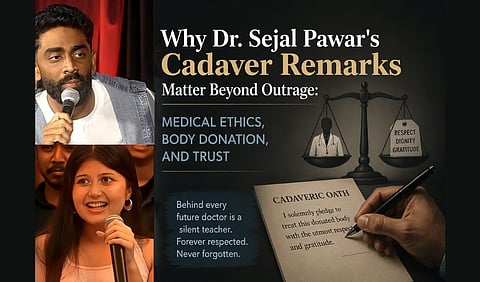
Recently, remarks made by Dr. Sejal Pawar during a comedy show hosted by Pranit More surfaced online and sparked widespread debate. While public reactions have largely focused on the appropriateness of the comments, the incident raises a much larger question about professional responsibility, respect for body donors, and the values that form the foundation of medical education.
The controversy stemmed from comments regarding cadavers used in medical education. Regardless of intent, such remarks have drawn criticism because they concern individuals who, through body donation, make it possible for generations of medical students to learn human anatomy. When conversations surrounding cadavers enter the public domain, they carry implications that extend beyond humor and entertainment.
After years of preparing for NEET and dreaming of becoming a doctor, anatomy is usually the first subject the students encounter in medical school. The transition into the medical profession is gradual and carefully guided. Students are introduced not only to scientific knowledge but also to the ethical responsibilities that accompany it. Long before they begin dissection, they are taught the significance of the dissection hall and the unique role of the cadaver in medical education.
The first visit to the dissection hall is a moment that many doctors remember for the rest of their lives. Before we are taught how to dissect a cadaver, we are taught how to respect one. We take cadaveric oaths, expressing gratitude to the individuals and families who chose to donate their bodies for medical education. We are repeatedly reminded that the cadaver lying before us is not merely a specimen but our first teacher.
Body donation is an extraordinary act of generosity. It requires not only the donor's willingness but also the support and understanding of family members. Across India, many medical colleges continue to face shortages of cadavers for teaching purposes. Every donated body contributes significantly to the training of future healthcare professionals and, ultimately, to patient care.
This is why public remarks about cadavers deserve careful consideration. Families who have donated the bodies of their loved ones place immense trust in medical institutions and professionals. Comments that appear to trivialize donated bodies risk undermining that trust. They may also discourage potential donors and create misconceptions about how cadavers are viewed within the medical community. Such outcomes could negatively affect ongoing efforts by medical colleges and organizations that actively promote body donation as a noble contribution to science and education.
Body donation programs depend entirely on voluntary participation and public confidence. If families begin to believe that donated remains may be treated casually or spoken about without dignity, that trust may erode. The consequences extend far beyond a single controversy, potentially affecting the education of future generations of medical students.
Medical professionals occupy a unique position in society. Their actions and words carry weight not only within hospitals and classrooms but also in public spaces, whether on social media platforms, podcasts, interviews, or entertainment programs. Professional responsibility does not end when the white coat comes off. While individuals are entitled to personal expression, they also bear the responsibility of ensuring that their conduct does not diminish public trust in the profession.
What makes this controversy particularly significant is not merely the comment itself but the context in which it was made. Medicine is a profession built on trust, respect, and service. The standards expected of healthcare professionals often extend beyond technical competence to include the values they uphold in their interactions with society.
The dissection hall is a place where death teaches the living. That is what many of us were taught when we first entered those doors, and that is what we continue to teach future generations of doctors. The individuals who donate their bodies to science deserve nothing less than our gratitude, dignity, and respect.