At 31 years old, Chris Kirt was diagnosed with colon cancer, a form of bowel (colorectal) cancer, after initially dismissing early symptoms as minor health issues. His case highlights how bowel cancer, often thought of as a disease of older adults, can present in younger people and why recognizing symptoms early is important for timely diagnosis and treatment.
Chris, a 31-year-old man and father, initially noticed symptoms that he and some healthcare professionals attributed to piles (hemorrhoids) and everyday fatigue. Over time, his symptoms worsened, leading to medical evaluation where a large tumour was discovered in his colon. He was subsequently diagnosed with bowel cancer and underwent treatment, including surgery, chemotherapy, and radiation. He is now sharing his experience to raise awareness about the disease in younger adults.
Below are some of the common early symptoms of bowel cancer that Chris and others may overlook, based on his experience and clinical symptom lists:
Rectal bleeding or blood in stool – often assumed to be haemorrhoids.
Changes in bowel habits (such as diarrhoea or constipation).
Unexpected or persistent tiredness / night sweats.
Unexplained weight loss or lack of appetite.
Abdominal pain, discomfort or bloating.
Although symptoms can vary between individuals, clinical guidance emphasises that such signs should not be ignored if persistent or worsening.
Bowel cancer is a cancer that begins in the large bowel, which consists of the colon and rectum. It develops when cells in the bowel lining grow uncontrollably, often starting from benign growths called polyps which can, in some cases, progress to cancer over time.
Early detection dramatically improves prognosis; cancers found at the earliest stages are often treatable and curable.
Bowel cancer is a significant health issue in the United Kingdom:
It is the fourth most common cancer overall in the UK.
Around 44,000 new cases are diagnosed each year.
It is the second most common cause of cancer deaths, causing more than 16,800 deaths annually.
Although most diagnoses occur in people aged 50 and over, more than 2,600 cases are diagnosed each year in people under 50.
Lifetime risk in the UK is about 1 in 17 for men and 1 in 20 for women.
Data also show incidence rates have remained stable in recent decades, but projections suggest there may be more cases in the future due to demographic changes.
Survival rates vary by stage at diagnosis:
Stage 1: ~90% survive 5 years or more.
Stage 2: ~85% survive 5 years or more.
Stage 3: ~65% survive 5 years or more.
Stage 4: ~10% survive 5 years or more.
Early detection through screening plays a major role in improving these outcomes.
In the UK, organised bowel cancer screening is offered to people within certain age ranges (traditionally 50–74), using tests like the faecal immunochemical test (FIT) that can detect traces of blood in stool before symptoms arise, enabling earlier investigation and intervention.
However, younger individuals like Chris, who fall outside typical screening age ranges, may not be routinely screened, which can delay diagnosis when symptoms are misattributed to benign causes.
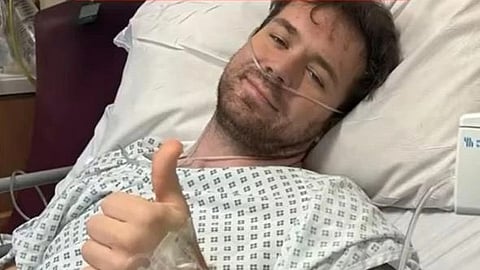
Chris’s story underscores that bowel cancer can occur in younger adults and that awareness of subtle symptoms is important. While the majority of UK cases occur in those over age 50, a measurable number occur below this age group each year. Recognising persistent symptoms and seeking medical evaluation can enable earlier diagnosis and improve outcomes.
Reference
Bowel Cancer UK. n.d. Bowel Cancer UK. Accessed February 5, 2026. https://www.bowelcanceruk.org.uk/.
(Rh)