- Home
- About Us
- Contact Us
- Biography
- MedBound Hub
- InternshipInternship
- Daily Pulse
- Medicine
- Physical Therapy
- InterviewInterview
- Pharmacy
- Biotechnology
- College/InstituteCollege/Institute
- Dentistry
- Blog
- Wellness & Nutrition
- Nursing
- Opinion

People with epilepsy are at risk for hypertension, atrial fibrillation, and hyperlipidemia; they also have an elevated risk of heart disease. Research suggests some of this risk may be due to the effects of chronic seizures, while treadmill tests and other studies suggest that epilepsy itself may confer risks for autonomic dysfunction, including chronotropic incompetence. Read more about these lines of research1.
Cardiac dysfunction also can occur during and after seizures. Some ictal arrythmias such as bradycardia and asystole are associated with focal seizures and thought to be largely self-limiting, while post-ictal arrythmias are more likely to occur after generalized tonic-clonic seizures and may confer a risk of sudden unexpected death in epilepsy (SUDEP).
A 2024 prospective study2 followed 249 adults with epilepsy with at least one recorded generalized convulsive seizure during inpatient video-EEG monitoring. It found that 20% of patients experienced at least one seizure-associated arrhythmia that could confer a risk of SUDEP. A 2015 study3 found similar results, with 18% of epilepsy patients experiencing an ictal arrhythmia.
The first published case of ictal asystole when the heart stops beating for more than 4 seconds during a seizure occurred more than a century ago. While reported incidence rates are generally less than 1%, identifying ictal asystole requires monitoring. Cases may be under identified; a small study using implantable loop recorders3 identified ictal asystole in 3 of 20 (16%) of people with refractory focal seizures over a two-year period.
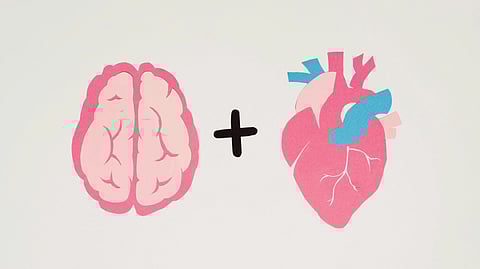
Neurologist and researcher Gashirai Mbizvo is working with colleagues at the University of Liverpool to bridge the gap between neurology and cardiology with a focus on ictal asystole.
The arrhythmia is likely a manifestation of the seizure, noted Mbizvo. “Your temporal lobe happens to be next to your central autonomic network, so by chance [the seizure] stimulates that and slows the heart down,” he said. “With asystole, you lose output to the brain, which terminates the seizure and you recover.
The termination and relatively quick recovery can mask the seizure altogether and delay epilepsy diagnosis, especially without a complete clinical and medical history.
While working toward his PhD in Edinburgh, Mbizvo encountered patients “who were having symptoms consistent with seizures temporal lobe symptoms, déjà vu and then they were fainting,” he said. “And they seemed to be bouncing between cardiology and neurology.”
One woman was prescribed antiseizure medication and sent to a cardiologist, where she was given an implantable loop recorder. During a seizure, the recorder logged a 13-second asystole. “The cardiologists said, ‘Ah, the neurologists were wrong. This was never epilepsy,’ recalled Mbizvo. “And the cardiologist actually stopped her [antiseizure medication], said she could drive again, and put in a pacemaker. Not long after that, she had a secondary generalized tonic-clonic seizure.”
Physician Richard Lenton had a history of déjà vu episodes without loss of consciousness—until the late 1990s, when he had an episode and blacked out. In a hospital cardiac unit he had several similar episodes; his EKG showed asystole. Despite the déjà vu and a family history of similar symptoms, he was discharged with a diagnosis of malignant vasovagal syndrome.
As a physician familiar with that diagnosis, Lenton knew it wasn’t accurate. He arranged for simultaneous EEG and EKG monitoring, which led to a diagnosis of epilepsy with ictal asystole.
“I ended up with a pacemaker and initially carbamazepine and then lamotrigine, and I’ve been perfectly fine since,” he said.
In 2024, a young woman from the UK contacted Mbizvo via email. She had undergone two years of tests and investigations due to loss of consciousness associated with déjà vu. She wrote, “I’ve seen both cardiologists and neurologists, neither of which can give me a definitive answer to whether I have a heart problem, an epilepsy problem, or both.” Rebecca tells her story in this article.
Cases like these require communication and collaboration between specialists, said Mbizvo and a lack of guidelines makes diagnosis and treatment even more complex. In addition to antiseizure medications and other epilepsy treatment options, asystole can be addressed with a pacemaker or cardioneuroablation but whether and when to employ these options is up in the air.
“Right now, treatment depends on which cardiologist you have and which neurologist you have and whether they talk, and where you are,” he said. “Any of the treatment options aren’t unreasonable, but they do need some evidence to support which is most beneficial for patients.”
Mbizvo, cardiologist Gregory Lip Price-Evans Chair of Cardiovascular Medicine at the University of Liverpool and colleagues have established a joint neurology-cardiology PhD position dedicated to developing management guidelines for ictal asystole in conjunction with the Association of British Neurologists and the British Heart Rhythm Society.
“We have to have a joint guideline here,” said Mbizvo. “The condition doesn’t respect the boundaries of brain and heart.”
To improve collaboration and communication at the University of Liverpool, neurologists and cardiologists and at least one electrophysiologist meet once a month for a multidisciplinary conference. “We discuss interesting cases and debate the investigation plans, management pathways, and treatment options,” said Lip. “It’s gotten quite popular and the list of cases is long.”
Mbizvo said the meetings are a learning experience for everyone involved and are shortening times to diagnosis for people with conditions that sit on the fence between neurology and cardiology. “Recently I saw a chap in clinic, and brought his story to the next [meeting],” said Mbizvo. “Within two weeks he had a wireless EKG patch. Then within a week or two he’s got epilepsy with ictal asystole confirmed. That’s the quickest it’s ever happened.”
Lip, Mbizvo and colleagues also authored a publication4 proposing the term “epilepsy-heart syndrome” to acknowledge the many connections between epilepsy and cardiovascular health.
“I think we need a broad definition that goes beyond strict categories,” Mbizvo said. “Can neurologists and cardiologists talk? Because if we do that, we create a pathway by which we can get better care for these patients.”
References:
1) https://www.ilae.org/journals/epigraph/epigraph-vol-27-issue-2-spring-2025/epilepsy-and-the-heart-intersecting-pathways-of-neurologic-and-cardiovascular-risk
2) https://www.neurology.org/doi/10.1212/WNL.0000000000209501?url_ver=Z39.88-2003&rfr_id=ori:rid:crossref.org&rfr_dat=cr_pub%20%200pubmed
3) https://www.thelancet.com/journals/lancet/article/PIIS0140-6736(04)17594-6/abstract
5) https://onlinelibrary.wiley.com/doi/10.1111/epi.18356
(Newswise/HG)