
- Home
- About Us
- Contact Us
- Biography
- MedBound Hub
- InternshipInternship
- Daily Pulse
- Medicine
- Physical Therapy
- InterviewInterview
- Pharmacy
- Biotechnology
- College/InstituteCollege/Institute
- Dentistry
- Blog
- Wellness & Nutrition
- Nursing
- Opinion

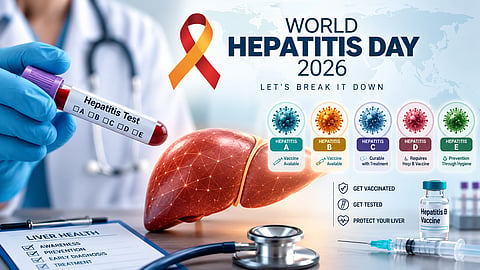
Hepatitis is not one disease but a group of five viral infections, hepatitis A, B, C, D, and E, each with its own mode of transmission, level of risk, prevention strategies, and treatment options. Yet millions of people remain unaware of these differences until serious liver damage has already occurred.
Every 30 seconds, someone around the world dies from a hepatitis-related illness despite the availability of vaccines, screening, and effective treatment for several forms of the disease. According to the World Health Organization (WHO), an estimated 304 million people were living with chronic hepatitis B or hepatitis C in 2022, viral hepatitis caused approximately 1.3 million deaths that year, and about 6,000 people acquire viral hepatitis every day worldwide. As World Hepatitis Day 2026 focuses on the theme "Hepatitis: Let's Break It Down," health experts are urging governments, healthcare providers, and communities to close the gaps in awareness, testing, and treatment that continue to fuel preventable deaths.
World Hepatitis Day is celebrated to mark the birth anniversary of Dr. Baruch Blumberg, who discovered the hepatitis B virus in 1967 and went on to develop the hepatitis B vaccine two years later. The day serves as a global opportunity to raise awareness about viral hepatitis and encourage prevention, early testing, and treatment.
According to the World Health Organization (WHO), viral hepatitis remains a major global public health challenge, causing chronic liver disease, cirrhosis, liver cancer, and approximately 1.3 million deaths annually. This year's campaign aims to simplify public understanding of hepatitis while encouraging broader access to prevention, diagnosis, and care. WHO has also called for accelerating efforts to eliminate viral hepatitis as a public health threat by 2030 through expanded vaccination, testing, treatment, and integrated healthcare services.
Speaking to MedBound Times, Dr. Jeffrey Klausner, Clinical Professor of Population and Public Health Sciences at the Keck School of Medicine of the University of Southern California (USC), explained the different types of viral hepatitis, who should get tested, and why vaccination remains one of the most powerful tools against the disease.
The World Hepatitis Day 2026 campaign calls on governments, healthcare providers, and communities to break down the social, financial, and healthcare barriers that prevent people from accessing hepatitis prevention, testing, vaccination, and treatment. The campaign also seeks to simplify public understanding of viral hepatitis and encourage earlier diagnosis to reduce preventable liver disease and deaths.
Many people are unaware that viral hepatitis is not a single disease but a group of infections caused by different viruses.
Dr. Klausner explained that hepatitis simply means inflammation of the liver, while the letters A through E identify the specific virus responsible.
Hepatitis A primarily spreads through contaminated food or water, including contaminated shellfish. People who become infected often experience fatigue, nausea, vomiting, loss of appetite, and yellowing of the skin and eyes.
Although the illness can last for several months, most patients recover completely.
"The good news is that almost all people recover and a simple safe vaccine can prevent the infection."
Unlike hepatitis A, hepatitis B can become a lifelong infection. It is commonly transmitted from mother to child during childbirth and through exposure to infected blood, including contaminated needles, injection equipment, and, less commonly, contaminated personal items such as razors or scissors.
Untreated chronic hepatitis B can lead to liver failure, liver cancer, and premature death.
"Hepatitis B is the most common cause of liver cancer worldwide."
Dr. Klausner noted that while chronic hepatitis B often requires lifelong treatment, effective daily medication can control the infection. Vaccination, particularly the birth-dose vaccine, remains the most effective preventive measure.
Hepatitis C frequently causes few or no symptoms for years, allowing liver damage to progress unnoticed. When symptoms do appear, they may include fatigue, weakness, depression, and fever.
The virus is most commonly transmitted through contaminated needles and injection equipment used during injection drug use. It can also spread through sexual contact among men who have sex with men and, less commonly, among heterosexual couples.
"The good news is that medicine is available to cure hepatitis in as quickly as 2-3 months of daily pills."
Hepatitis D differs from the other forms because it only occurs in people already infected with hepatitis B.
According to Dr. Klausner, hepatitis D can worsen hepatitis B-related liver disease. There is no vaccine specifically against hepatitis D. However, hepatitis B vaccination also prevents hepatitis D because the hepatitis D virus can infect only people who already have hepatitis B. Although there is no cure specifically for hepatitis D, newer treatment options are becoming available for some patients.
Hepatitis E is uncommon in the United States but occurs more frequently in regions where access to clean water and sanitation is limited.
Dr. Klausner noted that most people recover without treatment, although there is currently no widely available vaccine or specific antiviral therapy in most countries. However, hepatitis E can cause severe illness in pregnant women, particularly during the third trimester, making prevention and early medical care especially important in this group.
Vaccination remains one of the most effective ways to prevent viral hepatitis.
According to Dr. Klausner, hepatitis A and hepatitis B are both vaccine-preventable diseases.
He also emphasized additional preventive measures, including avoiding shared needles and injection equipment to reduce hepatitis C transmission and ensuring access to clean drinking water and safe food to lower the risk of hepatitis A and E.
One of the greatest challenges in controlling viral hepatitis is that chronic hepatitis B and hepatitis C often remain asymptomatic for years.
Dr. Klausner said the U.S. Centers for Disease Control and Prevention (CDC) recommends at least one lifetime hepatitis screening, with ongoing testing for individuals at increased risk.
People at increased risk include those born to mothers with hepatitis B, healthcare workers with potential exposure to blood, people who inject drugs, people receiving dialysis, people living with HIV, and people with multiple sexual partners.
"Treating and curing hepatitis B and C infections prevents complications like liver scarring, liver cancer and early death."
Early diagnosis allows patients to begin treatment before irreversible liver damage develops while also reducing the risk of transmitting the infection to others.
People with viral hepatitis may experience:
Fatigue
Nausea
Vomiting
Dark urine
Pale or clay-colored stools
Abdominal pain
Yellowing of the skin or eyes (jaundice)
Fever
Despite advances in vaccination and treatment, limited public awareness remains one of the greatest obstacles to eliminating viral hepatitis.
Asked about the biggest challenge, Dr. Klausner said:
He believes healthcare providers should make hepatitis screening and vaccination part of routine medical care whenever patients seek healthcare services.
"Healthcare systems can do a better job when people access care urgent care or emergency room care, to make sure people are always offered testing and vaccination, if not vaccinated."
Dr. Klausner said one of the most persistent misconceptions is that many people remain unaware that two common forms of viral hepatitis can be prevented through vaccination.
"Most people do not know that both hepatitis A and B are completely preventable with safe and very effective vaccines. People should know their vaccination status for hepatitis A and B and get vaccinated, if they have not in the past. One set of vaccinations is good for life."
As World Hepatitis Day 2026 highlights the need to "break it down," experts say understanding the differences between hepatitis A, B, C, D, and E is a crucial first step toward protecting liver health. Most hepatitis infections are either preventable, treatable, or, in the case of hepatitis C, curable. Yet millions of people remain undiagnosed simply because they have never been tested. Combined with vaccination, timely screening, safe healthcare practices, and access to effective treatment, greater public awareness and early diagnosis have the potential to prevent millions of infections, reduce hepatitis-related deaths, and move the world closer to the WHO goal of eliminating viral hepatitis as a public health threat by 2030.
References:
1. World Health Organization. “World Hepatitis Day 2026.” Accessed July 27, 2026. https://www.who.int/campaigns/world-hepatitis-day/2026
2. World Hepatitis Alliance. World Hepatitis Day. Accessed July 27, 2026. https://www.worldhepatitisday.org/
3. Hepatitis B Foundation. “World Hepatitis Day.” Accessed July 27, 2026. https://www.hepb.org/news-and-events/world-hepatitis-day/
