Sleep Labs in India: A Look at Sleep Study Centres Across Major Cities

From hospital-based units to independent centres, a patchy but growing grid of sleep labs is reshaping how major Indian cities detect and manage conditions like sleep apnea and insomnia
A modern Indian sleep laboratory at night, a patient sleeping on a bed connected to polysomnography sensors, soft blue ambient lighting
Learn about sleep labs in India, polysomnography, major city centres, and challenges in sleep disorder diagnosis.AI image
Published on
Updated on

Sleep disorders are increasingly being recognized as a major but underdiagnosed health concern in India, driving the need for structured diagnostic services such as sleep laboratories.

The shift toward recognizing sleep as a critical component of health is gradually influencing clinical practice in India. Sleep disorders are increasingly being identified as independent contributors to chronic disease, prompting the expansion of structured diagnostic services such as sleep laboratories across major cities.

Sleep labs are specialized units that evaluate physiological parameters during sleep, including brain activity, breathing patterns, oxygen levels, and cardiac rhythm. These facilities play a central role in diagnosing conditions such as obstructive sleep apnea, insomnia, narcolepsy, and circadian rhythm disorders.

Despite growing awareness, access remains limited. India has approximately 500 sleep laboratories, a number that remains insufficient for its population and disease burden.¹

Sleep disorders remain underdiagnosed in India despite their high prevalence, with many cases going unrecognized due to limited screening and diagnostic access.²

What Are Sleep Labs and Sleep Studies in India
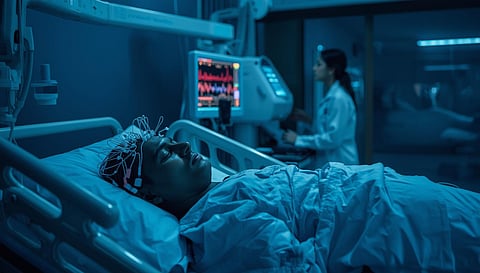
Sleep studies, particularly polysomnography, are considered the gold standard for diagnosing sleep disorders. These studies involve continuous overnight monitoring of physiological signals such as electroencephalography, eye movements, muscle activity, airflow, and oxygen saturation.³

In addition to polysomnography, specialized tests may include:

  • Multiple Sleep Latency Test for evaluating excessive daytime sleepiness

  • Maintenance of Wakefulness Test for assessing alertness

Sleep studies are interpreted using parameters such as the apnea-hypopnea index, which helps classify the severity of sleep apnea and guides treatment decisions.⁴

These evaluations are essential because untreated sleep disorders are associated with increased risk of cardiovascular disease, metabolic dysfunction, and impaired cognitive performance.⁵

Sleep Disorders in India and the Need for Sleep Labs

Split-screen image showing left side a tired person struggling with daytime fatigue in an urban Indian setting, right side a patient undergoing a sleep study in a lab with monitoring equipment
Sleep disorders remain underdiagnosed in India despite their high prevalence, with many cases going unrecognized due to limited screening and diagnostic access.

Sleep disorders in India remain underdiagnosed due to limited awareness and access to diagnostic facilities.

Obstructive sleep apnea is one of the most common conditions evaluated in sleep labs. It is characterized by repeated airway obstruction during sleep, leading to disrupted sleep patterns and daytime fatigue.⁵

Untreated sleep disorders have been linked to hypertension, heart disease, stroke, and reduced quality of life.⁵

The mismatch between disease burden and diagnostic infrastructure highlights the need for expanded sleep lab services and improved awareness.

Sleep Labs Across Major Cities in India

A. Delhi NCR

Neurology and Sleep Centre

Located in South Delhi, this centre is a dedicated sleep medicine facility recognized by the Indian Society for Sleep Research and led by a neurologist specializing in sleep disorders.

The centre provides:

  • In-lab polysomnography

  • Neurodiagnostic testing

  • PAP nap studies for CPAP adaptation

  • Long-term PAP therapy support

A key distinguishing feature is its integration of neurology with sleep medicine. This allows evaluation of complex cases where neurological conditions overlap with sleep disorders. The centre also provides access to sleep apnea devices and structured therapy programs, supporting both diagnosis and long-term management.

AIIMS Sleep Disorders Clinic and Laboratory

Located within AIIMS, this facility functions as both a clinical service and a research laboratory. It evaluates conditions such as sleep apnea and insomnia using standardized diagnostic protocols.

Its unique role lies in its academic and research integration. The centre contributes to sleep research and training, making it a key institution in the development of sleep medicine in India.

B. Mumbai

Chhajed Sleep Care

This independent sleep centre focuses exclusively on sleep diagnostics and therapy.

Services include:

  • In-lab polysomnography

  • Home sleep testing

  • Limited channel sleep studies

  • CPAP titration and therapy

A notable feature is its dual diagnostic approach, offering both in-lab and home-based studies. The centre also runs CPAP experience programs, helping patients adapt to therapy devices, which is critical for long-term treatment adherence.

C. Kochi / Kerala

Amrita Comprehensive Sleep Centre

Located within Amrita Hospital, this centre was established in 2000 and represents one of the earlier structured sleep labs in India.

It offers:

  • Polysomnography

  • Multiple Sleep Latency Test

  • Maintenance of Wakefulness Test

Its strength lies in its integration within a tertiary care hospital, enabling multidisciplinary evaluation involving neurology, pulmonology, and other specialties.

SCTIMST Comprehensive Center for Sleep Disorders

This centre combines clinical services with research and follow-up care.

Services include:

  • Sleep laboratory diagnostics

  • Outpatient evaluation

  • CPAP therapy and follow-up

Its distinguishing feature is its research focus, contributing to the scientific understanding of sleep disorders while delivering patient care.

D. Hyderabad

Dr. Rao’s ENT Super Speciality Hospital Sleep Lab

This sleep lab operates within an ENT-focused hospital and specializes in airway-related sleep disorders.

It evaluates:

  • Snoring disorders

  • Obstructive sleep apnea

The centre integrates sleep study findings with ENT evaluation, enabling both surgical and non-surgical treatment planning. This approach is particularly relevant for patients with anatomical airway obstruction.

E. Other Government and Research Facilities

National Institute of Tuberculosis and Respiratory Diseases Sleep Lab

This government-run facility focuses on respiratory sleep disorders.

It conducts more than 150 sleep studies annually, including CPAP titration, and provides structured training for healthcare professionals.

Its role in public healthcare is significant, particularly for patients with respiratory conditions linked to sleep disorders.

JNU Sleep Research Lab

This academic research laboratory focuses on sleep physiology and contributes to scientific research in sleep medicine.

Unlike clinical centres, its primary role is research, supporting the broader development of sleep science in India.

Types of Sleep Studies Offered by Sleep Labs in India

Sleep labs in India provide a range of diagnostic options:

  • In-lab polysomnography

  • Home sleep testing

  • Limited channel studies

  • CPAP titration studies

Trends in Sleep Labs and Sleep Study Centres in India

Inside a Sleep Study (Polysomnography) and Sidebar: The difference between "In-Lab" (Gold Standard) vs. "Home Testing" (Convenience).
Sleep labs in India are gradually expanding across major cities, supported by hospital-based units, independent centres, and academic institutions.

Several trends are shaping the growth of sleep labs in India and the expansion of sleep study centres in India:

  • Expansion within multispecialty hospitals

  • Growth of independent sleep centres

  • Increasing use of home sleep testing

  • Multidisciplinary care involving pulmonology, neurology, and psychiatry

Much of this growth is driven by rising awareness of sleep apnea and its link to chronic diseases, along with increasing availability of diagnostic technology in urban centres.

Challenges Facing Sleep Labs in India

Despite progress, several barriers remain:

  • Limited number of trained specialists

  • High cost of infrastructure

  • Limited awareness among patients

  • Inconsistent insurance coverage

Future of Sleep Labs and Sleep Medicine in India

The future of sleep medicine in India will depend on expanding access and integrating sleep care into mainstream healthcare systems.

Conclusion: Growth of Sleep Labs in India

Sleep labs in India are gradually expanding across major cities, supported by hospital-based units, independent centres, and academic institutions.

Facilities in Delhi, Mumbai, Kerala, and Hyderabad illustrate diverse models of care, including sleep labs in Delhi and other metropolitan regions.

However, the current number of sleep labs remains insufficient relative to demand. Expanding infrastructure, improving awareness, and strengthening training will be essential to meet future healthcare needs.

References:

  1. Economic Times Health. “There are around 500 sleep labs in India today but we need many more.” https://health.economictimes.indiatimes.com/news/industry/there-are-around-500-sleep-labs-in-india-today-but-we-need-many-more-dr-deepak-shrivastava/53956288

  2. Indian Journal of Psychiatry. “Indian Research on Sleep Disorders.”
    https://journals.lww.com/indianjpsychiatry/fulltext/2010/52001/indian_research_on_sleep_disorders.40.aspx

  3. PubMed Central. “Sleep Disorders and Sleep Medicine Overview.” https://pmc.ncbi.nlm.nih.gov/articles/PMC8314670/

  4. Springer. “Sleep Disorders and Their Management.” https://link.springer.com/article/10.1007/s41782-020-00097-2

  5. PubMed Central. “Sleep Disorders and Health Outcomes.” https://pmc.ncbi.nlm.nih.gov/articles/PMC12995174/

A modern Indian sleep laboratory at night, a patient sleeping on a bed connected to polysomnography sensors, soft blue ambient lighting
How Accurate Are Sleep Trackers? What Research Says About Wearables and Sleep Data

Related Stories

No stories found.
logo
Medbound Times
www.medboundtimes.com